

Archive position — measured, not model output
0 likes on Devpost
2,263 of the 7,850 archived projects have more likes, and 5,587 share exactly 0 — so this project's #5,319 place in the like-ranked listing is a tie-break inside that group, not a ranking.
Projects (log scale)
Likes on Devpost. ▲ marks this project's group.
Show the figures
| Likes | Projects | Share of archive |
|---|---|---|
| 0 | 5,587 | 71.2% |
| 1 | 1,758 | 22.4% |
| 2 | 284 | 3.6% |
| 3–4 | 132 | 1.7% |
| 5–9 | 75 | 1.0% |
| 10+ | 14 | 0.2% |
 User Stories BotA demo video on every pull request
Get a demo video on every new feature
GitHub App that watches your pull requests and records a narrated, captioned demo.
Save time on demo prep and make informed decisions faster with a video walkthrough of every new feature.
Executive Summary
What the company appears to be
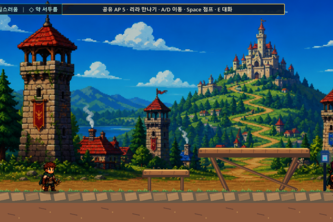
Minting Hero is a self-reported, single-person project that builds a Windows desktop pixel-arcade platform RPG using AI agents (specifically Codex and GPT-5.6) in Godot 4. The game features deterministic hero generation via seeded randomness, irreversible character creation, and a unique combat system where actions are planned on a numbered track and executed deterministically.
What changed
The project is described as a personal experiment in AI-driven game development, with the author stating that it was submitted to an OpenAI hackathon. It represents a shift from browser-based prototyping (Phaser) to native desktop (Godot), with process improvements around agent task ownership and verification gates.
Single most important open question
Is there any evidence of traction, revenue, or user adoption beyond the author’s own account? The description makes no claims about monetization, customer base, or product-market fit — only a self-reported development process and game concept.
Note: This analysis is based entirely on the self-reported project description provided by the author. No external verification or historical data are available. All statements reflect the author’s own account and should be treated as claims, not facts.
What The Product Actually Is
The description states that Minting Hero is:
- A chunky pixel-arcade platform RPG for Windows desktop.
- Built in Godot 4, using GDScript.
- Features deterministic hero generation via one recorded seed, with no reroll or comparison screen.
- Includes a side-view platform traversal system and combat on the same field.
- Combat uses an action-track mechanism where players plan actions in sequence and watch them play back deterministically.
- Hero traits include head, body, weapon, accessory, one boon, one flaw, all set at creation.
- The hero’s record is updated with permanent mutations after combat.
- The game includes a story intro, form choice, naming, and Lira recruitment.
Inference: The product appears to be a prototype or vertical slice of a game, not a full commercial release. It is described as being built in one packaged Windows build from title to hero record, suggesting a cohesive but limited experience.
Positioning & Claim Evolution
The author states:
- The game is inspired by gacha mechanics, but aims to invert them by making hero creation irreversible.
- The name "minting" reflects the idea of issuing a unique hero once — like a coin — and then owning it.
- The core concept is that issuance is chance, completion is choice.
Claim: The positioning is centered on irreversible randomness as a gameplay mechanic, not on monetization or market traction. It is framed as an experiment in AI-driven game design with deterministic systems.
Target Customer & ICP
The description does not state:
- Who the target customer is.
- What demographic or persona this product is built for.
- Whether there are any existing users or players.
Not evidenced: No information on target audience, user personas, or market segmentation.
Business Model & Pricing Evidence
The description states:
- There is no crypto in the game — it's only a metaphor.
- The project was submitted to a hackathon and has no mention of monetization.
- No pricing model, subscription, or revenue streams are described.
Not evidenced: No evidence of business model, pricing, or monetization strategy.
Technical & Delivery Signals
The description states:
- Built with Godot 4.7.1, GDScript, and Phaser.js (for earlier prototype).
- Uses Codex as the core developer agent.
- GPT-5.6 was used for design documents, art direction, and adversarial review.
- The architecture includes a pure deterministic domain layer that runs headless under test.
- A Windows export pipeline is in place.
- An agent task board with explicit scope and verification commands was used.
- A PowerShell script enforces a fail-closed gate to ensure builds are actually played before shipping.
Inference: The technical approach is disciplined, using AI agents as contractors with narrow contracts and verification gates. This suggests a structured development process, but not necessarily scalability or commercial viability.
Traction & Maturity Signals
The description states:
- The project was submitted to the OpenAI 2026 hackathon.
- It includes a vertical slice (15–20 minute experience).
- A full save/restore system, story callbacks, and art/audio are planned for next steps.
- The author emphasizes that nothing ships until a human plays the build.
Not evidenced: No evidence of user adoption, revenue, or market traction. The project is described as a prototype or experimental work-in-progress.
Competitive Context
The description does not state:
- Who the competitors are.
- What similar products exist in the market.
- Whether this product competes with any existing games or platforms.
Not evidenced: No competitive analysis or market positioning information provided.
Open Questions & Risks
- The project is described as a single-person effort (1 team member).
- It is a self-reported prototype, not a commercial product.
- There is no evidence of monetization, users, or traction.
- The use of AI agents like Codex and GPT-5.6 may be experimental, with unclear scalability or reliability.
- The author emphasizes that the project is still in development and not yet released to the public.
Inference: The lack of commercial evidence, user data, or product-market fit raises questions about viability as a business or investment opportunity.
Questions the description leaves open
- Is there any evidence of user feedback or playtesting beyond the author’s own experience?
- What is the plan for monetization if this were to be commercialized?
- How does the team intend to scale beyond a single-person development effort?
- Are there any plans to release this game publicly, and what distribution channels are considered?
- Has the AI agent workflow been tested or validated in other projects or contexts?
Overall Assessment
The description states:
- This is a self-reported personal project submitted to a hackathon.
- It is described as an experiment in AI-driven game development, not a commercial product.
- There is no evidence of revenue, users, or traction.
Not evidenced: No basis for investment or partnership consideration. The project appears to be a prototype or proof-of-concept, not a scalable business or product with demonstrated market demand.
User Stories BotA demo video on every pull request
Get a demo video on every new feature
GitHub App that watches your pull requests and records a narrated, captioned demo.
Save time on demo prep and make informed decisions faster with a video walkthrough of every new feature.
Source
Submitted to the OpenAI 2026 hackathon on Devpost. Project home on Devpost. Back to the full gallery on Devpost.
This competitive analysis was produced by top-founders.com (opens in a new tab)
Generated by a language model from this project's public Devpost page — its tagline, the author's own write-up and any built-with tags listed there — as captured in August 2026. Short quotations are the author's words. It is an opinion on the idea as a business, not on the people behind it, and it reflects the description as published then. If the project has moved on, request a correction below. The analysis is not independent research and contains no verified traction, revenue or customer data.
An independent guide by KFG International LLC — not affiliated with, endorsed by, or connected to Devpost or OpenAI.