

Archive position — measured, not model output
2 likes on Devpost
221 of the 7,850 archived projects have more likes, and 284 share exactly 2 — so this project's #390 place in the like-ranked listing is a tie-break inside that group, not a ranking.
Projects (log scale)
Likes on Devpost. ▲ marks this project's group.
Show the figures
| Likes | Projects | Share of archive |
|---|---|---|
| 0 | 5,587 | 71.2% |
| 1 | 1,758 | 22.4% |
| 2 | 284 | 3.6% |
| 3–4 | 132 | 1.7% |
| 5–9 | 75 | 1.0% |
| 10+ | 14 | 0.2% |
 User Stories BotA demo video on every pull request
Get a demo video on every new feature
GitHub App that watches your pull requests and records a narrated, captioned demo.
Save time on demo prep and make informed decisions faster with a video walkthrough of every new feature.
Executive Summary
What the company appears to be
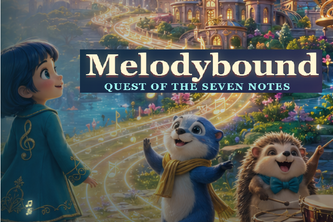
MelodyBound is an educational interactive storybook designed for young beginners to learn music through whimsical characters and engaging narratives. The product was built as a submission to the OpenAI 2026 hackathon.
What changed
The project was submitted to a hackathon, indicating it is in early development or prototype stage. No evidence of commercial traction, revenue, or customer adoption exists.
Single most important open question
Is there any evidence of product-market fit, user engagement, or a path toward monetization beyond the hackathon submission?
Analysis basis
This report is based solely on the self-reported project description provided by the caller. No external verification, archived data, or third-party sources were used. All claims are attributed to the author's own description and are unverified.
What The Product Actually Is
The description states that MelodyBound is an educational interactive storybook aimed at teaching music to young beginners. It uses whimsical fun characters, with a narrative involving a character named Lyra helping animals in a Garden learn to sing and dance.
- The product is described as an interactive storybook, suggesting it combines storytelling with musical learning.
- It is built using Codex (a tool for code generation), indicating a tech-driven approach to content creation or development.
- No further technical details, features, or functionality are provided in the description.
Confidence Low. The description does not specify how the product works technically or what educational outcomes it delivers.
Positioning & Claim Evolution
The author positions MelodyBound as an educational tool for young children to learn music through interactive storytelling and character engagement.
- The tagline emphasizes fun, whimsy, and learning: "Help Lyra teach the animals of the Garden to sing and dance."
- There is no indication of how this product differentiates from other educational apps or platforms, nor whether it targets a specific age group or learning objective.
- No claims about scalability, market reach, or prior user feedback are made.
Confidence Very low. The positioning is implied but not substantiated by any evidence of prior testing, target audience definition, or competitive differentiation.
Target Customer & ICP
The description states that MelodyBound is intended for young beginners learning music.
- It does not specify the age range of users.
- No mention of parents, teachers, or institutions as decision-makers or end-users.
- No evidence of a defined Ideal Customer Profile (ICP) beyond "young learners."
Confidence Not evidenced. The description lacks any detail on who the actual users are or how they would be reached.
Business Model & Pricing Evidence
There is no information in the description about:
- How the product will be monetized.
- Whether it will be free-to-play, subscription-based, or one-time purchase.
- Any pricing structure or revenue streams.
Confidence Not evidenced. No business model or pricing data are provided.
Technical & Delivery Signals
The project was built using Codex, a tool for generating code from natural language prompts.
- This suggests the product may have been prototyped quickly, possibly leveraging AI-assisted development.
- The use of Codex implies a focus on rapid iteration and ease of building interactive content.
- No further technical architecture, platform, or delivery method is described.
Confidence Low. The description only mentions the tool used to build it, not its functionality or scalability.
Traction & Maturity Signals
The project was submitted to the OpenAI 2026 hackathon, indicating:
- It is likely in an early stage of development.
- No evidence of user adoption, retention, or revenue generation.
- No mention of beta testing, user feedback, or product iteration.
Confidence Not evidenced. The only signal of maturity is its submission to a hackathon, which does not indicate commercial traction.
Competitive Context
No information is provided about:
- Competitors in the educational music or interactive storybook space.
- How MelodyBound compares to existing tools or platforms.
- Whether similar products already exist or are being developed.
Confidence Not evidenced. No competitive analysis or market positioning data is available.
Open Questions & Risks
- No product-market fit evidence: The description does not show whether users actually engage with the product or find value in it.
- Unproven educational impact: There is no indication of pedagogical effectiveness or learning outcomes.
- Limited team and resources: Only one team member (Ian Bartczak) is listed, suggesting limited development capacity.
- Hackathon prototype: The project was submitted to a hackathon, which typically indicates a short-term, experimental effort rather than a scalable product.
Confidence Medium. These are inferred risks from the lack of evidence, not stated facts.
Questions the description leaves open
- What is the specific educational goal of MelodyBound? How does it differ from existing music learning tools?
- Who are your target users and how did you identify them?
- Have you tested the product with children or educators yet?
- What is your plan for monetization beyond the hackathon submission?
- How do you intend to scale the product if it gains traction?
- What are the key features of the interactive storybook, and how do they support musical learning?
Note
These questions are based on the absence of evidence in the description and are not assertions.
Overall Assessment
There is no evidence to suggest that MelodyBound has achieved any level of commercial viability or traction. It appears to be a hackathon submission with no indication of user engagement, revenue, or product-market fit.
- Not evidenced as a viable investment or partnership opportunity at this stage.
- The project may represent an early idea or prototype, but lacks the data needed for due-diligence evaluation.
Confidence Very low. No commercial signals are present in the description.
User Stories BotA demo video on every pull request
Get a demo video on every new feature
GitHub App that watches your pull requests and records a narrated, captioned demo.
Save time on demo prep and make informed decisions faster with a video walkthrough of every new feature.
Source
Submitted to the OpenAI 2026 hackathon on Devpost. Project home on Devpost. Back to the full gallery on Devpost.
This competitive analysis was produced by top-founders.com (opens in a new tab)
Generated by a language model from this project's public Devpost page — its tagline and any built-with tags listed there, since the author published no write-up — as captured in August 2026. Short quotations are the author's words. It is an opinion on the idea as a business, not on the people behind it, and it reflects the description as published then. If the project has moved on, request a correction below. The analysis is not independent research and contains no verified traction, revenue or customer data.
An independent guide by KFG International LLC — not affiliated with, endorsed by, or connected to Devpost or OpenAI.