

Archive position — measured, not model output
0 likes on Devpost
2,263 of the 7,850 archived projects have more likes, and 5,587 share exactly 0 — so this project's #5,032 place in the like-ranked listing is a tie-break inside that group, not a ranking.
Projects (log scale)
Likes on Devpost. ▲ marks this project's group.
Show the figures
| Likes | Projects | Share of archive |
|---|---|---|
| 0 | 5,587 | 71.2% |
| 1 | 1,758 | 22.4% |
| 2 | 284 | 3.6% |
| 3–4 | 132 | 1.7% |
| 5–9 | 75 | 1.0% |
| 10+ | 14 | 0.2% |
 User Stories BotA demo video on every pull request
Get a demo video on every new feature
GitHub App that watches your pull requests and records a narrated, captioned demo.
Save time on demo prep and make informed decisions faster with a video walkthrough of every new feature.
Executive Summary
What the company appears to be
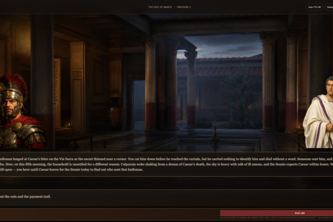
Living Worlds is a self-reported educational AI-powered roleplaying game (RPG) platform that allows students to inhabit historical narratives as active participants. The system uses AI agents to simulate persistent worlds where player actions have consequences, aiming to make learning history more immersive and experiential.
What changed
The project was submitted as part of the OpenAI 2026 hackathon. It represents an experimental approach to educational technology using AI-driven narrative design and persistent world simulation.
Single most important open question
Is there evidence of traction, revenue, or customer adoption beyond the author's own development and demonstration?
What The Product Actually Is
The description states that Living Worlds is a web-based RPG with a visual novel-style interface, built using technologies such as Next.js, React, Cloudflare Workers, GPT-5, and SQLite. It includes features like:
- Freeform text input
- Speech-to-text and text-to-speech capabilities
- Dice rolls
- Campaign memory (tracking consequences, character identities, knowledge boundaries)
- Reusable backgrounds and character portraits
The system is described as allowing players to act within a historical setting — for example, in Ancient Rome before the Ides of March — with AI agents proposing actions that are validated before becoming part of the narrative.
Inference The product is a prototype or demo-level educational tool designed to simulate an immersive learning environment through roleplaying and AI storytelling.
Positioning & Claim Evolution
The author claims that Living Worlds aims to redefine education by making it feel like stepping into a story, rather than studying from a page. It positions itself as a way to teach complex historical concepts through experiential engagement, where students must navigate consequences and make decisions based on their understanding.
It also states that the goal is not to test recall but to apply knowledge in dynamic situations — emphasizing understanding over memorization.
Inference The positioning reflects an attempt to bridge traditional pedagogy with interactive media, using AI to create a persistent narrative world that responds to user behavior.
Target Customer & ICP
The description indicates that the primary users are students learning history, particularly in educational settings. The author mentions specific historical campaigns (e.g., Ancient Rome, American Revolution) and suggests potential future applications in civics simulations, literature mysteries, science expeditions, or language-learning environments.
There is no mention of teachers or institutions as direct customers, though the author notes a desire to build better tools for educators.
Inference The ICP appears to be students aged 12–18 who are engaged with history education and may benefit from experiential learning methods. However, there is no evidence of institutional adoption or targeting.
Business Model & Pricing Evidence
There is no evidence in the description of any business model or pricing structure. The project is presented as a hackathon submission, not a commercial offering.
Inference No revenue streams or monetization strategies are evident from the provided information.
Technical & Delivery Signals
The system uses:
- AI agents (GPT-5, GPT-5.6)
- Cloudflare D1 and Workers
- React, Next.js, Tailwind CSS
- Speech-to-text and text-to-speech
- Structured outputs
- SQLite for persistence
- Vinext for some components
Key technical design decisions include:
- AI proposals are validated before becoming canonical
- Campaign memory tracks consequences, character knowledge, identities, and truth
- Internal tracing of AI calls to debug narrative consistency
Inference The architecture suggests a focus on maintaining narrative coherence in an open-ended environment, with attention to debugging and validation mechanisms.
Traction & Maturity Signals
The project is described as a hackathon demo, built by one person (Alfredo Gomez). There is no evidence of:
- Revenue
- Customers
- User base
- Product-market fit
- Commercial traction
Inference The product exists at the prototype stage, with no demonstrated market adoption or usage beyond its own creation.
Competitive Context
The description does not reference competitors directly. However, it implies alignment with:
- Educational AI tools
- Interactive learning platforms
- Narrative-driven roleplaying games (e.g., tabletop RPGs)
- Historical simulation software
It also mentions that the author was inspired by tabletop RPGs, suggesting a potential overlap with systems like Dungeons & Dragons or digital adaptations.
Inference While not explicitly competitive, Living Worlds enters a space where immersive learning and narrative AI are emerging trends. No clear competitors are named or described.
Open Questions & Risks
- No commercial traction: The project is presented as a hackathon demo with no evidence of real-world usage.
- Unproven scalability: The system is built for one developer and lacks any indication of team size, funding, or infrastructure support.
- Limited data on educational impact: There is no evidence that the approach improves learning outcomes or has been tested in classrooms.
- High technical complexity with low verification: The reliance on AI agents and persistent memory raises questions about reliability and consistency without real-world testing.
Inference The project is experimental, unproven, and lacks any commercial or educational validation.
Questions the description leaves open
- What specific learning outcomes have you observed in pilot use cases?
- How do you plan to scale beyond a single developer’s effort?
- Have you tested the system with actual students or educators?
- What are your plans for monetization, if any?
- How do you ensure historical accuracy while maintaining narrative freedom?
- Are there any partnerships or institutional collaborations in progress?
Overall Assessment
Not evidenced.
There is no evidence of revenue, customers, traction, or commercial viability beyond the author’s own development and demonstration. The project is described as a hackathon submission with no indication of market readiness or strategic positioning.
Confidence level: Low.
This is an early-stage idea with strong conceptual appeal but no demonstrated path to product-market fit or business sustainability. Any investment or partnership would require further validation through pilot programs, user feedback, and evidence of traction.
User Stories BotA demo video on every pull request
Get a demo video on every new feature
GitHub App that watches your pull requests and records a narrated, captioned demo.
Save time on demo prep and make informed decisions faster with a video walkthrough of every new feature.
Source
Submitted to the OpenAI 2026 hackathon on Devpost. Project home on Devpost. Back to the full gallery on Devpost.
This competitive analysis was produced by top-founders.com (opens in a new tab)
Generated by a language model from this project's public Devpost page — its tagline, the author's own write-up and any built-with tags listed there — as captured in August 2026. Short quotations are the author's words. It is an opinion on the idea as a business, not on the people behind it, and it reflects the description as published then. If the project has moved on, request a correction below. The analysis is not independent research and contains no verified traction, revenue or customer data.
An independent guide by KFG International LLC — not affiliated with, endorsed by, or connected to Devpost or OpenAI.