

Archive position — measured, not model output
0 likes on Devpost
2,263 of the 7,850 archived projects have more likes, and 5,587 share exactly 0 — so this project's #4,993 place in the like-ranked listing is a tie-break inside that group, not a ranking.
Projects (log scale)
Likes on Devpost. ▲ marks this project's group.
Show the figures
| Likes | Projects | Share of archive |
|---|---|---|
| 0 | 5,587 | 71.2% |
| 1 | 1,758 | 22.4% |
| 2 | 284 | 3.6% |
| 3–4 | 132 | 1.7% |
| 5–9 | 75 | 1.0% |
| 10+ | 14 | 0.2% |
 User Stories BotA demo video on every pull request
Get a demo video on every new feature
GitHub App that watches your pull requests and records a narrated, captioned demo.
Save time on demo prep and make informed decisions faster with a video walkthrough of every new feature.
Executive Summary
What the company appears to be
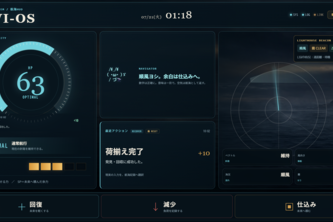
Lighthouse is a self-reported navigation system designed for field operations, built around the metaphor of a lighthouse that illuminates paths without steering the ship. It is described as a tool for managing unfinished work, recovery from disruptions, and maintaining orientation during dynamic tasks — particularly in environments where plans frequently collapse.
What changed
The project evolved from an early CLI-style system (operational by March 1, 2026) into a responsive web HUD using GPT-5.6 and Codex for co-design and engineering. The evolution involved expanding from single-command guidance to multi-route adaptive beaconing, incorporating trajectory review, turning points, and immutable past states.
Single most important open question
Is there evidence of real-world usage or adoption beyond the author's own field operations? The description does not indicate any external users, customers, or measurable impact outside of one operator’s experience.
Note: All claims are self-reported and unverified. No revenue, customer data, traction metrics or third-party validation is provided.
What The Product Actually Is
The description states that Lighthouse is a navigation system for field operations. It uses three inputs — R (remaining work), S (setup/preparation), Y (yield margin) — to determine current state and guide decision-making through a set of commands or routes.
It includes:
- Morning Check with R/S/Y observations
- HP (current capacity) and SP (stored preparation)
- Adaptive Beacon that presents multiple possible next steps
- LOG PAUSE / LAST 8 for reviewing recent actions
- JUNCTION to mark turning points where human choice influences future guidance
The system is described as a responsive Web HUD, built with React, TypeScript, Vite, and deployed via ChatGPT Sites and Codex.
Claim: Lighthouse is not an autonomous agent or task manager.
Evidence: The description explicitly states this. It also says it does not manage people or pretend there is one correct answer.
Inference: The system appears to be a lightweight, event-driven interface for reflection and recovery rather than automation.
Label: Inferred
Positioning & Claim Evolution
The author positions Lighthouse as a navigation layer that reflects where someone is and illuminates the next step — without managing them.
It evolved from:
- A CLI-style system used in real field operations (by March 1, 2026)
- Into a web-based HUD with enhanced features like Adaptive Beacon, Trajectory Review, and JUNCTION
Key claims include:
- It is not an optimization oracle or task manager.
- It works quietly during ordinary work but becomes valuable when orientation is lost.
- It preserves past trajectory and allows selective attention.
Claim: The system was designed to avoid pretending there’s one correct answer.
Evidence: Stated directly in the write-up.
Inference: The positioning reflects a shift from command-based tools toward reflective, context-aware systems.
Label: Inferred
Target Customer & ICP
The description does not name specific customers or personas. However, it implies:
- Operators working in environments where plans frequently collapse
- Field workers who need to recover orientation after disruptions
- Users who value reflection over constant automation
It is implied that the system targets individuals managing dynamic, unfinished work — especially those using productivity tools that fail when plans change.
Claim: Lighthouse is for field operators needing recovery and reflection.
Evidence: The write-up describes its inspiration in terms of field operations and unexpected events.
Inference: Likely a niche audience: field workers, project managers, or anyone working with incomplete or shifting tasks.
Label: Inferred
Business Model & Pricing Evidence
There is no evidence of pricing, monetization strategy, or business model in the description. The system is presented as a prototype/demo submitted to a hackathon.
Claim: No commercial model or pricing structure is described.
Evidence: Not evidenced.
Technical & Delivery Signals
The project was built using:
- GPT-5.6 (called ARK) for co-design and reasoning
- Codex for core engineering tasks including test creation, logic extraction, and deployment
- React, TypeScript, Vite for frontend
- Google Sheets and Apps Script for backend integration in earlier versions
- HTTP Shortcuts for automation
It is described as deterministic and not calling LLMs at runtime.
Claim: The system uses AI as a co-designer and reflection layer, not as a constantly speaking runtime manager.
Evidence: Stated directly.
Inference: The use of Codex suggests some level of automated engineering support in development.
Label: Inferred
Traction & Maturity Signals
The description mentions:
- An operational system used by March 1, 2026
- A retrospective analysis covering March 8 through May 26, 2026 (57 logging days)
- Decreased recorded negative events over time (74.8% drop from March to May)
However, there is no evidence of:
- External users or customers
- Revenue or ARR
- Product adoption beyond one operator
- Any measurable impact on productivity or outcomes
Claim: There was a real-world field system with some improvement in recorded friction.
Evidence: Retrospective data from one operator.
Inference: The system may have shown value to its creator, but no evidence of broader traction exists.
Label: Inferred
Competitive Context
There is no mention of competitors or market positioning beyond the general category of "productivity tools" and "navigation systems."
Claim: No competitive landscape or direct competitors are identified.
Evidence: Not evidenced.
Open Questions & Risks
- Lack of external validation: Only one user’s experience is reported; no third-party data or adoption metrics.
- No commercial viability: No pricing, monetization, or business model described.
- Limited scalability: The system appears tailored to a single operator and may not scale without significant redesign.
- Self-reported nature: All evidence is from the author's own account — unverified.
Inference: Without external users or data, it’s unclear whether this has broader relevance or applicability.
Label: Inferred
Questions the description leaves open
- What specific types of field operations does Lighthouse support? Are there examples beyond the one operator?
- How was the system tested for usability and effectiveness with others?
- Has it been used in any real-world settings outside of the author’s own use?
- What are the limitations of the current version that would prevent broader adoption?
- Is there a plan to move beyond the demo phase, and if so, what does that look like?
Overall Assessment
Not evidenced
There is no evidence of revenue, ARR, funding rounds, headcount, or customer base. The project is presented as a hackathon submission with minimal commercial traction.
Claim: No investment or partnership potential is evident.
Evidence: Not evidenced.
Inference: While the concept shows promise in addressing a specific operational challenge, there is insufficient evidence to assess commercial viability or strategic fit.
Label: Inferred
User Stories BotA demo video on every pull request
Get a demo video on every new feature
GitHub App that watches your pull requests and records a narrated, captioned demo.
Save time on demo prep and make informed decisions faster with a video walkthrough of every new feature.
Source
Submitted to the OpenAI 2026 hackathon on Devpost. Project home on Devpost. Back to the full gallery on Devpost.
This competitive analysis was produced by top-founders.com (opens in a new tab)
Generated by a language model from this project's public Devpost page — its tagline, the author's own write-up and any built-with tags listed there — as captured in August 2026. Short quotations are the author's words. It is an opinion on the idea as a business, not on the people behind it, and it reflects the description as published then. If the project has moved on, request a correction below. The analysis is not independent research and contains no verified traction, revenue or customer data.
An independent guide by KFG International LLC — not affiliated with, endorsed by, or connected to Devpost or OpenAI.