

Archive position — measured, not model output
1 like on Devpost
505 of the 7,850 archived projects have more likes, and 1,758 share exactly 1 — so this project's #1,069 place in the like-ranked listing is a tie-break inside that group, not a ranking.
Projects (log scale)
Likes on Devpost. ▲ marks this project's group.
Show the figures
| Likes | Projects | Share of archive |
|---|---|---|
| 0 | 5,587 | 71.2% |
| 1 | 1,758 | 22.4% |
| 2 | 284 | 3.6% |
| 3–4 | 132 | 1.7% |
| 5–9 | 75 | 1.0% |
| 10+ | 14 | 0.2% |
 User Stories BotA demo video on every pull request
Get a demo video on every new feature
GitHub App that watches your pull requests and records a narrated, captioned demo.
Save time on demo prep and make informed decisions faster with a video walkthrough of every new feature.
Executive Summary
What the company appears to be
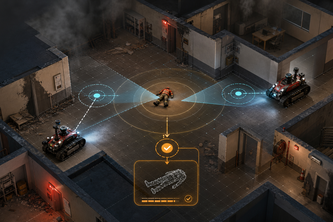
FireClaw is a self-reported safety-aware embodied-agent framework for firefighting robots. The description states it enables human operators to issue English commands like “Go to the second floor and rescue people,” and then selects capable robots, generates executable steps, verifies state, preserves hardware boundaries, and produces an auditable record.
What changed
The project was extended during a Build Week hackathon using Codex and GPT-5.6. These tools were used primarily for architectural inspection, implementation of memory systems (e.g., Entity Memory, R-Tree retrieval), test generation, and integration into the agent workflow. The human developer made all consequential product, research, and safety decisions.
Single most important open question
Is there any evidence that FireClaw has been deployed or tested in real-world scenarios beyond the described demo? If not, what is the path to traction or commercialization?
What The Product Actually Is
The description states that FireClaw is a safety-aware embodied-agent framework for firefighting robots. It includes:
- A MissionAgent that interprets English rescue commands and extracts target floors.
- Robot selection logic that rejects offline or incapable robots.
- Generation of five typed skills: navigate, search, assess, report, and return.
- Mission Memory which retrieves nearby victim evidence from multiple robots.
- A SafetyGate that refuses memory-only dispatch and requests operator confirmation.
- A DryRunRobotAdapter that executes plans without hardware calls.
- An audit log tracking every safety decision and skill transition.
It also includes:
- Append-only JSONL for audit authority.
- SQLite projection with R-Tree index for spatial lookup.
- Explicit safety contracts associated with retrieved memory (e.g.,
advisory_only=true,requires_revalidation=true). - No external runtime dependencies; runs on Python standard library only.
Inference The system is designed to be modular and safety-first, separating planning, skills, execution monitoring, and memory into explicit boundaries. It emphasizes evidence preservation over action authorization.
Positioning & Claim Evolution
The description states that FireClaw was built around the principle: “memory is evidence, not permission to act.”
It positions itself as a framework for firefighting robots operating under challenging conditions such as smoke, heat, degraded communication, and uncertain localization. It claims to support:
- Natural language command interpretation.
- Cross-robot memory sharing with operator confirmation.
- Safety checks at every step of execution.
- Auditable records of decisions and actions.
Inference The positioning reflects a research or prototype-level framework aimed at safety-critical robotics applications, particularly in emergency response. It does not claim to be a commercial product or platform but rather an engineering foundation.
Target Customer & ICP
The description does not name specific customers or buyer personas.
It implies that the primary users are human operators commanding firefighting robots, and potentially robotics researchers or developers working on safety-critical systems.
There is no indication of:
- End-user demographics.
- Industry verticals beyond firefighting.
- Specific customer segments or use cases beyond the demo.
Inference The ICP appears to be limited to robotics engineers, researchers, or developers working in safety-critical domains like emergency response. No evidence suggests a broader commercial audience.
Business Model & Pricing Evidence
There is no mention of pricing, licensing, or monetization strategies in the description.
The project is presented as a research and development framework, not a product for sale.
Inference There is no business model evidenced. The framework seems to be open-source or internal-only at this stage.
Technical & Delivery Signals
Key technical components include:
- Use of Python standard library.
- No API keys, network connections, ROS installations, simulators, or hardware required.
- Dry-run execution mode (real_robot_calls=0).
- Structured memory using JSONL and SQLite with R-Tree indexing.
- Explicit safety contracts tied to retrieved memory.
- Integration with Codex and GPT-5.6 during Build Week.
Inference The system is modular, designed for simulation or isolated testing environments. It uses lightweight tools and avoids heavy infrastructure dependencies.
Traction & Maturity Signals
The description states:
- The project existed before Build Week as a research framework.
- During Build Week, it was extended with Codex and GPT-5.6.
- Includes eleven deterministic tests with no external runtime dependencies.
- Demonstrates full workflow from command to execution in dry-run mode.
However, there is no evidence of real-world deployment, customer adoption, or performance metrics beyond the demo.
Inference The maturity level is that of a prototype or proof-of-concept. It has not demonstrated traction or scalability.
Competitive Context
The description does not reference competitors or similar products directly.
It implies a niche space involving:
- Embodied agents in safety-critical environments.
- Multi-agent robot coordination.
- Memory systems with uncertainty-aware retrieval and evidence lineage.
Inference The competitive landscape is unclear. It likely overlaps with academic robotics research, emergency response automation, and multi-agent systems, but no direct competitors are named or described.
Open Questions & Risks
- No real-world testing or deployment evidence: The system only runs in dry-run mode.
- Limited commercialization path: No pricing, licensing, or customer data.
- Self-reported nature: All claims are unverified; no third-party validation.
- Highly specialized domain: Firefighting robotics is a narrow niche with limited market size.
- Dependency on GPT-5.6 and Codex: This may not be sustainable or scalable without access to these tools.
Inference The project lacks commercial viability or traction signals, and its value proposition depends heavily on future development and adoption in niche markets.
Questions the description leaves open
- Has FireClaw been tested in any real-world or simulated firefighting scenarios?
- What are the plans for integrating with actual robot hardware or ROS platforms?
- How does FireClaw plan to scale beyond a single developer and demo environment?
- Is there interest from robotics companies, emergency services, or research institutions in adopting this framework?
- What is the long-term vision for monetization or commercial deployment?
- How does the team intend to address the challenges of localization noise and communication dropout in real-world settings?
Overall Assessment
Not evidenced: There is no evidence of revenue, customers, traction, or funding history.
The description presents FireClaw as a research prototype with strong safety design principles and modular architecture. It has not demonstrated commercial viability or market readiness.
Confidence level: Low
This is a pre-product stage framework that may evolve into a product or platform, but currently lacks evidence of adoption, scalability, or monetization. Any investment or partnership would be speculative at this point.
User Stories BotA demo video on every pull request
Get a demo video on every new feature
GitHub App that watches your pull requests and records a narrated, captioned demo.
Save time on demo prep and make informed decisions faster with a video walkthrough of every new feature.
Source
Submitted to the OpenAI 2026 hackathon on Devpost. Project home on Devpost. Back to the full gallery on Devpost.
This competitive analysis was produced by top-founders.com (opens in a new tab)
Generated by a language model from this project's public Devpost page — its tagline, the author's own write-up and any built-with tags listed there — as captured in August 2026. Short quotations are the author's words. It is an opinion on the idea as a business, not on the people behind it, and it reflects the description as published then. If the project has moved on, request a correction below. The analysis is not independent research and contains no verified traction, revenue or customer data.
An independent guide by KFG International LLC — not affiliated with, endorsed by, or connected to Devpost or OpenAI.