

Archive position — measured, not model output
0 likes on Devpost
2,263 of the 7,850 archived projects have more likes, and 5,587 share exactly 0 — so this project's #3,032 place in the like-ranked listing is a tie-break inside that group, not a ranking.
Projects (log scale)
Likes on Devpost. ▲ marks this project's group.
Show the figures
| Likes | Projects | Share of archive |
|---|---|---|
| 0 | 5,587 | 71.2% |
| 1 | 1,758 | 22.4% |
| 2 | 284 | 3.6% |
| 3–4 | 132 | 1.7% |
| 5–9 | 75 | 1.0% |
| 10+ | 14 | 0.2% |
 User Stories BotA demo video on every pull request
Get a demo video on every new feature
GitHub App that watches your pull requests and records a narrated, captioned demo.
Save time on demo prep and make informed decisions faster with a video walkthrough of every new feature.
Executive Summary
What the company appears to be
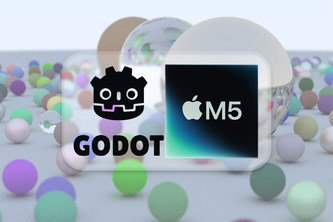
The project described by the author is a personal development effort to implement path tracing in the open-source Godot game engine for Mac (Apple Silicon). It was built as part of an OpenAI hackathon submission and is not a commercial product or company.
What changed
The author reports having successfully implemented a working version of path tracing on Mac using Metal, leveraging AI tools like GPT 5.6 Sol and Terra. This involved overcoming technical challenges such as compiler register mis-tracking in Apple's Metal renderer, which was identified and reported to Apple.
Single most important open question — the commercial due-diligence read
Is there any indication that this effort will evolve into a product or service with commercial traction, revenue, or customer adoption beyond the author’s own use case? The description contains no evidence of such evolution.
What The Product Actually Is
The description states:
- The project is an implementation of path tracing in the Godot game engine for Mac (Apple Silicon).
- It was built using C++, Godot, and Metal.
- The author used AI agents to research and build components, including tools for image comparison and code analysis.
Inference This is a technical prototype or proof-of-concept, not a commercial product. It does not appear to be available for general use outside of the author’s own system or development environment.
Positioning & Claim Evolution
The description states:
- The project was inspired by a GodotCon talk about NVIDIA's path tracing implementation in Godot.
- The author wanted to bring path tracing to Mac via Metal, as NVIDIA’s version only works on Vulkan and is incomplete.
- It is described as a passion project driven by personal interest in Apple Silicon and Godot.
Inference The positioning is that of a hobbyist or experimental developer working on a niche technical problem. There is no evidence of any commercial positioning, branding, or market strategy beyond the author’s own interest.
Target Customer & ICP
The description states:
- The author is a "diehard Apple Silicon and Godot fan."
- The implementation targets Mac users who want to use path tracing in Godot.
Inference The target customer appears to be individual developers or enthusiasts using Godot on Mac, not an enterprise or commercial user base.
Business Model & Pricing Evidence
The description states:
- No pricing information is provided.
- The author does not indicate any monetization strategy or business model beyond personal use and sharing with others.
Inference There is no evidence of a business model, revenue streams, or pricing structure. This is a personal project.
Technical & Delivery Signals
The description states:
- Built using C++, Godot, and Metal.
- Used AI tools like GPT 5.6 Sol, Terra, and Luna for development.
- The author identified and fixed a bug in Apple’s Metal renderer that was reported to Apple.
- The implementation supports Apple Silicon Macs but not Intel Macs yet.
Inference The technical execution is advanced for a personal project, involving AI-assisted development and deep integration with low-level graphics APIs. However, the delivery is limited to a prototype or proof-of-concept.
Traction & Maturity Signals
The description states:
- The author built this as part of an OpenAI hackathon submission.
- It was not merged into Godot’s main branch (as the author notes that Godot is “very anti-AI”).
- No customers, users, or adoption data are mentioned.
Inference There is no evidence of traction, adoption, or maturity beyond the author’s own development efforts. The project has not reached a commercial or widely accessible state.
Competitive Context
The description states:
- NVIDIA has been working on path tracing in Godot but only supports Vulkan and is incomplete.
- Blender has a Metal-based path tracing implementation that was used as a reference.
Inference There is a competitive landscape involving NVIDIA, Blender, and potentially other game engines with path tracing capabilities. However, the project does not appear to be competing directly in the market — it’s a personal effort.
Open Questions & Risks
The description states:
- The author notes that Godot is “very anti-AI,” which may prevent their work from being merged into the main branch.
- It only supports Apple Silicon Macs, not Intel Macs.
- No evidence of any commercial viability or scalability beyond personal use.
Inference
Key risks include:
- Lack of integration with Godot’s official codebase.
- Limited platform support (Apple Silicon only).
- No indication of commercialization or market demand.
- The author is a solo developer, which limits long-term sustainability.
Questions the description leaves open
- Is this project intended to be part of a larger product or service?
- What is the plan for Intel Mac support and broader platform compatibility?
- Are there any plans to monetize or commercialize this work?
- Has the bug identified in Apple’s Metal renderer been accepted or addressed by Apple?
- Is there any interest from the Godot community or developers in adopting this implementation?
Overall Assessment
The description states:
- This is a personal project built for a hackathon.
- It is not a company, product, or business with revenue or customers.
Inference There is no basis for investment or partnership consideration at this time. The effort is a solo developer’s technical exploration and does not indicate a scalable or commercial opportunity.
User Stories BotA demo video on every pull request
Get a demo video on every new feature
GitHub App that watches your pull requests and records a narrated, captioned demo.
Save time on demo prep and make informed decisions faster with a video walkthrough of every new feature.
Source
Submitted to the OpenAI 2026 hackathon on Devpost. Project home on Devpost. Back to the full gallery on Devpost.
This competitive analysis was produced by top-founders.com (opens in a new tab)
Generated by a language model from this project's public Devpost page — its tagline, the author's own write-up and any built-with tags listed there — as captured in August 2026. Short quotations are the author's words. It is an opinion on the idea as a business, not on the people behind it, and it reflects the description as published then. If the project has moved on, request a correction below. The analysis is not independent research and contains no verified traction, revenue or customer data.
An independent guide by KFG International LLC — not affiliated with, endorsed by, or connected to Devpost or OpenAI.