

Archive position — measured, not model output
0 likes on Devpost
2,263 of the 7,850 archived projects have more likes, and 5,587 share exactly 0 — so this project's #4,795 place in the like-ranked listing is a tie-break inside that group, not a ranking.
Projects (log scale)
Likes on Devpost. ▲ marks this project's group.
Show the figures
| Likes | Projects | Share of archive |
|---|---|---|
| 0 | 5,587 | 71.2% |
| 1 | 1,758 | 22.4% |
| 2 | 284 | 3.6% |
| 3–4 | 132 | 1.7% |
| 5–9 | 75 | 1.0% |
| 10+ | 14 | 0.2% |
 User Stories BotA demo video on every pull request
Get a demo video on every new feature
GitHub App that watches your pull requests and records a narrated, captioned demo.
Save time on demo prep and make informed decisions faster with a video walkthrough of every new feature.
Executive Summary
The description states that "Kids Eat Free App" is an iOS app designed to help families discover restaurant deals for children. The author, Jon Wenzel, claims he has built the app using Codex and a team of AI agents over a few weeks. He describes it as free-to-use with ad support and a paid upgrade option. There is no evidence of revenue, customers, or traction beyond the self-reported account.
The single most important open question is: What is the actual commercial viability of this app, given that it relies on a model where restaurants provide deals and users submit content, without any demonstrated market validation or monetization strategy?
This analysis is based entirely on the author's own description. No external verification or third-party data is available.
What The Product Actually Is
The description states:
- It is an iOS app
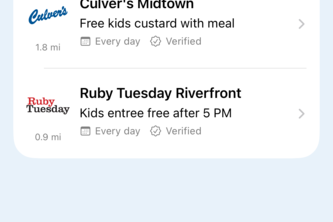
- It shows restaurants near users that have kid deals and family specials
- It organizes deals into a consistent, easy-to-understand format
- It connects deals with accurate restaurant information
- It is free to use, supported by banner ads
- There is a paid option for upgraded experience
- Users can submit deals they discover
- Submitted deals are verified before publishing
The app appears to be a local restaurant deal finder focused on family-friendly offers. The author claims it was built using Swift and Xcode, and that Codex helped in development.
Positioning & Claim Evolution
The description states:
- The idea originated 15 years ago when the founder's wife received a free meal at Jersey Mike’s
- The founder initially wanted to build a calendar showing kid deals but realized an app was needed instead
- The app is positioned as helping families discover real restaurant deals for children throughout the week
- It aims to organize deals into a consistent, easy-to-understand format
- The author claims to have turned a 15-year-old idea into a functioning app
The claim evolution shows a progression from an informal idea (a calendar) to a fully realized product (an iOS app), with the author emphasizing that he was able to build it himself using AI tools after years of being unable to do so.
Target Customer & ICP
The description states:
- The target customer is families
- The app helps families discover restaurant deals for children
- It focuses on family specials and kid deals throughout the week
There is no evidence provided about specific demographics, income levels, or geographic targeting beyond "families" and "nearby restaurants."
Business Model & Pricing Evidence
The description states:
- The app is free to use
- Supported by banner ads
- There is a paid option for users who want an upgraded experience
- Users can submit deals they discover
- Submitted deals are verified before publishing
No pricing information, revenue model details, or monetization strategy beyond ad-supported free access and optional upgrades are provided.
Technical & Delivery Signals
The description states:
- Built with Swift and Xcode
- The app was built using Codex over a few weeks
- It uses an agent-based system for content management
- The author created specialized agents for research, formatting, restaurant data management, and verification workflows
- The app organizes deals into consistent formats
There is no evidence of technical architecture details, scalability considerations, or delivery performance metrics.
Traction & Maturity Signals
The description states:
- The app was built in a matter of weeks using Codex
- It is "getting ready to launch"
- The author has been working on the idea for 15 years
- A database with genuine offers from real restaurants was created
- An agent-based workflow was established for content research, formatting, maintenance, and verification
There is no evidence of user adoption, downloads, active users, or any traction metrics beyond the fact that it's "getting ready to launch."
Competitive Context
The description does not provide any information about competitors or market positioning relative to existing restaurant deal apps.
Open Questions & Risks
- The app relies on restaurants providing deals and users submitting content without demonstrated validation
- No evidence of revenue, customers, or traction beyond the author's own claims
- The business model depends on ad support and a paid upgrade option, but no monetization details are provided
- The agent-based system for managing content is described but not validated for effectiveness or scalability
- The app appears to be a single-person project with no team structure or operational history
Questions the description leaves open
- What specific restaurant partnerships or relationships exist, if any?
- How are deals verified and what is the accuracy rate of submitted content?
- What is the expected user acquisition strategy and how will you reach families?
- Can you provide evidence of market demand for this type of service?
- What are the actual costs associated with running the agent-based system?
- How do you plan to scale beyond a single developer's capacity?
- What are your specific plans for monetization beyond ads and premium upgrades?
Overall Assessment
The description states that the app is "getting ready to launch" and that the author has turned a 15-year-old idea into a functioning app. However, there is no evidence of revenue, customers, or traction beyond the self-reported account.
This appears to be an early-stage concept with limited commercial validation. The business model relies on ad-supported free access and premium upgrades, but no monetization strategy details are provided. The single-person development approach raises questions about scalability and operational capacity.
The author's claims about building the app using Codex and AI agents are self-reported without independent verification. There is insufficient evidence to assess commercial viability or market potential.
Assessment: Not evidenced - No revenue, customer data, traction metrics, or independent validation of the business model or market demand are provided in the description.
User Stories BotA demo video on every pull request
Get a demo video on every new feature
GitHub App that watches your pull requests and records a narrated, captioned demo.
Save time on demo prep and make informed decisions faster with a video walkthrough of every new feature.
Source
Submitted to the OpenAI 2026 hackathon on Devpost. Project home on Devpost. Back to the full gallery on Devpost.
This competitive analysis was produced by top-founders.com (opens in a new tab)
Generated by a language model from this project's public Devpost page — its tagline, the author's own write-up and any built-with tags listed there — as captured in August 2026. Short quotations are the author's words. It is an opinion on the idea as a business, not on the people behind it, and it reflects the description as published then. If the project has moved on, request a correction below. The analysis is not independent research and contains no verified traction, revenue or customer data.
An independent guide by KFG International LLC — not affiliated with, endorsed by, or connected to Devpost or OpenAI.