

Archive position — measured, not model output
0 likes on Devpost
2,263 of the 7,850 archived projects have more likes, and 5,587 share exactly 0 — so this project's #4,776 place in the like-ranked listing is a tie-break inside that group, not a ranking.
Projects (log scale)
Likes on Devpost. ▲ marks this project's group.
Show the figures
| Likes | Projects | Share of archive |
|---|---|---|
| 0 | 5,587 | 71.2% |
| 1 | 1,758 | 22.4% |
| 2 | 284 | 3.6% |
| 3–4 | 132 | 1.7% |
| 5–9 | 75 | 1.0% |
| 10+ | 14 | 0.2% |
 User Stories BotA demo video on every pull request
Get a demo video on every new feature
GitHub App that watches your pull requests and records a narrated, captioned demo.
Save time on demo prep and make informed decisions faster with a video walkthrough of every new feature.
Executive Summary
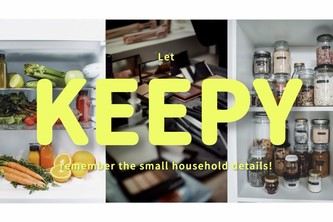
The description states that Keepy is a mobile-first app for tracking household items with expiry dates, including food, cosmetics, medicines, skincare products, and other household supplies. The author describes it as a personal project born from their own experience as an international student trying to manage inventory and avoid waste. It supports manual item entry or AI-assisted Quick Scan, allows users to see what has expired or needs attention soon, search and filter inventory, update quantities, record items as used or discarded, organize by category, and review usage patterns through Insights.
The author claims the goal is to turn household tracking into a lightweight daily habit rather than a demanding audit. The app was built using Flask, Jinja, JavaScript, SQLite, HTML, CSS, with AI components powered by GPT-5.6, Codex, SmolVLM, and Transformers.js, deployed on PythonAnywhere.
The most important open question is whether the author’s personal experience reflects a scalable market need or if this remains a niche solution for one individual. The description does not provide any evidence of traction, revenue, customers, or adoption beyond the single developer's use case.
What The Product Actually Is
- The description states that Keepy is a mobile-first app.
- It tracks household items with expiry dates such as food, cosmetics, medicines, skincare products, and other supplies.
- Users can add items manually or via Quick Scan which receives an editable AI-suggested name.
- Key features include:
- Seeing what has expired or needs attention soon
- Searching and filtering current inventory
- Updating quantities as items are used
- Recording items as used or discarded
- Organising current items by category
- Reviewing inventory and usage patterns through Insights
This is a self-reported product definition. No independent verification of functionality, features, or performance exists.
Positioning & Claim Evolution
- The description states that Keepy aims to make household tracking a "lightweight daily habit."
- It positions itself as solving the problem of forgetting what one already owns and when it expires.
- The author notes that the app grew from personal experience as an international student managing inventory while preparing meals in advance.
- The claim evolution appears to be from a single-user solution (personal project) to a potential broader utility with future enhancements like shared inventories, notifications, and multi-device sync.
No evidence provided about how this positioning compares to existing solutions or whether it reflects market demand beyond the author’s own use case.
Target Customer & ICP
- The description states that the app was built based on the author's experience as an international student.
- It targets individuals who buy items regularly and struggle to remember what they already have or when it expires.
- There is no explicit segmentation beyond this personal context, nor any indication of target personas or buyer profiles.
No evidence of customer research, persona development, or market validation exists in the description.
Business Model & Pricing Evidence
- The description does not mention any pricing model, subscription plans, monetization strategy, or business model.
- There is no indication of whether the app will be free-to-use, freemium, paid, or supported by advertising.
No evidence of commercial viability or financial structure.
Technical & Delivery Signals
- The app was built with Flask, Jinja, JavaScript, SQLite, HTML, and CSS.
- AI components include GPT-5.6 (as development strategist), Codex (as software engineer), SmolVLM via Transformers.js, Web Workers, and WebGPU.
- Deployment occurred on PythonAnywhere.
- Development followed a structured process: Define → Design → Specify → Implement → Test → Review → Refine → Deploy.
- The author worked with AI through clearly separated roles.
- Challenges included limitations of the on-device model for multi-item recognition and Codex credit consumption.
These are self-reported technical details. No evidence of scalability, performance metrics, or robustness beyond a single developer’s MVP.
Traction & Maturity Signals
- The description states that Keepy is an MVP (minimum viable product) deployed on PythonAnywhere.
- It was submitted to the OpenAI 2026 hackathon.
- There is no mention of user adoption, retention, usage data, or customer feedback.
- No evidence of revenue, customers, or growth metrics.
The project remains at the prototype stage with no demonstrated traction.
Competitive Context
- The description does not identify any direct competitors.
- It does not describe how Keepy differs from existing household inventory or expiry tracking apps.
- There is no discussion of market size, competitive landscape, or differentiation strategy.
No evidence of competitive analysis or positioning within a larger ecosystem.
Open Questions & Risks
- The app is described as a solo developer project with no team or external support.
- It relies heavily on AI tools (GPT-5.6, Codex) for development, which may not be sustainable or scalable.
- The MVP has limited functionality and lacks features like multi-item recognition, barcode scanning, or native camera support.
- There is no evidence of product-market fit, user feedback, or market validation.
- The author’s familiarity with tools and architecture is noted but does not imply scalability or long-term viability.
Questions the description leaves open
- What specific problem in your personal life led you to build this? How does that translate into a broader market need?
- Have you tested the app with others outside of yourself? If so, what were their reactions and feedback?
- What is your plan for scaling beyond a single-user MVP?
- Are there any plans to monetize or generate revenue from Keepy?
- How do you intend to handle data privacy and security concerns related to personal household inventory?
- What are the technical limitations of relying on AI tools like GPT-5.6 and Codex for ongoing development?
Overall Assessment
The description states that Keepy is a solo developer project built as an MVP for a hackathon. There is no evidence of traction, revenue, customers, or adoption beyond the author’s personal use case.
This is a self-reported product concept with no verified commercial performance or market validation. The app remains at the prototype stage and lacks any indication of scalability or business model.
Confidence Level: Low
The entire analysis rests on unverified self-reporting. No third-party data, user metrics, or financials are available to assess viability or potential for investment or partnership.
User Stories BotA demo video on every pull request
Get a demo video on every new feature
GitHub App that watches your pull requests and records a narrated, captioned demo.
Save time on demo prep and make informed decisions faster with a video walkthrough of every new feature.
Source
Submitted to the OpenAI 2026 hackathon on Devpost. Project home on Devpost. Back to the full gallery on Devpost.
This competitive analysis was produced by top-founders.com (opens in a new tab)
Generated by a language model from this project's public Devpost page — its tagline, the author's own write-up and any built-with tags listed there — as captured in August 2026. Short quotations are the author's words. It is an opinion on the idea as a business, not on the people behind it, and it reflects the description as published then. If the project has moved on, request a correction below. The analysis is not independent research and contains no verified traction, revenue or customer data.
An independent guide by KFG International LLC — not affiliated with, endorsed by, or connected to Devpost or OpenAI.