

Archive position — measured, not model output
0 likes on Devpost
2,263 of the 7,850 archived projects have more likes, and 5,587 share exactly 0 — so this project's #4,606 place in the like-ranked listing is a tie-break inside that group, not a ranking.
Projects (log scale)
Likes on Devpost. ▲ marks this project's group.
Show the figures
| Likes | Projects | Share of archive |
|---|---|---|
| 0 | 5,587 | 71.2% |
| 1 | 1,758 | 22.4% |
| 2 | 284 | 3.6% |
| 3–4 | 132 | 1.7% |
| 5–9 | 75 | 1.0% |
| 10+ | 14 | 0.2% |
 User Stories BotA demo video on every pull request
Get a demo video on every new feature
GitHub App that watches your pull requests and records a narrated, captioned demo.
Save time on demo prep and make informed decisions faster with a video walkthrough of every new feature.
Executive Summary
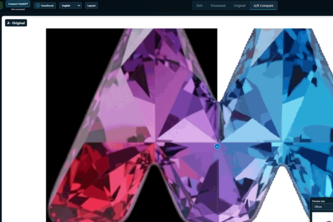
The description states that "Image to SVG Suite" is a browser-based application that converts raster images into SVG files using AI (specifically GPT 5.6 SOL). It claims support for background removal, A/B view, and integration with WebMCP and MCP protocols, enabling use within ChatGPT. The author reports building it in high setting with GPT 5.6 SOL, and notes challenges in initial output quality, which were overcome through better prompting.
The project appears to be a single-person hackathon submission, not evidenced as having any revenue, customers, or traction beyond the author's own use. It is positioned as an AI-powered tool for converting images to vector formats, with integration capabilities into AI assistants like ChatGPT.
The single most important open question
Is there any evidence of actual usage or demand from users beyond the author?
What The Product Actually Is
The description states that "Image to SVG Suite" is a browser-based application that converts raster images into SVG files. It removes backgrounds, offers an A/B view, and supports WebMCP and MCP protocols for integration with AI assistants like ChatGPT.
Evidence
- “Converts Raster Images into SVG Files”
- “Removes Background”
- “A/B View”
- “WebMCP, MCP, can be used from within ChatGPT”
Inference The tool is described as a PWA (Progressive Web App) based on the tagline "WebMCP PWA SVG Converter".
Positioning & Claim Evolution
The author states that the project was inspired by a personal need to convert AI-generated logos into SVG format, and that they built it to avoid installing software locally. The positioning evolved from a simple image-to-SVG converter to one that integrates with AI tools like ChatGPT via WebMCP and MCP protocols.
Evidence
- “I wanted to create SVG Files from my AI created Logos directly”
- “did not find a good program to do that so I decided using AI to create a converter for that”
- “And with the new WebMCP support I even managed to get it running direcly with ChatGPT”
Inference The evolution suggests an intent to build a tool that bridges image conversion and AI assistant workflows, but no evidence of actual adoption or feedback from users.
Target Customer & ICP
Not evidenced. The description does not identify specific customer segments or personas. It only mentions the author’s personal use case and lack of external users.
Evidence
- “I wanted to create SVG Files from my AI created Logos directly”
- “Lets wait if anybody other than me uses it.”
Business Model & Pricing Evidence
Not evidenced. There is no mention of pricing, monetization strategy, or business model in the description.
Evidence
- No statement on how the tool would be sold or used commercially
- No mention of licensing, subscriptions, or fees
Technical & Delivery Signals
The project was built using GPT 5.6 SOL in high setting. It supports WebMCP and MCP protocols for integration with AI tools like ChatGPT. The author notes that the tool is a browser-based application (PWA), and that it can convert images directly without reinterpreting them.
Evidence
- “Built with (author-declared): gpt, gpt5.6sol”
- “WebMCP, MCP, can be used from within ChatGPT”
- “can be used from within ChatGPT”
- “it can convert images by itself into the SVG Format without having to interpret the image again”
Inference The use of AI for development and integration with AI tools suggests a technical approach that may appeal to developers or creators, but no evidence of delivery or performance metrics.
Traction & Maturity Signals
Not evidenced. The project is described as a single-person hackathon submission with no mention of users, adoption, or product maturity beyond the author’s own use.
Evidence
- “Team size: 1”
- “Lets wait if anybody other than me uses it.”
- “Until the middle of the project I was getting nervous because the produced product could not be used be a human”
Competitive Context
Not evidenced. The description does not mention existing tools or competitors in the image-to-SVG conversion space.
Evidence
- No reference to similar products, market players, or competitive landscape
Open Questions & Risks
- Single-person development: The project is a solo effort, which raises questions about scalability and long-term maintenance.
- No external usage: The author explicitly states they are waiting for others to use it, indicating no evidence of traction or demand.
- Unverified AI claims: The tool’s performance and quality are based on the author's own experience, not independent validation.
- Unclear commercial viability: No pricing, monetization, or business model is described.
Questions the description leaves open
- What specific use cases have you identified for this tool beyond your own?
- Have you received any feedback from users outside of yourself?
- How do you plan to scale beyond a single-person development effort?
- What are the technical limitations or edge cases in converting raster images to SVG using AI?
- Are there any plans to monetize or commercialize this tool?
Overall Assessment
Not evidenced. The project is described as a hackathon submission with no evidence of revenue, customers, or traction. It is not clear whether the author intends to build a product for market adoption or if it remains a personal experiment.
Evidence
- “Team size: 1”
- “Lets wait if anybody other than me uses it.”
- No mention of funding, partnerships, or commercial intent
Inference At this stage, the project appears to be an experimental tool with no demonstrated market demand or business model. It is not ready for investment or partnership consideration without further evidence of traction or product-market fit.
User Stories BotA demo video on every pull request
Get a demo video on every new feature
GitHub App that watches your pull requests and records a narrated, captioned demo.
Save time on demo prep and make informed decisions faster with a video walkthrough of every new feature.
Source
Submitted to the OpenAI 2026 hackathon on Devpost. Project home on Devpost. Back to the full gallery on Devpost.
This competitive analysis was produced by top-founders.com (opens in a new tab)
Generated by a language model from this project's public Devpost page — its tagline, the author's own write-up and any built-with tags listed there — as captured in August 2026. Short quotations are the author's words. It is an opinion on the idea as a business, not on the people behind it, and it reflects the description as published then. If the project has moved on, request a correction below. The analysis is not independent research and contains no verified traction, revenue or customer data.
An independent guide by KFG International LLC — not affiliated with, endorsed by, or connected to Devpost or OpenAI.