

Archive position — measured, not model output
0 likes on Devpost
2,263 of the 7,850 archived projects have more likes, and 5,587 share exactly 0 — so this project's #4,479 place in the like-ranked listing is a tie-break inside that group, not a ranking.
Projects (log scale)
Likes on Devpost. ▲ marks this project's group.
Show the figures
| Likes | Projects | Share of archive |
|---|---|---|
| 0 | 5,587 | 71.2% |
| 1 | 1,758 | 22.4% |
| 2 | 284 | 3.6% |
| 3–4 | 132 | 1.7% |
| 5–9 | 75 | 1.0% |
| 10+ | 14 | 0.2% |
 User Stories BotA demo video on every pull request
Get a demo video on every new feature
GitHub App that watches your pull requests and records a narrated, captioned demo.
Save time on demo prep and make informed decisions faster with a video walkthrough of every new feature.
Executive Summary
What the company appears to be
HelixBox, as described by its author, is a mobile application that enables developers to build, run, and ship software from their phones. It leverages a secure Rust PTY (pseudo-terminal) and AI assistance powered by Codex and GPT-5.6.
What changed
The project was submitted to the OpenAI 2026 hackathon on Devpost. No further development or commercial activity is evidenced.
Single most important open question
Is there any evidence of product-market fit, customer traction, or revenue generation beyond the hackathon submission?
What The Product Actually Is
The description states that HelixBox is a tool that brings a full local development environment to mobile. It uses a secure Rust PTY and integrates AI assistance from Codex and GPT-5.6.
Evidence
- The author describes it as enabling developers to "build, run, and ship from your phone."
- It uses a "secure Rust PTY" and "Codex & GPT-5.6 AI assistance."
- Built with technologies including React Native, Expo.io, Rust, and TypeScript.
Inference
- The product is likely a mobile app that allows remote development workflows using terminal emulation and AI tools.
- It may be positioned as a developer tool for mobile-first or remote development.
Not evidenced
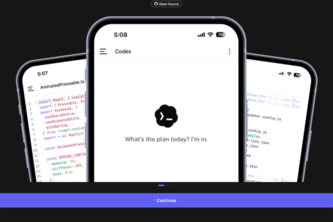
- No screenshots, demos, or functional details are provided.
- No indication of whether it's a standalone app, a browser-based interface, or a hybrid solution.
Positioning & Claim Evolution
The tagline states: “Build, run, and ship from your phone.” This is a self-reported claim about the product’s core functionality and positioning.
Evidence
- The tagline positions HelixBox as a mobile development tool.
- It emphasizes portability and AI-assisted workflows.
Inference
- The author intends to position this as a solution for developers who want to code on-the-go or in environments where traditional desktop tools are not available.
- The inclusion of AI (Codex & GPT-5.6) suggests an intent to offer intelligent coding assistance.
Not evidenced
- No evolution of positioning is described.
- No evidence of prior versions, marketing materials, or customer feedback that would indicate how the product’s positioning has changed over time.
Target Customer & ICP
The description states that HelixBox is for developers who want to build, run, and ship from their phones.
Evidence
- The tagline implies a developer audience.
- It is built with developer tools like React Native, Rust, and terminal emulators.
Inference
- The ICP (Ideal Customer Profile) likely includes mobile-first developers, remote workers, or those in constrained environments who need to code on the go.
Not evidenced
- No segmentation of customer types.
- No evidence of specific personas, use cases, or customer interviews.
- No indication of whether the tool targets enterprise, indie devs, or open-source contributors.
Business Model & Pricing Evidence
There is no evidence in the description of a business model or pricing structure.
Evidence
- The project was submitted to a hackathon and has no mention of monetization.
Inference
- If this is a commercial product, it likely targets developers who may pay for access to AI tools or cloud-based development environments.
- It could be freemium, SaaS, or a one-time purchase model — but no evidence supports any of these.
Not evidenced
- No pricing tiers, subscription models, or monetization strategy are mentioned.
- No indication of whether it’s open-source, proprietary, or part of a larger platform.
Technical & Delivery Signals
The project is built using technologies such as React Native, Rust, Expo.io, and TypeScript.
Evidence
- The author lists the following tech stack: bun, cross-platform, developer-tools, expo.io, git, gpt-5.6, openai-codex, pty, react-native, rust, terminal-emulator, typescript, websockets.
Inference
- The product is likely a cross-platform mobile app with terminal emulation capabilities and AI integration.
- It may be built using modern developer tooling and frameworks.
Not evidenced
- No delivery timeline or roadmap.
- No evidence of performance benchmarks, scalability, or deployment strategy.
- No mention of backend infrastructure or cloud services used.
Traction & Maturity Signals
The only evidence of traction is that the project was submitted to a hackathon.
Evidence
- The project was submitted to the OpenAI 2026 hackathon on Devpost.
Inference
- This suggests early-stage development or prototype status.
- No evidence of user adoption, customer feedback, or product-market fit.
Not evidenced
- No metrics, user base, or revenue data.
- No mention of beta users, pilot programs, or product launches.
- No indication of whether the project has moved beyond the hackathon phase.
Competitive Context
There is no evidence of competitive analysis in the description.
Evidence
- The author does not reference competitors or similar tools.
Inference
- HelixBox may compete with mobile development tools, terminal emulators, or AI-assisted coding platforms.
- It could be positioned against tools like Termius, Gitpod, or VS Code’s mobile extensions.
Not evidenced
- No competitive landscape, market positioning, or differentiation strategy is described.
- No evidence of how HelixBox compares to existing solutions in the market.
Open Questions & Risks
Several risks and open questions are evident from the lack of detail:
Evidence
- The project is a hackathon submission with no further development or traction.
Inference
- Risk of product-market misalignment if there is no real demand for mobile development tools.
- Risk of technical limitations in running full local dev environments on mobile.
- Risk of over-reliance on AI (GPT-5.6) that may not be available or scalable.
Not evidenced
- No evidence of a go-to-market strategy, team expansion, or product roadmap.
- No indication of funding, partnerships, or investor interest.
Questions the description leaves open
- What is the core problem you're solving for developers?
- How does HelixBox differ from existing terminal emulators or mobile development tools?
- Have you conducted any user research or interviews with developers?
- What is your plan to monetize this product beyond the hackathon?
- Are there any technical limitations in running full local dev environments on mobile?
- What are your plans for scaling and expanding the team?
Overall Assessment
Not evidenced
The project description provides no evidence of traction, revenue, or customer adoption. It is a hackathon submission with no indication of further development or commercial viability.
Inference
- This is likely an early-stage idea or prototype.
- The lack of evidence makes it difficult to assess whether this has investment potential or strategic value for a partnership.
Confidence Level Low — based on self-reported, unverified information and minimal evidence of product-market fit or commercial activity.
User Stories BotA demo video on every pull request
Get a demo video on every new feature
GitHub App that watches your pull requests and records a narrated, captioned demo.
Save time on demo prep and make informed decisions faster with a video walkthrough of every new feature.
Source
Submitted to the OpenAI 2026 hackathon on Devpost. Project home on Devpost. Back to the full gallery on Devpost.
This competitive analysis was produced by top-founders.com (opens in a new tab)
Generated by a language model from this project's public Devpost page — its tagline and any built-with tags listed there, since the author published no write-up — as captured in August 2026. Short quotations are the author's words. It is an opinion on the idea as a business, not on the people behind it, and it reflects the description as published then. If the project has moved on, request a correction below. The analysis is not independent research and contains no verified traction, revenue or customer data.
An independent guide by KFG International LLC — not affiliated with, endorsed by, or connected to Devpost or OpenAI.