

Archive position — measured, not model output
0 likes on Devpost
2,263 of the 7,850 archived projects have more likes, and 5,587 share exactly 0 — so this project's #4,477 place in the like-ranked listing is a tie-break inside that group, not a ranking.
Projects (log scale)
Likes on Devpost. ▲ marks this project's group.
Show the figures
| Likes | Projects | Share of archive |
|---|---|---|
| 0 | 5,587 | 71.2% |
| 1 | 1,758 | 22.4% |
| 2 | 284 | 3.6% |
| 3–4 | 132 | 1.7% |
| 5–9 | 75 | 1.0% |
| 10+ | 14 | 0.2% |
 User Stories BotA demo video on every pull request
Get a demo video on every new feature
GitHub App that watches your pull requests and records a narrated, captioned demo.
Save time on demo prep and make informed decisions faster with a video walkthrough of every new feature.
Executive Summary
What the company appears to be
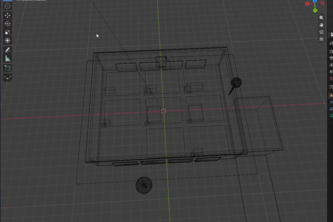
Helio Architect is a self-reported AI-powered 3D house generator that takes natural language descriptions and outputs rendered architectural models in Blender. The system uses LLMs (GPT-5.6/Codex), TCP agents, and Blender for model construction and rendering.
What changed
This is a hackathon submission with no evidence of commercial traction or product-market fit beyond the author's own description. It represents an experimental proof-of-concept rather than a mature product.
Single most important open question
Does Helio Architect actually work as described, or is this a theoretical framework that has not been validated in practice?
What The Product Actually Is
The description states that Helio Architect is "an AI assistant that generates 3D architectural models from natural language descriptions."
It claims to:
- Use GPT-5.6/Codex to interpret design descriptions and generate JSON floor plans
- Send those plans to a TCP agent within Blender for 3D construction
- Render professional images with PBR materials, lighting, and features like pools and furniture
The system is built using:
- Codex + GPT-5.6 for natural language processing
- Blender 5.2 for modeling and rendering (Eevee engine)
- Python for TCP agents, web server logic, and construction
- Streamlit for interactive web interface
- OpenRouter for LLM access
Confidence Low — this is a self-reported technical architecture with no evidence of actual implementation or performance.
Positioning & Claim Evolution
The description states that Helio Architect "generates 3D houses from text" and produces "professional rendered models in Blender with materials, pools and furniture."
It positions itself as an AI tool for architects or homeowners to quickly visualize their ideal homes without manual design work.
Confidence Low — the claim is self-reported and lacks validation. No evidence of market positioning beyond a hackathon submission.
Target Customer & ICP
The description does not state who the target customer is, nor does it define an Ideal Customer Profile (ICP).
It implies use by "architects or homeowners" but provides no segmentation or customer data.
Confidence Not evidenced — no indication of specific buyer personas or customer types.
Business Model & Pricing Evidence
The description makes no mention of pricing, monetization, or business model.
There is no evidence of revenue streams, subscription tiers, or commercial use cases.
Confidence Not evidenced — no commercial structure described.
Technical & Delivery Signals
The project uses:
- GPT-5.6/Codex for natural language interpretation
- Blender 5.2 with Eevee engine for rendering
- Python TCP agents and server logic
- Streamlit for UI
- OpenRouter for LLM access
It claims to solve technical challenges like:
- Consistent plan generation without impossible dimensions
- Synchronization of TCP agents with Blender's main thread
- Data type consistency between LLM outputs and model construction
Confidence Low — these are self-reported technical details, not validated performance or delivery.
Traction & Maturity Signals
The project is described as a submission to the OpenAI 2026 hackathon. No evidence of:
- Revenue
- Customers
- Product usage
- Market traction
- Iteration beyond initial prototype
Confidence Not evidenced — no signs of product maturity or commercial adoption.
Competitive Context
The description does not mention competitors or market context.
It is unclear whether similar tools exist, how Helio Architect compares to them, or what its competitive advantage might be.
Confidence Not evidenced — no competitive analysis provided.
Open Questions & Risks
- Unverified claims: All technical and functional claims are self-reported with no independent validation.
- Prototype nature: Submitted to a hackathon; no evidence of product development beyond initial concept.
- Technical complexity: The described integration of LLMs, TCP agents, and Blender is complex and likely unproven in practice.
- No commercialization path: No pricing, customers, or business model are evident.
Confidence High — these are clear risks based on the lack of evidence for any real-world functionality or traction.
Questions the description leaves open
- Has Helio Architect been tested with actual users or customers?
- What is the accuracy rate of plan generation from natural language input?
- How does it handle ambiguous or contradictory user descriptions?
- Is there a working prototype that can be demonstrated?
- Have you validated the rendering quality and consistency across different inputs?
- What are your plans for scaling beyond the current hackathon-level implementation?
Overall Assessment
Assessment Not ready for investment or partnership.
The project is described as a hackathon submission with no evidence of commercial viability, traction, or product-market fit. It lacks any demonstrated value proposition, revenue model, or customer feedback.
Confidence Very low — this is an unvalidated concept, not a product in development.
User Stories BotA demo video on every pull request
Get a demo video on every new feature
GitHub App that watches your pull requests and records a narrated, captioned demo.
Save time on demo prep and make informed decisions faster with a video walkthrough of every new feature.
Source
Submitted to the OpenAI 2026 hackathon on Devpost. Project home on Devpost. Back to the full gallery on Devpost.
This competitive analysis was produced by top-founders.com (opens in a new tab)
Generated by a language model from this project's public Devpost page — its tagline, the author's own write-up and any built-with tags listed there — as captured in August 2026. Short quotations are the author's words. It is an opinion on the idea as a business, not on the people behind it, and it reflects the description as published then. If the project has moved on, request a correction below. The analysis is not independent research and contains no verified traction, revenue or customer data.
An independent guide by KFG International LLC — not affiliated with, endorsed by, or connected to Devpost or OpenAI.