

Archive position — measured, not model output
0 likes on Devpost
2,263 of the 7,850 archived projects have more likes, and 5,587 share exactly 0 — so this project's #6,879 place in the like-ranked listing is a tie-break inside that group, not a ranking.
Projects (log scale)
Likes on Devpost. ▲ marks this project's group.
Show the figures
| Likes | Projects | Share of archive |
|---|---|---|
| 0 | 5,587 | 71.2% |
| 1 | 1,758 | 22.4% |
| 2 | 284 | 3.6% |
| 3–4 | 132 | 1.7% |
| 5–9 | 75 | 1.0% |
| 10+ | 14 | 0.2% |
 User Stories BotA demo video on every pull request
Get a demo video on every new feature
GitHub App that watches your pull requests and records a narrated, captioned demo.
Save time on demo prep and make informed decisions faster with a video walkthrough of every new feature.
Executive Summary
What the company appears to be
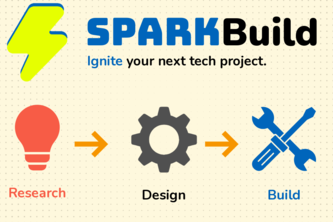
SparkBuild, as described by its author, is a self-reported tool that converts plain-language tech ideas into structured, guided project workflows. It includes research, sourcing, step-by-step lessons, and 3D visualization — all designed for beginners or non-experts who want to build hardware projects but lack experience or direction.
What changed
The author states they built this as a response to the friction many people face when starting their first tech project. The tool is described as local-first, private, and deterministic in its execution, with no reliance on cloud infrastructure during core operations.
Single most important open question — the commercial due-diligence read
Is there evidence of traction or product-market fit beyond the author’s own use case? The description does not indicate any customers, revenue, or adoption data. It is unclear whether this tool has moved beyond a personal prototype or hackathon demo into a scalable offering.
What The Product Actually Is
The description states that SparkBuild turns tech ideas into complete workflows including:
- Research and planning (via an LLM-based agent)
- A ranked bill of materials with sourcing links
- Step-by-step visual lessons (with 3D guides and circuit diagrams)
- An interactive 3D assembly view built using React/Three.js
It is described as running local-first, meaning it can function without cloud dependencies, using local inference via Ollama and deterministic pipelines. The system includes a deterministic fixture mode for demos and testing.
The tool uses:
- Node.js + React
- PostgreSQL + pgvector
- Ollama (for LLMs)
- Docker Compose (optional full stack)
- n8n for ingestion workflows
- OpenSCAD for validation
It is a monorepo built with TypeScript, Zod schemas, and streaming SSE APIs.
Inference The product appears to be a prototype or proof-of-concept tool aimed at making hardware engineering more accessible through AI-assisted guidance. It is not described as having any commercial or production-ready features beyond what was demonstrated in the hackathon submission.
Positioning & Claim Evolution
The author positions SparkBuild as:
- A way to demystify the building process of tech projects.
- An accessible entry point for beginners, hobbyists, and students.
- A tool that removes friction from idea-to-build workflows.
- A local-first, private solution that avoids cloud-based data handling.
It is described as:
- Using smarter models like GPT 5.6 (self-reported version number).
- Leveraging typed contracts, citations, and deterministic pipelines to keep AI outputs grounded.
- Designed for non-experts, not professional engineers.
Inference The positioning reflects a focus on accessibility and education rather than enterprise or high-volume use cases. It is framed as a tool for curiosity-driven learners, not commercial product development.
Target Customer & ICP
The description states that SparkBuild targets:
- Engineering students
- Hobbyists
- People from other fields who are curious about how things work
- Anyone who wants to build tech projects but lacks experience or direction
It is explicitly stated that the tool is designed for beginners, with a focus on making engineering approachable.
Inference The ICP (Ideal Customer Profile) seems to be individuals or small groups seeking to learn and build simple hardware projects — not businesses or large teams. There is no indication of B2B or enterprise targeting.
Business Model & Pricing Evidence
There is no evidence in the description of a business model, pricing structure, monetization strategy, or any revenue streams.
The author describes the tool as:
- A hackathon submission
- A local-first prototype
- Not yet production-ready
Inference No commercial model is evident. The project appears to be an experimental or educational effort, not a commercial product.
Technical & Delivery Signals
The system is described as:
- Local-first, with optional Docker support
- Uses typed contracts (Zod) and schema validation across components
- Employs deterministic pipelines for spatial transforms
- Leverages Ollama for local LLM inference
- Uses pgvector + PostgreSQL for data storage and embeddings
- Built with React/Three.js, Node.js, TypeScript
It includes:
- A research agent
- A sourcing engine
- A workshop UI
- A 3D inspection module
The system is said to support:
- Cited research
- Typed streaming progress
- Background ingestion via n8n
- A fixture mode for demos and testing
Inference The technical architecture shows a strong emphasis on determinism, privacy, and local execution, which may be attractive for educational or personal use. However, there is no evidence of scalability, performance metrics, or production-grade infrastructure.
Traction & Maturity Signals
The description states:
- This was built for the OpenAI 2026 hackathon
- It is a single-person project (Tylor Duong)
- It includes a deterministic fixture mode, but no mention of live or production use
- The author mentions what's next, including persistent projects, richer feedback, and production readiness — suggesting it’s not yet in a mature state
There is no evidence of:
- Customers
- Revenue
- Adoption
- Usage metrics
- Product-market fit
Inference This is an early-stage prototype or demo. It has not demonstrated any traction or commercial viability.
Competitive Context
The description does not mention any competitors directly. However, based on the stated functionality (AI-assisted project planning, sourcing, and 3D visualization), it may relate to:
- Educational platforms for engineering
- Hardware design tools with AI assistance
- Maker-focused learning ecosystems
Inference No competitive analysis is provided in the description. The tool’s niche appears to be focused on beginner accessibility, which could overlap with general-purpose maker or educational platforms, but no specific competitors are named.
Open Questions & Risks
- No traction or commercialization evidence: The project is described as a hackathon submission and personal prototype.
- Single-person team: No indication of scaling beyond one founder.
- Unproven market demand: There’s no evidence that users actually want this tool beyond the author’s own experience.
- Limited scope: The system is described as local-first, which may limit its appeal to broader audiences or enterprise use cases.
- Self-reported tech stack: No independent verification of performance or architecture claims.
Inference The project lacks commercial viability indicators and appears to be in an early prototype phase. It has not demonstrated any real-world adoption or monetization strategy.
Questions the description leaves open
- What is the actual user base beyond yourself?
- Have you tested this with non-engineering users, and what feedback did you get?
- Are there any plans to monetize or scale this beyond a personal tool?
- How do you intend to handle data reliability and sourcing accuracy at scale?
- What are your thoughts on expanding beyond hardware projects into software or other domains?
- Is there any plan for user-generated content, community features, or collaboration tools?
Overall Assessment
Not evidenced — There is no evidence of revenue, customers, traction, or commercial viability. The project is described as a hackathon submission and personal prototype with no indication of market demand or scalability.
Confidence level Low This is a self-reported, unverified description of a tool that appears to be in an early-stage prototype phase. It has not demonstrated any signs of product-market fit or commercial traction. Any investment or partnership decision would require further evidence of adoption, user feedback, and business model development.
User Stories BotA demo video on every pull request
Get a demo video on every new feature
GitHub App that watches your pull requests and records a narrated, captioned demo.
Save time on demo prep and make informed decisions faster with a video walkthrough of every new feature.
Source
Submitted to the OpenAI 2026 hackathon on Devpost. Project home on Devpost. Back to the full gallery on Devpost.
This competitive analysis was produced by top-founders.com (opens in a new tab)
Generated by a language model from this project's public Devpost page — its tagline, the author's own write-up and any built-with tags listed there — as captured in August 2026. Short quotations are the author's words. It is an opinion on the idea as a business, not on the people behind it, and it reflects the description as published then. If the project has moved on, request a correction below. The analysis is not independent research and contains no verified traction, revenue or customer data.
An independent guide by KFG International LLC — not affiliated with, endorsed by, or connected to Devpost or OpenAI.