

Archive position — measured, not model output
0 likes on Devpost
2,263 of the 7,850 archived projects have more likes, and 5,587 share exactly 0 — so this project's #4,395 place in the like-ranked listing is a tie-break inside that group, not a ranking.
Projects (log scale)
Likes on Devpost. ▲ marks this project's group.
Show the figures
| Likes | Projects | Share of archive |
|---|---|---|
| 0 | 5,587 | 71.2% |
| 1 | 1,758 | 22.4% |
| 2 | 284 | 3.6% |
| 3–4 | 132 | 1.7% |
| 5–9 | 75 | 1.0% |
| 10+ | 14 | 0.2% |
 User Stories BotA demo video on every pull request
Get a demo video on every new feature
GitHub App that watches your pull requests and records a narrated, captioned demo.
Save time on demo prep and make informed decisions faster with a video walkthrough of every new feature.
Executive Summary
What the company appears to be
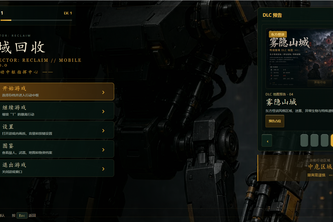
GREYSECTOR: RECLAIM is a single-person indie game project built by vanillaherb van. The author describes it as a top-down extraction shooter with survival and resource management elements, featuring a duck-like protagonist in an industrial battlefield. It was submitted to the OpenAI 2026 hackathon.
What changed
The project evolved from a basic HTML prototype into a more complex game with combat systems, loot mechanics, multiple maps, UI components, and cross-platform support (browser, Android). The author notes iterative improvements in performance, UI layout, and architecture as the project matured.
Single most important open question — the commercial due-diligence read
Is there any evidence that this project has moved beyond a personal learning or experimental phase into a product with potential for monetization or further development? There is no evidence of revenue, users, customers, or traction beyond the author’s own account.
What The Product Actually Is
The description states:
- GREYSECTOR: RECLAIM is a top-down extraction shooter.
- Players enter dangerous zones, search for supplies, fight enemies and bosses, and attempt to reach an extraction point while managing limited resources.
- It includes systems such as player movement, aiming, shooting, reloading, rolling; weapons (pistols, assault rifles), medical kits, grenades, flashbangs; enemy tracking, projectiles, damage systems; loot containers, backpacks, secure storage; maps with buildings and high-risk zones; raid results, economy system, local save data.
- The game uses JavaScript for logic and Three.js with WebGL for rendering.
- It started as a single-file HTML prototype and was later packaged into an Android APK.
Inference The product is described as a playable prototype or early-stage indie game, not yet a commercial product. It has gameplay systems but lacks evidence of monetization or user adoption.
Positioning & Claim Evolution
The description states:
- The author wanted to create something more accessible and lightweight than complex extraction games.
- The character is cute (duck-like) but the combat feels tense, with a contrast between lighthearted design and serious gameplay.
- The tagline “Scavenge the danger. Extract alive.” reflects core themes of risk, reward, and survival.
Inference The positioning appears to be an indie survival shooter that balances accessibility with strategic depth. However, there is no evidence of market positioning beyond self-description or any external validation of its appeal.
Target Customer & ICP
The description states:
- The game targets players interested in tactical survival games and extraction shooters.
- It aims to be more accessible than traditional military-themed games.
- It supports both desktop and mobile platforms, including WeChat’s landscape browser behavior.
Inference The target customer is likely casual or indie gamers who enjoy top-down tactical gameplay. However, no evidence exists of specific user segments, demographics, or actual users.
Business Model & Pricing Evidence
The description states:
- The game was built as a prototype and later packaged into an Android APK.
- It uses local storage for save data.
- No mention of monetization strategies, in-app purchases, subscriptions, or pricing models.
Inference There is no evidence of any business model or pricing strategy. The project remains self-reported as a personal development effort without commercial intent.
Technical & Delivery Signals
The description states:
- Built with HTML5, JavaScript, Three.js, WebGL.
- Supports both desktop and mobile platforms (keyboard/mouse and touch controls).
- UI layout was adapted for different screen ratios and safe areas.
- Performance optimization techniques were used to manage enemy count and visual effects.
- The project evolved from a single-file architecture to modular systems.
- Cross-platform compatibility was considered through runtime layer separation.
Inference Technical delivery shows strong engineering effort, especially in mobile adaptation and performance management. However, no evidence of production deployment or scalability beyond prototype stage.
Traction & Maturity Signals
The description states:
- The project began as a single-file HTML prototype.
- It has evolved through repeated testing and version updates.
- It was submitted to the OpenAI 2026 hackathon.
- The author continues developing it, planning future improvements and architecture migration.
Inference There is no evidence of user traction, downloads, or engagement metrics. The maturity level reflects a personal learning project rather than a product with market validation.
Competitive Context
The description states:
- Inspired by extraction shooters, tactical survival games, and lightweight indie games.
- Aims to be more accessible than complex systems.
- Uses a duck-like character instead of traditional military protagonists.
Inference No evidence of competitive analysis or comparison to existing products. The author does not reference competitors or market positioning beyond genre affinity.
Open Questions & Risks
The description states:
- The project started as a single-file prototype and evolved into modular systems.
- Mobile UI layout was frequently revised due to device differences.
- Performance challenges were addressed through optimization techniques.
- Cross-platform support required rethinking architecture.
- The author emphasizes that finishing a project involves repeated problem discovery and redesign.
Inference Key risks include lack of commercial traction, unclear monetization strategy, limited scalability beyond prototype stage, and dependency on one developer. No evidence of team expansion or external investment.
Questions the description leaves open
- What is the current status of the project? Is it still under active development?
- Have you considered any monetization strategies for this game?
- Are there plans to expand beyond a single-player experience or add multiplayer features?
- How do you plan to scale the project if it gains traction?
- What are your long-term goals for GREYSECTOR: RECLAIM?
Overall Assessment
The description states:
- The project is an indie game built by a single developer.
- It has evolved from a prototype into a more complex system with multiple features.
- The author continues to develop it and plans future improvements.
Inference There is no evidence of commercial viability, revenue, or traction. This appears to be a personal learning or experimental project without clear investment potential or partnership opportunity at this time.
User Stories BotA demo video on every pull request
Get a demo video on every new feature
GitHub App that watches your pull requests and records a narrated, captioned demo.
Save time on demo prep and make informed decisions faster with a video walkthrough of every new feature.
Source
Submitted to the OpenAI 2026 hackathon on Devpost. Project home on Devpost. Back to the full gallery on Devpost.
This competitive analysis was produced by top-founders.com (opens in a new tab)
Generated by a language model from this project's public Devpost page — its tagline, the author's own write-up and any built-with tags listed there — as captured in August 2026. Short quotations are the author's words. It is an opinion on the idea as a business, not on the people behind it, and it reflects the description as published then. If the project has moved on, request a correction below. The analysis is not independent research and contains no verified traction, revenue or customer data.
An independent guide by KFG International LLC — not affiliated with, endorsed by, or connected to Devpost or OpenAI.