

Archive position — measured, not model output
0 likes on Devpost
2,263 of the 7,850 archived projects have more likes, and 5,587 share exactly 0 — so this project's #4,268 place in the like-ranked listing is a tie-break inside that group, not a ranking.
Projects (log scale)
Likes on Devpost. ▲ marks this project's group.
Show the figures
| Likes | Projects | Share of archive |
|---|---|---|
| 0 | 5,587 | 71.2% |
| 1 | 1,758 | 22.4% |
| 2 | 284 | 3.6% |
| 3–4 | 132 | 1.7% |
| 5–9 | 75 | 1.0% |
| 10+ | 14 | 0.2% |
 User Stories BotA demo video on every pull request
Get a demo video on every new feature
GitHub App that watches your pull requests and records a narrated, captioned demo.
Save time on demo prep and make informed decisions faster with a video walkthrough of every new feature.
Executive Summary
What the company appears to be
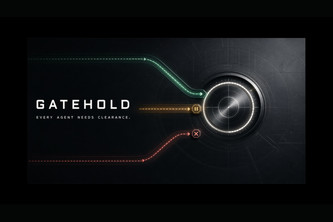
Gatehold is a self-reported tool for managing cooperative AI coding agents on a single developer workstation. It positions itself as "local air-traffic control" that governs workstream ownership, resource allocation (e.g., ports, simulators), and cleanup processes in deterministic, fail-closed ways.
What changed
The project was submitted to the OpenAI 2026 Build Week hackathon. It evolved from earlier prototypes at EVL Labs, with a focus on preventing collisions between parallel agents while maintaining local control over resources and process lifecycle.
Single most important open question
Is there any evidence of actual usage or adoption beyond the author’s own development environment?
What The Product Actually Is
The description states that Gatehold is a local control plane for cooperative AI coding agents, designed to manage workstream ownership, resource exclusivity, and cleanup on one developer machine. It operates with deterministic policies around capacity waiting (FIFO), TTL-bound leases, heartbeat tracking, and verified cleanup before release.
It includes:
- A Python 3.12-based daemon using FastAPI, Pydantic, SQLite, psutil, and uv.
- A CLI and local service that run without an OpenAI key.
- Optional integration with GPT-5.6, which is limited to adding semantic holds but not granting clearance or allocating resources.
- A process-group supervisor for governed command execution.
- An optional macOS simulator adapter using xcrun simctl and exact UDID state machines.
- A public dashboard labeled REPLAY, distinct from live-local mode.
The product boundary is defined as deciding whether cooperative work may start, retaining a local runtime lane, and ensuring deterministic cleanup. It does not claim to be the first or only tool for parallel agents but focuses on the intersection of ownership, capacity admission, named runtime lanes, and fail-closed cleanup.
Inference The system appears built around enforcing invariants through local policy rather than relying on AI models for decision-making beyond semantic hold checks.
Positioning & Claim Evolution
The author claims Gatehold is “local air-traffic control for coding agents.” This metaphor suggests a centralized, deterministic coordination mechanism that prevents conflicts and ensures safe resource use across parallel agent workflows.
It distinguishes itself from other tools by focusing on:
- Product-work ownership
- Machine-capacity admission
- Named runtime lanes
- Fail-closed owned cleanup
The project also explicitly states it does not claim to be the first or only tool for managing parallel agents, but instead solves a specific intersection of problems related to coordination and safety in shared workstations.
Inference The positioning reflects an attempt to carve out a niche around deterministic control over local resources, especially where AI agents might otherwise interfere with each other due to lack of coordination.
Target Customer & ICP
The description states that Gatehold was built for a solo developer or small team running cooperative coding agents on one machine. It assumes the user is working in a shared physical environment and needs to manage access to exclusive resources like simulators, ports, or browser profiles.
It does not describe any enterprise customers or broader B2B use cases beyond individual developers or small teams.
Inference The ICP seems narrowly defined as solo developers or small teams using AI agents locally — likely in environments where resource contention is a real concern but there’s no need for cloud-scale coordination.
Business Model & Pricing Evidence
There is no evidence of any business model, pricing structure, monetization strategy, or revenue streams mentioned in the description. The product is described as working without an OpenAI key and includes optional integrations that do not appear to involve paid services.
Inference No commercial model has been presented beyond self-hosted open-source-like functionality.
Technical & Delivery Signals
The system uses:
- Python 3.12, FastAPI, Pydantic, SQLite, psutil, uv
- React 19, TypeScript, vinext for UI
- macOS simulator adapter using xcrun simctl and exact UDID state machine
- Optional OpenAI Responses API integration with GPT-5.6
- A CLI interface supporting claim, status, heartbeat, release, governed run, and demo commands
- Process-group supervision with durable identity and secret-derived provenance
- Cleanup using bounded TERM then KILL after verification
- Browser-profile deletion requires exact marker; port release requires bind-free verification
It supports:
- Deterministic FIFO waiting for capacity
- TTL-bound leases with heartbeat and cleanup paths
- Fail-closed lifecycle: ACTIVE → CLEANUP_PENDING → RELEASED or EXPIRED
- Quarantine for partial or ambiguous cleanup
- ProofLatch evaluation after checks (separate from Gatehold)
Inference The technical stack suggests a lightweight, local-first system built around deterministic state machines and process control. It emphasizes safety and correctness over scalability.
Traction & Maturity Signals
There is no evidence of traction, customers, revenue, or adoption beyond the author’s own development environment. The project is described as a submission to a hackathon and lacks any indication of real-world usage or deployment outside of testing scenarios.
The release inventory includes:
- 247 Python contract cases
- Three Node web contract tests
- Ruff, Pyright, TypeScript, ESLint, privacy and link checks
- Dependency audit, production build, reproducible judge route
But these are internal artifacts, not indicators of product-market fit or user engagement.
Inference The maturity level reflects a prototype or proof-of-concept, likely developed for a hackathon context. No evidence exists of sustained usage or market validation.
Competitive Context
The description states that worktree managers, multi-agent workspaces, process governors, queues, and cleanup utilities already solve valuable parts of the problem, but Gatehold focuses on the intersection of:
- Product-work ownership
- Machine-capacity admission
- Named runtime lanes
- Fail-closed owned cleanup
It explicitly differentiates itself from a related project called ProofLatch, which evaluates release evidence after checks, whereas Gatehold prevents collisions before work starts.
No mention is made of competitors beyond this distinction or any competitive landscape analysis.
Inference The competitive positioning is narrow and focused on local coordination in single-machine environments. There is no evidence of broader market awareness or competitive dynamics.
Open Questions & Risks
- No commercial traction or adoption: The product appears to exist only as a prototype or hackathon submission.
- Limited scope: Designed for solo developers or small teams; no indication of enterprise scalability or broader use cases.
- Dependency on local control: Relies heavily on deterministic, local policies — may not scale beyond single-machine environments.
- Unclear threat model for remote coordination: Future plans include "opt-in remote coordination" but lack details on authentication and security.
- No revenue, pricing, or monetization strategy: No indication of how the product would generate value or be sold.
Inference The risk is high that this remains a conceptual or experimental tool without commercial viability or real-world application beyond its creator’s own workflow.
Questions the description leaves open
- What specific use cases led to building Gatehold? Was it a personal pain point or part of a larger project?
- Have you tested Gatehold in any real-world scenarios outside of your own development setup?
- How do you plan to expand beyond local-only operation if needed?
- What are the key assumptions about how AI agents will interact with this system in practice?
- Are there any plans for integrating with existing CI/CD pipelines or IDEs?
- What is the long-term vision for monetization or product evolution?
- How do you intend to handle edge cases like agent crashes or unclean shutdowns?
- Can you clarify how the GPT-5.6 integration works in practice and what role it plays beyond semantic hold?
Overall Assessment
Not evidenced: There is no evidence of revenue, customers, traction, or commercial viability to support an investment or partnership decision.
The project appears to be a self-contained prototype, likely built for a hackathon context. It demonstrates technical capability in local coordination and process control but lacks any indication of market demand, product-market fit, or scalable business model.
Confidence level: Low — based entirely on self-reported information with no external validation or data points.
Conclusion: Gatehold is a proof-of-concept tool for managing AI agents locally. It shows promise in solving coordination challenges within shared workstations but does not yet demonstrate commercial readiness or traction. Any investment or partnership would require further evidence of real-world usage, scalability, and monetization strategy.
User Stories BotA demo video on every pull request
Get a demo video on every new feature
GitHub App that watches your pull requests and records a narrated, captioned demo.
Save time on demo prep and make informed decisions faster with a video walkthrough of every new feature.
Source
Submitted to the OpenAI 2026 hackathon on Devpost. Project home on Devpost. Back to the full gallery on Devpost.
This competitive analysis was produced by top-founders.com (opens in a new tab)
Generated by a language model from this project's public Devpost page — its tagline, the author's own write-up and any built-with tags listed there — as captured in August 2026. Short quotations are the author's words. It is an opinion on the idea as a business, not on the people behind it, and it reflects the description as published then. If the project has moved on, request a correction below. The analysis is not independent research and contains no verified traction, revenue or customer data.
An independent guide by KFG International LLC — not affiliated with, endorsed by, or connected to Devpost or OpenAI.