

Archive position — measured, not model output
0 likes on Devpost
2,263 of the 7,850 archived projects have more likes, and 5,587 share exactly 0 — so this project's #4,267 place in the like-ranked listing is a tie-break inside that group, not a ranking.
Projects (log scale)
Likes on Devpost. ▲ marks this project's group.
Show the figures
| Likes | Projects | Share of archive |
|---|---|---|
| 0 | 5,587 | 71.2% |
| 1 | 1,758 | 22.4% |
| 2 | 284 | 3.6% |
| 3–4 | 132 | 1.7% |
| 5–9 | 75 | 1.0% |
| 10+ | 14 | 0.2% |
 User Stories BotA demo video on every pull request
Get a demo video on every new feature
GitHub App that watches your pull requests and records a narrated, captioned demo.
Save time on demo prep and make informed decisions faster with a video walkthrough of every new feature.
Executive Summary
What the company appears to be
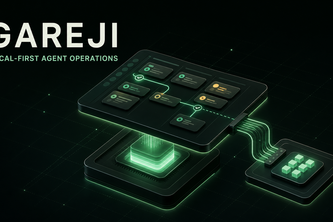
Gareji AI is a self-reported local-first tool designed for developers or technical users who want to manage and inspect Codex agent workflows with visibility into progress, evidence, and decision points. It consists of three components: Gareji Board (UI), Gareji Core (CLI trust layer), and Gareji MCP (local bridge). The system is built around a “local-first” architecture that emphasizes human control over automation.
What changed
The author reports building this tool in response to personal frustration with opaque agent workflows, particularly around visibility into execution status and evidence. They structured the solution as a three-part system with distinct responsibilities across repositories, using Rust for core logic and Tauri + JavaScript for UI.
Single most important open question
Is there any evidence of actual usage or adoption beyond the author’s own development environment? The description does not indicate whether others are using Gareji AI, nor does it show traction, revenue, or customer feedback.
What The Product Actually Is
The description states that Gareji AI is composed of three parts:
- Gareji Board: A user interface for viewing projects, work items, agent runs, approvals, evidence, and attention items.
- Gareji Core: A CLI-only local trust layer managing capability policy, project registration, execution, diagnostics, and progress records.
- Gareji MCP: A small local bridge allowing Codex access to Gareji tools without moving logic or security decisions into the MCP server.
The system enforces a workflow where an approach can succeed but must still go through an audit stage before being marked as complete. The demo runs in a disposable workspace, and all data shown is labeled as sample data.
Inference: The tool appears to be a developer-facing local-first platform for inspecting and controlling Codex-based automation workflows, with emphasis on transparency and human oversight.
Positioning & Claim Evolution
The author positions Gareji AI as:
- A local-first operations desk.
- A trust layer for dependable Codex agent workflows.
- A tool that allows users to see agent progress, inspect evidence, and remain in control of final decisions.
It is described as addressing a specific pain point: the lack of visibility into what agents are doing, why they stopped, or whether “done” was actually supported by evidence.
Inference: The positioning reflects an early-stage developer tool aimed at improving trust and transparency in AI-assisted coding workflows. It is not positioned for enterprise adoption or mass-market use.
Target Customer & ICP
The description does not name specific customers or personas. However, it implies:
- Developers working with Codex agents.
- Users who want to maintain control over automated processes.
- Technical users who value local execution and visibility into agent behavior.
Inference: The likely target is a niche group of developers or technical teams using AI coding tools who prioritize transparency and auditability in their workflows.
Business Model & Pricing Evidence
There is no evidence of pricing, monetization strategy, or business model in the description. The project is presented as a hackathon submission with no indication of commercial intent or revenue streams.
Not evidenced: No information about how Gareji AI would be sold, licensed, or funded.
Technical & Delivery Signals
The author reports:
- Three separate repositories for Board (UI), Core (CLI), and MCP (bridge).
- Implementation in Rust, with Tauri + JavaScript for UI.
- Use of Codex throughout development, debugging, test writing, documentation, and code reviews.
- GPT-5.6 used for reasoning across components but not for architectural decisions.
- Public repositories under Apache-2.0 license.
- Demo includes setup instructions and tests.
Inference: The technical stack suggests a focus on performance, modularity, and local execution. The use of multiple languages and tools indicates a deliberate design for clarity and testability.
Traction & Maturity Signals
The description states:
- This is a hackathon submission.
- It includes a demo, which is resettable and labeled as sample data.
- No mention of users, customers, or real-world usage beyond the author’s own work.
- The demo runs in a disposable workspace.
Not evidenced: No evidence of traction, adoption, or user feedback. The tool has not been released to the public or integrated into any production environment.
Competitive Context
The description does not reference competitors or similar tools. It is unclear whether Gareji AI operates within an existing marketplace or ecosystem of agent management platforms.
Not evidenced: No competitive landscape or positioning relative to other tools in the space.
Open Questions & Risks
- No traction or adoption: The tool is described only as a hackathon project with no evidence of real-world usage.
- Single founder: The team size is listed as 1, suggesting limited resources for scaling or support.
- Unproven market fit: There is no indication that others have expressed interest in this solution beyond the author’s own needs.
- Limited commercial viability: No pricing, monetization, or business model described.
Inference: The project lacks any signs of commercial traction or product-market fit. It remains an experimental prototype with no clear path to market adoption.
Questions the description leaves open
- What specific problems are you trying to solve for users beyond your own experience?
- Have you tested this tool with other developers or teams? If so, what feedback did you get?
- How do you plan to make installation easier, given that users currently need to build components from source?
- Are there any plans to integrate with existing agent platforms or tools (e.g., OpenAI, LangChain)?
- What is the long-term vision for Gareji AI? Is it intended to be a standalone tool or part of a larger platform?
Overall Assessment
Not evidenced: No data on valuation, funding rounds, revenue, or customer base exists.
This project appears to be an early-stage prototype submitted as part of a hackathon. It addresses a potential need for visibility in AI agent workflows but lacks any evidence of traction, adoption, or commercial viability.
Confidence level: Low — based entirely on self-reported information with no external validation or user data.
User Stories BotA demo video on every pull request
Get a demo video on every new feature
GitHub App that watches your pull requests and records a narrated, captioned demo.
Save time on demo prep and make informed decisions faster with a video walkthrough of every new feature.
Source
Submitted to the OpenAI 2026 hackathon on Devpost. Project home on Devpost. Back to the full gallery on Devpost.
This competitive analysis was produced by top-founders.com (opens in a new tab)
Generated by a language model from this project's public Devpost page — its tagline, the author's own write-up and any built-with tags listed there — as captured in August 2026. Short quotations are the author's words. It is an opinion on the idea as a business, not on the people behind it, and it reflects the description as published then. If the project has moved on, request a correction below. The analysis is not independent research and contains no verified traction, revenue or customer data.
An independent guide by KFG International LLC — not affiliated with, endorsed by, or connected to Devpost or OpenAI.