

Archive position — measured, not model output
0 likes on Devpost
2,263 of the 7,850 archived projects have more likes, and 5,587 share exactly 0 — so this project's #4,252 place in the like-ranked listing is a tie-break inside that group, not a ranking.
Projects (log scale)
Likes on Devpost. ▲ marks this project's group.
Show the figures
| Likes | Projects | Share of archive |
|---|---|---|
| 0 | 5,587 | 71.2% |
| 1 | 1,758 | 22.4% |
| 2 | 284 | 3.6% |
| 3–4 | 132 | 1.7% |
| 5–9 | 75 | 1.0% |
| 10+ | 14 | 0.2% |
 User Stories BotA demo video on every pull request
Get a demo video on every new feature
GitHub App that watches your pull requests and records a narrated, captioned demo.
Save time on demo prep and make informed decisions faster with a video walkthrough of every new feature.
Executive Summary
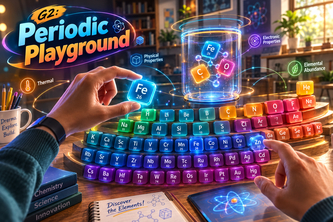
The company appears to be a solo project, G2: Periodic Playground, an augmented-reality (AR) educational tool for chemistry students. The author describes it as a spatial learning experience that allows users to interact with the periodic table in 3D using hand gestures and AR. It includes two modes: "Periodic Kitchen" for compound discovery and "Periodic Properties" for exploring trends.
What changed: The project is presented as a proof-of-concept built during OpenAI Build Week, leveraging AI tools like Codex and GPT-5.6, along with AR development frameworks such as Lens Studio and Spectacles 2024.
The single most important open question: Is there any evidence of traction, revenue, or customer adoption beyond the author's self-reported description?
Analysis basis: This report is based entirely on the self-reported project description provided by the author. No external verification or historical data is available. All claims are stated by the author and not independently confirmed.
What The Product Actually Is
- The description states that G2: Periodic Playground is an AR application for Spectacles 2024.
- It uses hand-tracking interactions (pinch, grab, stir) to allow users to explore the periodic table in 3D.
- The product has two core modes:
- Periodic Kitchen: Users can pinch elements from the table and place them into a mixer; compatible compounds are revealed through visual cues on the table.
- Periodic Properties: A radial menu system shows physical, electronic, and thermal properties of elements to help learners notice trends.
- The experience begins with a hand gesture (fist → open palm), after which the periodic table appears in real space.
- It uses data stored in Snap Cloud, powered by Supabase, for compound and property information.
Inference: This is an educational AR tool aimed at spatial learning. It is not a commercial product but rather a prototype or hackathon submission.
Positioning & Claim Evolution
- The author positions the product as a way to bring the periodic table out of textbooks and into real-world interaction.
- The tagline says: “Periodic Table in AR like seen never before, out of the textbook and into your world.”
- The project claims to transform chemistry education from memorization into experimentation.
- It aims to make chemistry feel less like a wall of facts and more like a place for small, memorable “what happens if…” moments.
Claim vs. Fact: These are self-reported positioning statements. No evidence of actual market traction or user feedback is provided.
Target Customer & ICP
- The description states that the target audience is students learning chemistry.
- It emphasizes a focus on spatial learning, suggesting the tool is designed for learners who benefit from tactile and visual engagement.
- The experience targets users who are likely to use Spectacles 2024 hardware.
Inference: The ICP appears to be students or educators using AR-enabled devices, particularly those interested in interactive science education. No specific segment data is provided.
Business Model & Pricing Evidence
- There is no evidence of a business model or pricing structure.
- The project is described as a hackathon submission built during OpenAI Build Week.
- No mention of monetization, licensing, or distribution plans.
Not evidenced: No indication of how the product would be sold or funded.
Technical & Delivery Signals
- Built in Lens Studio for Spectacles 2024, using technologies like:
- Hand-tracking
- Pinch interaction
- Spatial learning UI components
- TypeScript logic
- Supabase and Snap Cloud for data storage
- Uses Codex and GPT-5.6 to assist with engineering tasks.
- Features include animated entrances, mixer feedback, spatial cards, radial menus, and progressive hints.
Inference: The technical stack suggests a strong focus on AR UX and AI-assisted development. However, no evidence of scalability or production readiness is given.
Traction & Maturity Signals
- The project was submitted to the OpenAI 2026 hackathon.
- It is described as a first-time use of Codex and GPT, indicating early-stage experimentation.
- No mention of user testing, beta programs, or adoption metrics.
- The author notes that it currently uses a static dataset, with plans to expand data fetching capabilities.
Not evidenced: No evidence of traction, usage numbers, or customer feedback.
Competitive Context
- The description references ptable.com as an inspiration source for thoughtful periodic-table tools.
- It positions itself within the educational AR space, especially for chemistry education.
- No mention of direct competitors or market positioning against existing tools.
Not evidenced: No competitive analysis, pricing comparison, or market share data is provided.
Open Questions & Risks
- The project is a solo effort (1 person team), which raises concerns about scalability and long-term maintenance.
- It’s presented as a hackathon submission with no indication of commercial viability or product-market fit.
- There is no evidence of revenue, customers, or funding, nor any mention of plans to move beyond prototype status.
- The use of AI tools like Codex and GPT-5.6 may raise questions about whether the project is truly innovative or simply leveraging existing tooling.
Inference: Risk of limited impact due to lack of traction, scalability issues, and absence of a clear go-to-market strategy.
Questions the description leaves open
- What is your plan for scaling beyond this prototype?
- Are there any users or educators currently testing the product?
- How do you intend to monetize or distribute the tool?
- What are the technical limitations of the current implementation, and how will they be addressed?
- Have you considered integrating with existing educational platforms or curricula?
Overall Assessment
- The project is described as a proof-of-concept built during a hackathon.
- There is no evidence of traction, revenue, or customer adoption.
- It is not yet a commercial product but rather an experimental tool with potential for future development.
Assessment: Not ready for investment or partnership at this stage. The project lacks key signals of maturity and market readiness. Further validation through user testing, data collection, or product iteration would be required before considering deeper engagement.
User Stories BotA demo video on every pull request
Get a demo video on every new feature
GitHub App that watches your pull requests and records a narrated, captioned demo.
Save time on demo prep and make informed decisions faster with a video walkthrough of every new feature.
Source
Submitted to the OpenAI 2026 hackathon on Devpost. Project home on Devpost. Back to the full gallery on Devpost.
This competitive analysis was produced by top-founders.com (opens in a new tab)
Generated by a language model from this project's public Devpost page — its tagline, the author's own write-up and any built-with tags listed there — as captured in August 2026. Short quotations are the author's words. It is an opinion on the idea as a business, not on the people behind it, and it reflects the description as published then. If the project has moved on, request a correction below. The analysis is not independent research and contains no verified traction, revenue or customer data.
An independent guide by KFG International LLC — not affiliated with, endorsed by, or connected to Devpost or OpenAI.