

Archive position — measured, not model output
0 likes on Devpost
2,263 of the 7,850 archived projects have more likes, and 5,587 share exactly 0 — so this project's #4,254 place in the like-ranked listing is a tie-break inside that group, not a ranking.
Projects (log scale)
Likes on Devpost. ▲ marks this project's group.
Show the figures
| Likes | Projects | Share of archive |
|---|---|---|
| 0 | 5,587 | 71.2% |
| 1 | 1,758 | 22.4% |
| 2 | 284 | 3.6% |
| 3–4 | 132 | 1.7% |
| 5–9 | 75 | 1.0% |
| 10+ | 14 | 0.2% |
 User Stories BotA demo video on every pull request
Get a demo video on every new feature
GitHub App that watches your pull requests and records a narrated, captioned demo.
Save time on demo prep and make informed decisions faster with a video walkthrough of every new feature.
Executive Summary
Company: GAIA GUARD
Self-reported basis: The entire analysis is based on a single project description provided by the author, submitted to the OpenAI 2026 hackathon on Devpost. No external verification or archived data is available.
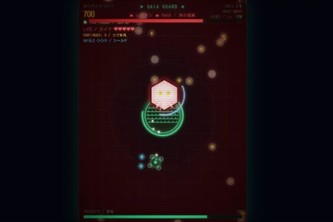
What it appears to be: A non-coder-developed browser-based game built with AI tools (Codex, GPT-5.6), where players guide wildlife safely home without harming them. It includes five levels, a boss fight, and a poetic ending.
What changed: The author states that this is the first release of a vision for future drone-based community support systems, inspired by a tribute to a childhood friend.
Single most important open question: Is there any evidence of gameplay traction, revenue, or user adoption beyond the single developer's self-report?
What The Product Actually Is
The description states that GAIA GUARD is a browser-based game, built using HTML5, JavaScript, Canvas, and AI tools (Codex, GPT-5.6). It is described as a "gentle farm-defense game" where players guide wildlife back to the mountains without harming them.
The game includes:
- A drone pilot mechanic
- Five increasingly difficult areas
- Boss fights with rotating partial shields
- A "thank-you coin" system for collecting rewards
- A continue system for replayability
- An opening cinematic and poetic ending
Inference: The product is a single-player, browser-based game, likely built as a prototype or hackathon submission. It does not appear to be an enterprise or commercial product.
Positioning & Claim Evolution
The author positions GAIA GUARD as:
- A tribute to a childhood friend who loved games
- A non-violent defense game that emphasizes protection over destruction
- A simulation for the future, where players may one day become real-world guardians
The claim evolution shows:
- The initial idea: a game built by a non-coder using AI tools.
- The current version: a playable prototype with five levels and boss mechanics.
- The vision: a future where drones respond to SOS calls in communities, trained by gameplay.
Inference: The positioning is personal, narrative-driven, and aspirational, not commercial or product-market-fit focused.
Target Customer & ICP
The description does not state the target customer or ideal customer profile (ICP). It only mentions:
- A single developer (kei KEIKO ONO) as the creator
- The game is built for personal expression and tribute
- The author envisions a future where players may become real-world guardians
Inference: No clear ICP is evident. The game appears to be a personal project, not a product targeting specific users or markets.
Business Model & Pricing Evidence
The description does not mention:
- Any pricing model
- Revenue streams
- Monetization strategy
- Subscription or in-game purchases
Inference: There is no evidence of a business model. The game appears to be a personal or hackathon project, not a commercial product.
Technical & Delivery Signals
The author states:
- The game was built using HTML5, JavaScript, Canvas
- Tools used: Codex, GPT-5.6, GitHub, Claude
- The game includes real-browser playtesting, difficulty tuning, mobile touch improvements, bilingual UI
Inference: The project is a technical prototype, likely built in a short timeframe (e.g., hackathon). It uses AI tools to assist with development but does not appear to be a scalable or production-ready product.
Traction & Maturity Signals
The description states:
- The game was submitted to the OpenAI 2026 hackathon
- It is described as a first release of a larger vision
- No mention of user adoption, downloads, or engagement metrics
Inference: There is no evidence of traction, user base, or market validation. The project appears to be in an early prototype stage.
Competitive Context
The description does not mention:
- Competitors
- Similar games or platforms
- Market positioning relative to other defense or simulation games
Inference: No competitive context is provided. The game appears to be a unique, personal creation, not part of a known market segment.
Open Questions & Risks
- No revenue or user data: The project is unproven in terms of adoption or monetization.
- Single developer: A single-person project may lack scalability or long-term sustainability.
- AI-assisted development: While novel, it raises questions about the depth of technical control and future maintainability.
- Narrative-driven: The focus on storytelling and personal tribute may not translate into commercial appeal.
Inference: The project is a personal prototype, not a scalable or market-ready product. Risks include lack of traction, limited development capacity, and unclear commercial potential.
Questions the description leaves open
- What is the intended user base for GAIA GUARD beyond the personal vision?
- Are there any plans to monetize the game or expand its scope?
- How does the author intend to scale beyond a single-person development model?
- Has the game been tested by others outside of the developer’s circle?
- What are the long-term goals for GAIA GUARD beyond the hackathon submission?
Overall Assessment
The description states that GAIA GUARD is:
- A personal project built by one developer
- A first release of a larger vision
- Not yet monetized or validated in the market
Inference: There is no evidence of commercial viability, traction, or scalability. The project appears to be a creative prototype, not an investment-ready product.
Assessment: Not suitable for investment or partnership at this stage. It may have narrative or conceptual value but lacks commercial signals.
User Stories BotA demo video on every pull request
Get a demo video on every new feature
GitHub App that watches your pull requests and records a narrated, captioned demo.
Save time on demo prep and make informed decisions faster with a video walkthrough of every new feature.
Source
Submitted to the OpenAI 2026 hackathon on Devpost. Project home on Devpost. Back to the full gallery on Devpost.
This competitive analysis was produced by top-founders.com (opens in a new tab)
Generated by a language model from this project's public Devpost page — its tagline, the author's own write-up and any built-with tags listed there — as captured in August 2026. Short quotations are the author's words. It is an opinion on the idea as a business, not on the people behind it, and it reflects the description as published then. If the project has moved on, request a correction below. The analysis is not independent research and contains no verified traction, revenue or customer data.
An independent guide by KFG International LLC — not affiliated with, endorsed by, or connected to Devpost or OpenAI.