

Archive position — measured, not model output
1 like on Devpost
505 of the 7,850 archived projects have more likes, and 1,758 share exactly 1 — so this project's #1,089 place in the like-ranked listing is a tie-break inside that group, not a ranking.
Projects (log scale)
Likes on Devpost. ▲ marks this project's group.
Show the figures
| Likes | Projects | Share of archive |
|---|---|---|
| 0 | 5,587 | 71.2% |
| 1 | 1,758 | 22.4% |
| 2 | 284 | 3.6% |
| 3–4 | 132 | 1.7% |
| 5–9 | 75 | 1.0% |
| 10+ | 14 | 0.2% |
 User Stories BotA demo video on every pull request
Get a demo video on every new feature
GitHub App that watches your pull requests and records a narrated, captioned demo.
Save time on demo prep and make informed decisions faster with a video walkthrough of every new feature.
Executive Summary
What the company appears to be: FocusShelf (self-described as "Liuguang") is a native iOS application for personal cultural journaling around books, films, and music. It allows users to record, organize, and reflect on their engagement with these media types in a local-first environment.
What changed: The project was developed during the OpenAI Build Week hackathon using Codex as an engineering partner. It evolved from a broad idea into a working native iPhone app with metadata integration across multiple sources.
Single most important open question: Is there evidence of user adoption or engagement beyond the single developer's personal use?
The description states that this is a self-built project by one individual, with no evidence of revenue, customers, or traction. The author describes technical implementation and product features but does not provide any data on usage, retention, monetization, or market validation.
What The Product Actually Is
- The description states that Liuguang is a "local-first cultural journal for books, films, and music"
- Users can record what they want to read, watch, or hear; what they are currently experiencing; and what they have completed
- It supports searching multiple metadata sources without manual entry of titles, creators, covers, release dates, regions, or genres
- The app allows adding ratings, tags, progress, and personal reflections
- It distinguishes between different media types (albums, singles, songs, EPs, live recordings)
- Features include importing album track lists and lyrics with distraction-free performance mode
- Users receive daily recommendations that exclude works already saved in the library
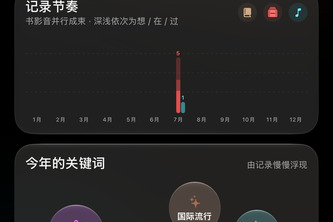
- The app includes annual activity review through weighted keyword bubbles
- It supports exporting, importing, or erasing the local library
- Interface uses Apple's Liquid Glass system for visual design
Evidence strength: Self-reported and unverified. No independent verification of functionality or user experience.
Positioning & Claim Evolution
- The description states that streaming services remember what users played, reading platforms remember what they bought, and movie databases remember what they rated—but none remember why a work mattered to the user
- The author positions this as a quiet, personal place for preserving cultural experiences that continue to glow after the experience ends
- The name "Liuguang" means "keeping the light," suggesting a focus on preserving meaningful cultural moments
- The project evolved from an idea about fragmented cultural memories to a working native iPhone application during OpenAI Build Week
Evidence strength: Self-reported positioning and intent. No evidence of market testing, user feedback, or competitive positioning validation.
Target Customer & ICP
- Not evidenced. The description does not identify specific customer segments, personas, or ideal customer profiles
- The author describes the product as personal and local-first but does not specify target demographics or use cases beyond individual cultural journaling
- No evidence of market research, user interviews, or competitive analysis to inform customer targeting
Business Model & Pricing Evidence
- Not evidenced. There is no mention of pricing models, monetization strategies, revenue streams, or business model assumptions in the description
- The author does not describe any commercial aspects beyond personal development and potential future features like iCloud synchronization or OpenAI reflection layers
- No evidence of customer acquisition costs, unit economics, or sales processes
Technical & Delivery Signals
- Built with Swift 6 using SwiftUI and SwiftData, targeting iOS 26
- Uses a provider-based metadata architecture that converts external results into shared MediaSnapshot model
- Connects to sources including Open Library, Apple Books, Google Books, Douban, IMDb, Rotten Tomatoes, Apple Music, Spotify, and LRCLIB
- Implements actor-based disk cache for cover artwork with URL hashing using CryptoKit
- Uses file protection and LRU-style storage limits to manage cache growth
- Recommendation engine is local and explainable, scoring candidates using media-type affinity, creators, tags, daily seeds, and recent recommendation history
- Implements Apple's Liquid Glass system with native SwiftUI APIs
- Core Motion integration for annual keyword bubbles responding to device tilt
Evidence strength: Self-reported technical implementation details. No evidence of production deployment, performance metrics, or scalability considerations.
Traction & Maturity Signals
- Not evidenced. The description provides no data on user engagement, retention, adoption rates, or market traction
- The project is described as a single-person development effort during a hackathon
- No evidence of revenue generation, customer base, or product-market fit validation
- No mention of user feedback loops, feature usage analytics, or iterative improvements beyond the initial build
Competitive Context
- Not evidenced. The description does not identify direct or indirect competitors in the cultural journaling or personal media tracking space
- No evidence of competitive analysis, market sizing, or positioning relative to existing solutions
- The author mentions that streaming services, reading platforms, and movie databases remember user activity but do not remember why a work mattered—this is presented as a gap rather than competitive landscape analysis
Open Questions & Risks
- Single developer dependency: The project was built by one person with no evidence of team or organizational support
- Limited market validation: No evidence of user testing, feedback, or adoption beyond the author's personal use
- Technical complexity without scale evidence: The described technical architecture is complex but lacks evidence of production deployment or performance validation
- Unclear commercial viability: No business model, pricing, or monetization strategy described
- Hackathon origin: The project was developed during a hackathon, suggesting early-stage development with unknown maturity or long-term commitment
Questions the description leaves open
- What specific user problems are you solving that existing solutions don't address?
- How do you plan to validate market demand for this product beyond personal use?
- What is your timeline and approach for building out the team and scaling the product?
- How do you intend to monetize this product, and what pricing model are you considering?
- What are the key technical challenges that remain unresolved in the current implementation?
- How do you plan to handle data privacy and user control as features expand?
- What is your strategy for growing user engagement and retention beyond initial adoption?
Overall Assessment
Not evidenced. The description provides no information about financial performance, customer base, market traction, or commercial viability that would inform investment or partnership decisions.
The project appears to be a single-person hackathon development with no demonstrated commercial traction or market validation. While the technical implementation is detailed and the concept has potential, there is insufficient evidence to assess whether this represents a viable business opportunity or product-market fit. The author's own description indicates this was a personal project built during a short timeframe without any evidence of revenue generation, customer adoption, or scalable business model.
The lack of any financial data, user metrics, competitive analysis, or commercial strategy makes it impossible to evaluate the investment potential or partnership value of this initiative at this stage.
User Stories BotA demo video on every pull request
Get a demo video on every new feature
GitHub App that watches your pull requests and records a narrated, captioned demo.
Save time on demo prep and make informed decisions faster with a video walkthrough of every new feature.
Source
Submitted to the OpenAI 2026 hackathon on Devpost. Project home on Devpost. Back to the full gallery on Devpost.
This competitive analysis was produced by top-founders.com (opens in a new tab)
Generated by a language model from this project's public Devpost page — its tagline, the author's own write-up and any built-with tags listed there — as captured in August 2026. Short quotations are the author's words. It is an opinion on the idea as a business, not on the people behind it, and it reflects the description as published then. If the project has moved on, request a correction below. The analysis is not independent research and contains no verified traction, revenue or customer data.
An independent guide by KFG International LLC — not affiliated with, endorsed by, or connected to Devpost or OpenAI.