

Archive position — measured, not model output
0 likes on Devpost
2,263 of the 7,850 archived projects have more likes, and 5,587 share exactly 0 — so this project's #4,136 place in the like-ranked listing is a tie-break inside that group, not a ranking.
Projects (log scale)
Likes on Devpost. ▲ marks this project's group.
Show the figures
| Likes | Projects | Share of archive |
|---|---|---|
| 0 | 5,587 | 71.2% |
| 1 | 1,758 | 22.4% |
| 2 | 284 | 3.6% |
| 3–4 | 132 | 1.7% |
| 5–9 | 75 | 1.0% |
| 10+ | 14 | 0.2% |
 User Stories BotA demo video on every pull request
Get a demo video on every new feature
GitHub App that watches your pull requests and records a narrated, captioned demo.
Save time on demo prep and make informed decisions faster with a video walkthrough of every new feature.
Executive Summary
What the company appears to be
Fleetic Keyboard is an Android keyboard application that integrates GPT-5.6 to refine workplace messages while preserving the user's communication identity. It is built as a native Android input method, leveraging AOSP LatinIME and a privacy-conscious backend. The product allows users to define a "Communication DNA" profile based on writing samples and refinement priorities, which guides AI-assisted text refinement.
What changed
The author describes Fleetic as a personal project developed during an OpenAI hackathon (Build Week). It is presented as a proof-of-concept with a focus on trust, privacy, and user control. The product does not appear to have launched commercially or gained traction beyond its developer's own use.
Single most important open question
Is there any evidence of commercial viability, user adoption, or revenue generation? The description contains no data on users, customers, monetization, or market traction — only a self-reported technical and conceptual framework.
What The Product Actually Is
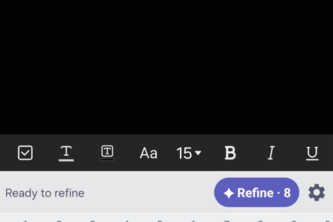
The description states that Fleetic is a native Android keyboard built using AOSP LatinIME as its foundation. It integrates GPT-5.6 to refine workplace messages in real time, but only after the user explicitly taps "Refine". Key features include:
- Communication DNA: A structured profile derived from a writing sample and refinement priority.
- Refinement is intentional: text is not sent until the user confirms.
- Text ownership is conservative: the keyboard replaces only what it can prove it owns.
- The system fails safely if replacement cannot be verified.
The product is described as an input method that works within existing Android apps (e.g., Slack, email clients), and does not replace the entire messaging experience.
Claim
Fleetic is a native Android keyboard with AI-assisted refinement.
Evidence Author's own description.
Positioning & Claim Evolution
The author positions Fleetic as an alternative to generic grammar checkers or chatbot keyboards, emphasizing:
- User voice preservation: The output should sound like the user.
- Intentional sending: No automatic replacement; users must tap Refine.
- Privacy-first design: No message content is stored or logged.
- Trust boundary: Text replacement only happens when ownership can be verified.
The positioning evolves from a technical solution to a trust-based communication tool, where the AI’s role is to assist without altering identity.
Claim
Fleetic aims to reduce hesitation before sending messages by refining them naturally, while preserving user voice.
Evidence Author's own description.
Target Customer & ICP
The author describes the target audience as:
- Professionals working in English who are not native speakers.
- Users who experience hesitation or context-switching when typing short workplace messages (e.g., Slack, email).
- Individuals who want AI help but do not want to lose their communication identity.
There is no explicit segmentation beyond this general user group. No named customer types, personas, or use cases are provided.
Claim
Fleetic targets professionals working in English as a second language.
Evidence Author's own description.
Business Model & Pricing Evidence
The description does not contain any information about:
- Revenue streams
- Pricing models
- Monetization strategy
- Customer acquisition costs
- Sales process or go-to-market plan
It is unclear whether the product is intended to be free, paid, or offered via subscription.
Claim
No business model or pricing evidence provided.
Evidence Not evidenced.
Technical & Delivery Signals
The author provides detailed technical information:
- Built on AOSP LatinIME
- Uses Kotlin, Java, C++, Jetpack Compose, and Android Views
- Backend in Go with Chi, PostgreSQL (via pgx), Distroless containers
- Communication DNA is structured into six dimensions: brevity, formality, warmth, directness, vocabulary, expressiveness
- GPT-5.6 is used via OpenAI’s Responses API
- Uses strict schema validation and idempotent request handling
- Includes tests covering contracts, handlers, prompt invariants, and Android API client behavior
The product was tested on a physical Samsung Galaxy A54 running Android 16.
Claim
Fleetic is built with strong technical rigor, including privacy-conscious design and safety mechanisms.
Evidence Author's own description.
Traction & Maturity Signals
There is no evidence of:
- User adoption or retention
- Revenue or monetization
- Customer feedback or usage metrics
- Product roadmap or iteration history beyond the MVP
- Any form of market validation
The project is described as a Build Week hackathon submission, and no mention of launch, beta testing, or user engagement.
Claim
No traction or maturity signals.
Evidence Not evidenced.
Competitive Context
The author does not reference any competitors directly. However, the product’s positioning implies it competes with:
- Generic AI keyboards
- Grammar-checking tools (e.g., Grammarly)
- Chatbots integrated into messaging apps
It distinguishes itself by focusing on user identity preservation, intentional refinement, and trust boundaries.
Claim
Competes in the AI-assisted writing space, with a focus on trust and identity.
Evidence Author's own description.
Open Questions & Risks
Several risks are implied by the description:
- No commercial traction or monetization: The product is not yet launched or monetized.
- Limited scope: Only supports Android; no iOS or desktop plans mentioned.
- High technical complexity: Integrating AI into a keyboard with trust and safety constraints may be difficult to scale.
- Unproven user need: No evidence of market demand or user feedback beyond the developer’s own experience.
- Dependency on GPT-5.6: The system relies heavily on a proprietary model, which could introduce risks if access changes.
Claim
Risks include lack of traction, limited scope, and unvalidated assumptions.
Inference Based on absence of evidence for commercial viability or user feedback.
Questions the description leaves open
- What is the expected timeline to market?
- How will you validate that users actually want this product?
- Are there any plans to expand beyond Android?
- What are your assumptions about user behavior and adoption?
- How do you plan to handle model drift or degradation over time?
- Is there a plan for user onboarding or education around Communication DNA?
- What are the key metrics you would track post-launch?
Claim
These questions are necessary due to lack of evidence around traction, user validation, and commercial strategy.
Inference Based on absence of data.
Overall Assessment
There is no evidence of:
- Revenue or ARR
- Customer base or adoption metrics
- Product-market fit or user feedback
- Commercial readiness or scalability
- Funding or investor interest
The project is described as a self-developed MVP for a hackathon, with no indication of commercial intent or traction.
Claim
No evidence of investment or partnership viability.
Evidence Not evidenced.
User Stories BotA demo video on every pull request
Get a demo video on every new feature
GitHub App that watches your pull requests and records a narrated, captioned demo.
Save time on demo prep and make informed decisions faster with a video walkthrough of every new feature.
Source
Submitted to the OpenAI 2026 hackathon on Devpost. Project home on Devpost. Back to the full gallery on Devpost.
This competitive analysis was produced by top-founders.com (opens in a new tab)
Generated by a language model from this project's public Devpost page — its tagline, the author's own write-up and any built-with tags listed there — as captured in August 2026. Short quotations are the author's words. It is an opinion on the idea as a business, not on the people behind it, and it reflects the description as published then. If the project has moved on, request a correction below. The analysis is not independent research and contains no verified traction, revenue or customer data.
An independent guide by KFG International LLC — not affiliated with, endorsed by, or connected to Devpost or OpenAI.