

Archive position — measured, not model output
0 likes on Devpost
2,263 of the 7,850 archived projects have more likes, and 5,587 share exactly 0 — so this project's #4,114 place in the like-ranked listing is a tie-break inside that group, not a ranking.
Projects (log scale)
Likes on Devpost. ▲ marks this project's group.
Show the figures
| Likes | Projects | Share of archive |
|---|---|---|
| 0 | 5,587 | 71.2% |
| 1 | 1,758 | 22.4% |
| 2 | 284 | 3.6% |
| 3–4 | 132 | 1.7% |
| 5–9 | 75 | 1.0% |
| 10+ | 14 | 0.2% |
 User Stories BotA demo video on every pull request
Get a demo video on every new feature
GitHub App that watches your pull requests and records a narrated, captioned demo.
Save time on demo prep and make informed decisions faster with a video walkthrough of every new feature.
Executive Summary
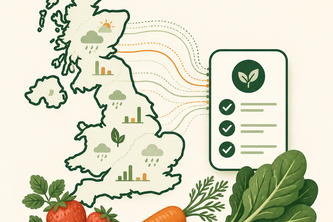
The company appears to be a single-person project (LS Wong) building an AI-powered prototype for fresh produce buyers. The author states that Firewatch is a buyer-first decision-support tool that aggregates climate signals into earlier sourcing conversations for fragile crops. It uses GPT-5.6 to generate plain-English planning briefs based on user-selected scenarios, with a map interface and a "Buyer Decision Card" as outputs.
The project is described as a prototype built during an OpenAI hackathon. No revenue, customers or traction are evidenced. The author emphasizes that the tool is not a forecast but a conversation starter, and that its commercial value lies in enabling earlier buyer-grower discussions rather than generating predictive scores.
The single most important open question is: What is the actual market need for this type of buyer-first decision support, and how does it differ from existing supplier communication tools?
What The Product Actually Is
- The description states that Firewatch is a "buyer-first decision-support prototype for fragile fresh produce."
- It allows users to choose a crop scenario, source region, and planning timeframe.
- It shows map context using Leaflet.js and OpenStreetMap.
- It generates a "Buyer Decision Card" that outlines what is known, what a grower should confirm, what the buyer should prepare, and when to review.
- GPT-5.6 is used to turn selected context into a cautious, plain-English planning brief.
- The backend uses Node.js and Express with OpenAI Responses API.
- The API key is stored locally in a .env file.
Not evidenced: What the product actually does beyond the prototype stage; whether it has been tested or piloted; what specific crops or regions it targets beyond general mention of "fragile fresh produce."
Positioning & Claim Evolution
- The author states that Firewatch began as a wildfire adviser for rural property owners but evolved into helping buyers and growers make earlier, better-informed supply decisions.
- It is positioned as a tool to help buyers collate scattered information in one place and initiate the right supplier conversation before disruptions become availability problems.
- The product is described as not being a forecast but a "conversation tool" that turns climate signals into planning priorities.
- The author claims that the most valuable AI role here is translation, not prediction.
Inferred: That Firewatch aims to improve supply chain resilience by enabling earlier decision-making. However, this claim is based on the author's self-description and not independently verified.
Target Customer & ICP
- The description states that the target customer is "fresh produce buyers like large supermarkets whether is Walmart in the US or Lidl in Europe."
- These buyers are said to often hear about heat, drought or crop stress through scattered supplier messages, news and weather tools.
- The tool is aimed at helping these buyers make earlier, better-informed supply decisions for fragile crops.
Not evidenced: Specific buyer personas beyond general supermarket examples; whether the tool targets specific types of buyers (e.g., procurement managers vs. sourcing directors); or if there are any actual customer interviews or feedback from target users.
Business Model & Pricing Evidence
- The description does not provide evidence of a business model or pricing structure.
- The author mentions that the next step is a "small concierge pilot with one fragile commodity."
- There is no mention of monetization, licensing fees, subscription models, or any commercial arrangements.
Not evidenced: Any revenue streams, pricing tiers, or commercial partnerships; whether there are plans to sell to buyers or growers directly.
Technical & Delivery Signals
- Built using Codex, Express.js, GPT-5.6, JavaScript, Leaflet.js, Node.js, OpenAI Responses API, and OpenStreetMap.
- The backend calls GPT-5.6 through the OpenAI Responses API.
- The API key stays in a local .env file, never in browser code or GitHub.
- GPT-5.6 is instructed to use UK English, be practical and cautious, and not invent forecasts.
- The project includes documentation with data-source context, limitations, accessibility improvements, and setup instructions.
Not evidenced: Technical architecture beyond the tools mentioned; scalability of the solution; whether there are any production deployments or infrastructure considerations beyond the prototype.
Traction & Maturity Signals
- The project is described as a "prototype" built during an OpenAI hackathon.
- It has not been independently verified for traction, revenue, or adoption.
- The author mentions that the next step is a small concierge pilot with one fragile commodity.
- There are no customer testimonials, usage metrics, or performance data provided.
Not evidenced: Any actual users, customers, or real-world usage; whether there are any existing buyer-grower conversations facilitated by the tool; or if there is any evidence of product-market fit beyond the prototype stage.
Competitive Context
- The description does not provide information about competitors.
- It mentions that buyers often hear about climate issues through scattered supplier messages, news and weather tools.
- There is no evidence of existing solutions in this space or how Firewatch differentiates from them.
Not evidenced: Any competitive landscape analysis; whether there are existing tools for sourcing decision support or climate risk management in agriculture; or any differentiation strategy beyond the prototype's features.
Open Questions & Risks
- The tool is described as a prototype, not a commercial product.
- It uses GPT-5.6 with safety boundaries to avoid inventing forecasts, but this raises questions about how useful it is without predictive capabilities.
- The author states that public climate data alone cannot prove specific shortages, which may limit the tool's utility.
- The single-person team size (1) suggests limited capacity for rapid development or scaling.
- There is no evidence of any revenue model or customer base.
Inferred: That the tool may not be commercially viable without significant further development and integration into existing buyer workflows. Also, there is a risk that buyers might not see value in a non-predictive tool.
Questions the description leaves open
- What specific pain points do buyers face when trying to source fragile produce during climate disruptions?
- How does Firewatch's approach differ from current supplier communication tools used by large supermarkets?
- What are the key challenges in getting buyers and growers to adopt a new decision-support tool?
- How will you validate that Firewatch actually improves sourcing decisions rather than just providing information?
- What is your plan for moving from a prototype to a scalable product or service?
- Have you identified any potential partners or early adopters among large produce buyers?
Overall Assessment
- The project is described as a single-person prototype built during a hackathon.
- There is no evidence of traction, revenue, customers, or commercial viability beyond the author's self-description.
- The tool appears to be in very early stages and lacks any demonstrated market need or product-market fit.
- The author acknowledges that the most valuable AI role here is translation, not prediction, which may limit its utility.
Not evidenced: Any investment-ready metrics or commercial potential; whether there are any existing partnerships or pilot programs; or if the tool has shown measurable improvements in sourcing decisions.
Given the lack of evidence for traction, revenue, or customer validation, and the early-stage prototype nature of the project, this is not a viable investment opportunity at this time. The author's own description indicates that the next step is a small pilot, suggesting that significant development and market validation are still required before any commercial viability can be assessed.
User Stories BotA demo video on every pull request
Get a demo video on every new feature
GitHub App that watches your pull requests and records a narrated, captioned demo.
Save time on demo prep and make informed decisions faster with a video walkthrough of every new feature.
Source
Submitted to the OpenAI 2026 hackathon on Devpost. Project home on Devpost. Back to the full gallery on Devpost.
This competitive analysis was produced by top-founders.com (opens in a new tab)
Generated by a language model from this project's public Devpost page — its tagline, the author's own write-up and any built-with tags listed there — as captured in August 2026. Short quotations are the author's words. It is an opinion on the idea as a business, not on the people behind it, and it reflects the description as published then. If the project has moved on, request a correction below. The analysis is not independent research and contains no verified traction, revenue or customer data.
An independent guide by KFG International LLC — not affiliated with, endorsed by, or connected to Devpost or OpenAI.