

Archive position — measured, not model output
0 likes on Devpost
2,263 of the 7,850 archived projects have more likes, and 5,587 share exactly 0 — so this project's #7,313 place in the like-ranked listing is a tie-break inside that group, not a ranking.
Projects (log scale)
Likes on Devpost. ▲ marks this project's group.
Show the figures
| Likes | Projects | Share of archive |
|---|---|---|
| 0 | 5,587 | 71.2% |
| 1 | 1,758 | 22.4% |
| 2 | 284 | 3.6% |
| 3–4 | 132 | 1.7% |
| 5–9 | 75 | 1.0% |
| 10+ | 14 | 0.2% |
 User Stories BotA demo video on every pull request
Get a demo video on every new feature
GitHub App that watches your pull requests and records a narrated, captioned demo.
Save time on demo prep and make informed decisions faster with a video walkthrough of every new feature.
Executive Summary
What the company appears to be
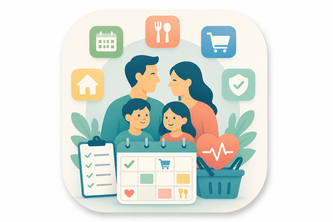
A self-reported family collaboration app named Kopā (meaning “Together” in Latvian), built as a personal project by one developer (Agris Pētersons). It is described as an Android-based family assistant that combines shared tasks, calendars, chat, meal planning, and safety features. The app uses AI via the OpenAI API to generate structured plans for complex responsibilities.
What changed
The project was submitted to the OpenAI 2026 hackathon and is presented as a working prototype with core functionality including P2P communication, local storage, secure synchronization, and AI-powered planning.
Single most important open question — the commercial due-diligence read
Is there evidence of user demand or adoption beyond the author’s own use case? The description lacks any data on users, revenue, customer acquisition, or market traction. All claims are self-reported without verification.
What The Product Actually Is
The description states that Kopā is a collaborative Android family assistant for up to 15 family members. It combines:
- Shared and recurring tasks
- Task assignment and workload visibility
- A shared calendar
- Shopping lists
- Family group chat
- Activity notifications with timestamps and unread counters
- Baby meal planning and age-appropriate food suggestions
- A baby photo gallery synchronized between parents
- Daily and monthly family summaries
- Location sharing and safety alerts
- Family invitations through secure links
- Battery-friendly synchronization and an eco/night mode
It also integrates AI via the OpenAI API, which generates structured plans from vague tasks such as “take the baby to the doctor.” These outputs include preparation tasks, calendar events, required shopping items, suggested assignments, and a sequence of actions.
The app is built using Kotlin with Jetpack Compose, local storage via Room, background sync via WorkManager, and server-side coordination in Node.js. It supports WebRTC peer-to-peer communication, secure file transfers, and encrypted API key handling.
Inference This is a personal project that functions as a prototype for family organization. No evidence of commercial deployment or user adoption exists beyond the author’s own description.
Positioning & Claim Evolution
The description states that Kopā was created to make invisible mental load visible and easier to share across the whole family. It positions itself not just as a task manager but as a tool for coordinating complex, multi-step responsibilities like taking a child to the doctor.
It claims to support AI-powered planning, where users can input vague tasks and receive structured action plans from OpenAI. The app also emphasizes privacy and security, including encrypted data at rest and in transit, secure API key handling, and P2P communication for sensitive media.
Inference The positioning is centered on family coordination, mental load reduction, and privacy. There is no indication of broader market positioning or intent to scale beyond the author’s own use case.
Target Customer & ICP
The description states that Kopā targets families with up to 15 members, including parents and children. It includes features like baby meal planning, age-appropriate food suggestions, and safety alerts—indicating a focus on parents or caregivers managing young families.
It also mentions shared routines, calendars, and safety monitoring, suggesting it is aimed at families seeking better organization and communication tools.
Inference The ICP appears to be tech-savvy parents or caregivers with multiple children, who are interested in reducing mental load and improving family coordination. No evidence of segmentation beyond this.
Business Model & Pricing Evidence
There is no mention of a business model, pricing strategy, monetization plan, or revenue streams in the description. The author states that “Complete production billing only if there is sufficient user demand”, indicating an uncertain commercial path.
Inference No evidence of a defined business model or pricing structure exists. The project appears to be in early development with no clear path to monetization.
Technical & Delivery Signals
The app is built for Android using Kotlin and Jetpack Compose, with Room for local data storage, WorkManager for background tasks, and a Node.js server for coordination. It supports:
- Direct P2P communication via WebRTC
- Encrypted API key handling
- Secure APK updates through a self-hosted system
- Battery-friendly sync strategies (eco mode, night-time pause)
- Localization in Latvian and English
The app is described as supporting secure family invitations, encrypted media sharing, and conflict-free synchronization.
Inference Technical architecture shows a focus on privacy, performance, and offline resilience. However, no evidence of production deployment or scalability beyond the author’s own use case.
Traction & Maturity Signals
The description states that Kopā is a working prototype, built for the OpenAI 2026 hackathon. It includes accomplishments such as:
- Working Android app
- P2P communication
- Secure invitation system
- AI-powered planning assistant
- Local storage and sync
- Multi-language support
However, there is no evidence of user adoption, customer base, or revenue.
Inference The project is in a pre-commercial prototype phase, with no demonstrated traction or market validation.
Competitive Context
There are no references to competitors or market positioning in the description. The author does not discuss existing solutions such as family task managers, shared calendars, or AI planning tools.
Inference No competitive analysis or differentiation strategy is evident. The project appears to be self-contained and unanchored in a known marketplace.
Open Questions & Risks
- Single-person development: The app was built by one developer (Agris Pētersons), raising questions about scalability, maintenance, and long-term support.
- No user data or adoption: No evidence of real users, customer feedback, or market traction.
- Unclear monetization path: No pricing model or revenue plan is described.
- Limited scope: The app targets only up to 15 family members, which may limit its commercial appeal.
- AI dependency: Reliance on OpenAI API introduces risk of cost and availability issues.
Inference The project is at a very early stage with no clear path to commercial viability or user adoption. Risks include technical debt, lack of scalability, and unclear business model.
Questions the description leaves open
- What is the actual user base beyond the author? Are there any real users or beta testers?
- How do you plan to monetize this product, and what is your pricing strategy?
- What are the technical challenges in scaling beyond 15 family members?
- How do you handle data privacy and security compliance (e.g., GDPR)?
- What is the long-term roadmap for AI integration and feature expansion?
- Are there any plans to publish on official app stores or expand platform support?
Overall Assessment
The project is a self-reported prototype built by one developer, with no evidence of traction, revenue, or user adoption. It is described as a working Android app with family coordination features and AI integration, but lacks any commercial or market validation.
Confidence Level Low
Assessment Not ready for investment or partnership at this stage. The project needs to demonstrate real-world usage, user feedback, and a clear path to monetization before it can be considered viable.
User Stories BotA demo video on every pull request
Get a demo video on every new feature
GitHub App that watches your pull requests and records a narrated, captioned demo.
Save time on demo prep and make informed decisions faster with a video walkthrough of every new feature.
Source
Submitted to the OpenAI 2026 hackathon on Devpost. Project home on Devpost. Back to the full gallery on Devpost.
This competitive analysis was produced by top-founders.com (opens in a new tab)
Generated by a language model from this project's public Devpost page — its tagline, the author's own write-up and any built-with tags listed there — as captured in August 2026. Short quotations are the author's words. It is an opinion on the idea as a business, not on the people behind it, and it reflects the description as published then. If the project has moved on, request a correction below. The analysis is not independent research and contains no verified traction, revenue or customer data.
An independent guide by KFG International LLC — not affiliated with, endorsed by, or connected to Devpost or OpenAI.