

Archive position — measured, not model output
0 likes on Devpost
2,263 of the 7,850 archived projects have more likes, and 5,587 share exactly 0 — so this project's #4,052 place in the like-ranked listing is a tie-break inside that group, not a ranking.
Projects (log scale)
Likes on Devpost. ▲ marks this project's group.
Show the figures
| Likes | Projects | Share of archive |
|---|---|---|
| 0 | 5,587 | 71.2% |
| 1 | 1,758 | 22.4% |
| 2 | 284 | 3.6% |
| 3–4 | 132 | 1.7% |
| 5–9 | 75 | 1.0% |
| 10+ | 14 | 0.2% |
 User Stories BotA demo video on every pull request
Get a demo video on every new feature
GitHub App that watches your pull requests and records a narrated, captioned demo.
Save time on demo prep and make informed decisions faster with a video walkthrough of every new feature.
Executive Summary
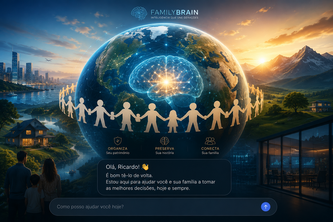
The company appears to be a solo project, FamilyBrain, submitted by monric MONTEIRO for the OpenAI 2026 hackathon. The author describes it as an AI platform for long-term wealth planning that integrates legal, tax, accounting, financial, corporate, international, and estate planning domains into a single conversational interface.
The core innovation claimed is the development of a cognitive architecture called CogniLab, which focuses on four capabilities: memory, temporal reasoning, reflection, and strategy. The project's positioning centers around AI systems that preserve continuity, reason across timelines, and reflect before acting — particularly for long-term collaboration over months, years, or generations.
What changed
The author initially approached the problem as a user experience challenge but evolved to a cognitive architecture challenge focused on temporal reasoning and continuity in long-term conversations.
The single most important open question
Is there evidence of any traction, revenue, customers, or real-world usage beyond the author's own development work?
This analysis is based entirely on self-reported information from the project description. No external verification or third-party data is available. The description states claims about intent and positioning but does not provide facts about product-market fit, adoption, or commercial viability.
What The Product Actually Is
The description states that FamilyBrain is:
- An AI platform for long-term wealth planning
- Designed to integrate multiple domains: legal, tax, accounting, financial, corporate, international assets, estate and succession planning
- Built with a conversational interface
- Aims to preserve continuity across long-term conversations
- Based on a cognitive architecture called CogniLab
The author describes the platform as combining specialist domains into a single conversational experience. It is not evidenced whether this integration is functional or merely conceptual.
Positioning & Claim Evolution
Claim
FamilyBrain was initially conceived as a tool to help families make better long-term wealth planning decisions by integrating multiple domains into one AI platform.
Evolution of claim
The author states that the biggest challenge was no longer building specialist AI agents, but preserving continuity across long-term conversations. This led to a shift from a user experience problem to a cognitive architecture challenge.
Claim
The platform is built on a reusable cognitive architecture called CogniLab with four capabilities: memory, temporal reasoning, reflection, and strategy.
Inference The author's evolution suggests that the project moved from a product-focused approach to an architectural innovation focus. However, this is not evidenced by any demonstration or proof of concept beyond the author’s own account.
Target Customer & ICP
The description states:
- The target is families making long-term wealth planning decisions
- The platform integrates domains relevant to family financial planning: legal, tax, accounting, financial, corporate, international assets, estate and succession planning
Not evidenced No specific customer segments, personas, or market size are provided. There is no evidence of any actual customers or target user groups beyond the stated intent.
Business Model & Pricing Evidence
The description does not provide any information about:
- Revenue model
- Pricing structure
- Monetization strategy
- Customer acquisition costs
- Unit economics
Not evidenced No business model or pricing details are available. The author only describes the platform's purpose and architecture, not how it would generate revenue.
Technical & Delivery Signals
The description states that FamilyBrain was built using:
- Technologies: anthropic, api, codex, css, docker, fastapi, github, gpt-5, next.js, openai, postgresql, python, sqlalchemy, tailwind, typescript, vercel
- Architecture: a cognitive architecture called CogniLab with capabilities for memory, temporal reasoning, reflection, and strategy
Not evidenced No evidence of actual delivery or deployment. The project is described as a hackathon submission, suggesting it may be a prototype or proof-of-concept rather than a production-ready system.
Traction & Maturity Signals
The description states:
- It was submitted to the OpenAI 2026 hackathon
- Team size: 1 person (monric MONTEIRO)
- No evidence of revenue, customers, or adoption beyond the author's own development work
Not evidenced There is no traction data, customer feedback, usage metrics, or product maturity indicators. The project appears to be in early-stage development.
Competitive Context
The description does not provide any information about:
- Competitors
- Market landscape
- Competitive advantages
- Differentiation from existing solutions
Not evidenced No competitive analysis or positioning relative to other wealth planning tools or AI platforms is available.
Open Questions & Risks
- Solo development: Only one team member (monric MONTEIRO) is mentioned, which raises concerns about scalability and execution capability.
- No traction or revenue: The project appears to be a prototype or hackathon submission with no evidence of real-world usage or monetization.
- Unproven architecture: While CogniLab is described as a reusable cognitive architecture, there is no demonstration or validation that it works beyond the author's own account.
- Highly ambitious claims: The project makes broad claims about AI systems understanding time and collaborating over generations without evidence of practical implementation.
Questions the description leaves open
- What specific problems in long-term wealth planning are you solving, and how do you know?
- How does CogniLab differ from existing approaches to temporal reasoning in AI?
- Have you tested the platform with any real users or families?
- What is your path to market and monetization?
- How do you plan to scale beyond a single developer?
- Can you demonstrate how the cognitive architecture works in practice?
Overall Assessment
Not evidenced No commercial due-diligence data is available to assess viability, traction, or investment potential.
The description indicates this is a solo hackathon project with no evidence of revenue, customers, or real-world usage. The claims about the cognitive architecture are unverified and lack demonstration or validation.
Confidence level Low — based entirely on self-reported information without any external corroboration or evidence of traction or commercial viability.
The project appears to be an early-stage idea or prototype with ambitious claims but no demonstrated product-market fit, revenue, or customer adoption. It is not evident whether this represents a viable business opportunity or merely a conceptual exploration.
User Stories BotA demo video on every pull request
Get a demo video on every new feature
GitHub App that watches your pull requests and records a narrated, captioned demo.
Save time on demo prep and make informed decisions faster with a video walkthrough of every new feature.
Source
Submitted to the OpenAI 2026 hackathon on Devpost. Project home on Devpost. Back to the full gallery on Devpost.
This competitive analysis was produced by top-founders.com (opens in a new tab)
Generated by a language model from this project's public Devpost page — its tagline, the author's own write-up and any built-with tags listed there — as captured in August 2026. Short quotations are the author's words. It is an opinion on the idea as a business, not on the people behind it, and it reflects the description as published then. If the project has moved on, request a correction below. The analysis is not independent research and contains no verified traction, revenue or customer data.
An independent guide by KFG International LLC — not affiliated with, endorsed by, or connected to Devpost or OpenAI.