

Archive position — measured, not model output
0 likes on Devpost
2,263 of the 7,850 archived projects have more likes, and 5,587 share exactly 0 — so this project's #6,059 place in the like-ranked listing is a tie-break inside that group, not a ranking.
Projects (log scale)
Likes on Devpost. ▲ marks this project's group.
Show the figures
| Likes | Projects | Share of archive |
|---|---|---|
| 0 | 5,587 | 71.2% |
| 1 | 1,758 | 22.4% |
| 2 | 284 | 3.6% |
| 3–4 | 132 | 1.7% |
| 5–9 | 75 | 1.0% |
| 10+ | 14 | 0.2% |
 User Stories BotA demo video on every pull request
Get a demo video on every new feature
GitHub App that watches your pull requests and records a narrated, captioned demo.
Save time on demo prep and make informed decisions faster with a video walkthrough of every new feature.
Executive Summary
What the company appears to be
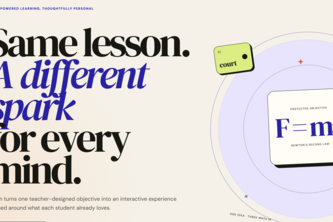
Prism is an AI-powered learning platform that transforms study material into personalized, interactive lessons, quizzes, and practice tailored to how a user learns. It is described as a hackathon project built with OpenAI models, TypeScript, Python, Docker, and Vercel.
What changed
The project was submitted to the OpenAI 2026 hackathon on Devpost. No evidence of prior development or commercial activity beyond this submission exists.
Single most important open question
Is there any evidence that Prism has moved beyond a prototype or proof-of-concept, and if so, what traction, revenue, or user adoption data supports its viability as a product?
What The Product Actually Is
The description states:
- Prism is an AI-powered learning platform.
- It transforms study material into personalized educational experiences.
- Users can upload or provide learning content.
- It leverages OpenAI models to generate interactive lessons, explanations, quizzes, summaries, and personalized study sessions.
- The platform adapts its responses based on user progress and learning preferences.
Inference The product appears to be a web-based tool that uses generative AI to process educational input and output customized learning content.
Not evidenced No details about the actual functionality of the platform beyond its description, nor any evidence of how it works in practice or whether it has been tested with users.
Positioning & Claim Evolution
The description states:
- Prism aims to make high-quality, personalized learning accessible to everyone.
- It is inspired by the idea that modern AI can act as a personalized tutor.
- The platform adapts to the learner instead of forcing the learner to adapt to the platform.
- It envisions becoming an intelligent learning companion that continuously adapts alongside each student.
Inference Prism positions itself as a tool for personalization in education, using AI to reduce friction and enhance engagement.
Not evidenced No evidence of prior positioning or evolution of claims beyond this single submission. No indication of how Prism’s positioning has changed over time or whether it has been validated by users.
Target Customer & ICP
The description states:
- The target is students who spend more time organizing notes, searching for explanations, and creating practice questions than actually learning.
- It aims to make personalized learning accessible to everyone.
Inference Prism targets students seeking adaptive learning tools, particularly those frustrated by traditional one-size-fits-all approaches.
Not evidenced No evidence of specific customer segments, personas, or user research. No indication of whether the team has identified or validated a core customer profile beyond general student needs.
Business Model & Pricing Evidence
The description states:
- No explicit mention of pricing or monetization strategy.
- The platform is described as an AI-powered learning companion with long-term vision for personalized tutoring.
Inference There is no evidence of a business model or pricing structure in the submission.
Not evidenced No revenue streams, pricing tiers, or commercial plans are mentioned. No indication of how Prism would generate value or income.
Technical & Delivery Signals
The description states:
- Built with chatgpt, codex, docker, python, typescript, vercel.
- Uses OpenAI models to generate educational content dynamically.
- Developed a responsive frontend and backend for managing personalized learning workflows.
- Modular AI-powered components that can produce explanations, quizzes, summaries, and interactive learning experiences.
- Architecture designed to support future expansion without becoming overly complex.
Inference The platform uses modern web technologies and generative AI models to deliver an educational experience.
Not evidenced No evidence of technical performance metrics, scalability, or production deployment details beyond the hackathon context.
Traction & Maturity Signals
The description states:
- Built during a hackathon.
- Demonstrated how generative AI can make learning more interactive, engaging, and accessible.
- Plans include adaptive learning paths, long-term memory, richer quizzes, support for videos, AI agents, collaborative study groups, and analytics.
Inference The project is at an early stage, likely a prototype or proof-of-concept.
Not evidenced No evidence of user adoption, retention, revenue, or product-market fit. No data on usage, engagement, or customer feedback.
Competitive Context
The description states:
- No mention of competitors or competitive landscape.
- The platform is described as a new approach to personalized learning using AI.
Inference Prism does not appear to have a clearly defined competitive positioning or awareness of existing players in the space.
Not evidenced No evidence of market analysis, competitor benchmarking, or differentiation strategy beyond its own claims.
Open Questions & Risks
The description states:
- The project was built during a hackathon.
- Challenges included designing an AI experience that feels genuinely personalized.
- Balancing response quality, latency, and cost while integrating multiple AI workflows.
- Time constraints were a major challenge.
Inference There are risks related to product maturity, scalability, and the lack of real-world testing or user validation.
Not evidenced No evidence of how these challenges have been addressed or whether they pose long-term threats to viability.
Questions the description leaves open
- What specific learning outcomes or metrics does Prism aim to improve for users?
- Has the platform been tested with real students or educators?
- How is user data handled, and what privacy protections are in place?
- Are there any plans for monetization or revenue generation?
- What are the technical limitations of using OpenAI models at scale?
- How does Prism plan to differentiate itself from existing AI learning tools?
Overall Assessment
The description states:
- This is a hackathon project submitted to the OpenAI 2026 hackathon.
- No evidence of traction, revenue, or user adoption exists beyond the submission.
Inference At this stage, Prism appears to be an early-stage idea with no demonstrated commercial viability or product-market fit.
Not evidenced No indication of whether this project has moved beyond prototype status, nor any data supporting its potential for investment or partnership.
User Stories BotA demo video on every pull request
Get a demo video on every new feature
GitHub App that watches your pull requests and records a narrated, captioned demo.
Save time on demo prep and make informed decisions faster with a video walkthrough of every new feature.
Source
Submitted to the OpenAI 2026 hackathon on Devpost. Project home on Devpost. Back to the full gallery on Devpost.
This competitive analysis was produced by top-founders.com (opens in a new tab)
Generated by a language model from this project's public Devpost page — its tagline, the author's own write-up and any built-with tags listed there — as captured in August 2026. Short quotations are the author's words. It is an opinion on the idea as a business, not on the people behind it, and it reflects the description as published then. If the project has moved on, request a correction below. The analysis is not independent research and contains no verified traction, revenue or customer data.
An independent guide by KFG International LLC — not affiliated with, endorsed by, or connected to Devpost or OpenAI.