

Archive position — measured, not model output
0 likes on Devpost
2,263 of the 7,850 archived projects have more likes, and 5,587 share exactly 0 — so this project's #3,843 place in the like-ranked listing is a tie-break inside that group, not a ranking.
Projects (log scale)
Likes on Devpost. ▲ marks this project's group.
Show the figures
| Likes | Projects | Share of archive |
|---|---|---|
| 0 | 5,587 | 71.2% |
| 1 | 1,758 | 22.4% |
| 2 | 284 | 3.6% |
| 3–4 | 132 | 1.7% |
| 5–9 | 75 | 1.0% |
| 10+ | 14 | 0.2% |
 User Stories BotA demo video on every pull request
Get a demo video on every new feature
GitHub App that watches your pull requests and records a narrated, captioned demo.
Save time on demo prep and make informed decisions faster with a video walkthrough of every new feature.
Executive Summary
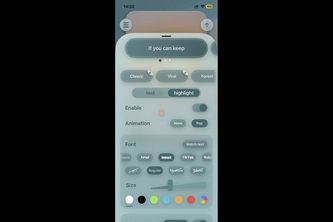
The company appears to be a solo developer project named Easy Captions Flow, which self-reports as an app that generates video captions and allows customization of their style. The author states the entire product was built from scratch using AI agents, including Codex. There is no evidence of revenue, customers, or traction beyond the author’s own account.
What changed: The project was submitted to the OpenAI 2026 hackathon, indicating a development milestone and public launch attempt. However, there is no indication of prior activity or product evolution.
The single most important open question: Is there any evidence of actual user adoption or monetization beyond the author’s personal account?
Analysis basis: The entire analysis is based on the self-reported description provided by the project author. No independent verification, archived data, or third-party sources are available.
What The Product Actually Is
The description states:
- Easy Captions Flow is an app that generates video captions.
- It allows users to customize the style of those captions.
- The entire app was built from scratch using AI agents, including Codex.
- It was launched on the App Store.
Inference: The product appears to be a mobile application (iOS) focused on caption generation and styling for video content. It is not described as a web-based tool or SaaS offering.
Claim: The author states that the app generates captions and styles them.
Evidence: Yes, from the project write-up.
Inference: The app was built using AI agents (e.g., Codex).
Evidence: Yes, from the project write-up.
Claim: It was launched on the App Store.
Evidence: Yes, from the project write-up.
Positioning & Claim Evolution
The author’s own account describes:
- The inspiration came from personal experience with other caption tools.
- The goal was to create something better than existing solutions.
- The app is positioned as a tool for content creators or users who want easy caption generation and styling.
Inference: The positioning appears to be that of a consumer-facing mobile app targeting individuals who produce or edit video content, possibly influencers or YouTubers.
Claim: The author states the goal was to “do better” than existing tools.
Evidence: Yes, from the project write-up.
Inference: The product is positioned for personal or small-scale use.
Evidence: Not directly stated; inferred from solo development and lack of customer data.
Target Customer & ICP
The description does not specify:
- Who the target customers are.
- Whether it targets creators, businesses, or general users.
- How the app differentiates by audience segment.
Inference: Based on the inspiration (wife using apps for content creation), the product likely targets content creators or individuals who produce video content.
Claim: The author states that the inspiration came from a wife using caption tools.
Evidence: Yes, from the project write-up.
Inference: The target customer is likely an individual user or small creator.
Evidence: Not directly stated; inferred from solo development and lack of enterprise focus.
Business Model & Pricing Evidence
The description does not contain:
- Any information about pricing.
- Revenue streams.
- Monetization strategy.
- Subscription model, freemium, or one-time purchase details.
Inference: The app may be monetized through in-app advertising (e.g., Google AdMob) or a one-time purchase, based on the author's mention of configuring AdMob.
Claim: The author mentions configuring Google AdMob.
Evidence: Yes, from the project write-up.
Inference: There is no evidence of pricing or monetization model.
Evidence: Not evidenced.
Technical & Delivery Signals
The description states:
- The app was built using AI agents, including Codex.
- It was built from scratch.
- Challenges included animation behavior bugs and limitations in agent communication (e.g., videos converted to images).
- The author learned about AI-agent workflows and App Store launch processes.
Inference: The technical stack includes C++, Python, Swift, and Codex. The app is likely a native iOS application.
Claim: The app was built using AI agents including Codex.
Evidence: Yes, from the project write-up.
Claim: It was built from scratch.
Evidence: Yes, from the project write-up.
Inference: The app is likely native (iOS).
Evidence: Not directly stated; inferred from App Store launch and Swift usage.
Traction & Maturity Signals
The description does not include:
- Any evidence of user adoption or downloads.
- Customer feedback or reviews.
- Metrics on usage, retention, or engagement.
- Product roadmap or future features beyond marketing.
Inference: The app was launched to the App Store but there is no indication of traction or growth.
Claim: The app was launched on the App Store.
Evidence: Yes, from the project write-up.
Inference: No evidence of user adoption or engagement.
Evidence: Not evidenced.
Competitive Context
The description does not mention:
- Competitors in the video captioning space.
- Market positioning relative to existing tools.
- Product differentiation from similar offerings.
Inference: The product is likely in a niche market for caption generation and styling, but no competitive analysis or market data is provided.
Claim: The author states that they were inspired by other apps.
Evidence: Yes, from the project write-up.
Inference: No information on competitors or market dynamics.
Evidence: Not evidenced.
Open Questions & Risks
- Solo developer risk: Only one team member is listed, which may limit scalability and long-term maintenance.
- Unverified claims: All product features, functionality, and launch are self-reported with no external validation.
- No monetization evidence: No pricing or revenue model is described.
- Limited traction: No data on downloads, users, or engagement.
- Technical constraints: The author notes limitations in AI agent communication (e.g., videos converted to images).
Inference: Solo development may pose risks for long-term product evolution.
Evidence: Not directly stated; inferred from team size.
Inference: Lack of monetization evidence is an open question.
Evidence: Not evidenced.
Questions the description leaves open
- What specific problem does Easy Captions Flow solve, and how does it differ from existing tools?
- How many users have downloaded the app, and what are their feedback or reviews?
- What is the monetization strategy beyond Google AdMob?
- Are there plans to expand beyond iOS or add new features?
- What is the current usage pattern or engagement data (if any)?
- How does the AI agent workflow integrate with development processes?
Overall Assessment
Not evidenced: There is no evidence of revenue, customers, traction, or a clear business model beyond the author’s own account.
Inference: This is an early-stage solo project with no demonstrated commercial viability.
Evidence: Not evidenced.
User Stories BotA demo video on every pull request
Get a demo video on every new feature
GitHub App that watches your pull requests and records a narrated, captioned demo.
Save time on demo prep and make informed decisions faster with a video walkthrough of every new feature.
Source
Submitted to the OpenAI 2026 hackathon on Devpost. Project home on Devpost. Back to the full gallery on Devpost.
This competitive analysis was produced by top-founders.com (opens in a new tab)
Generated by a language model from this project's public Devpost page — its tagline, the author's own write-up and any built-with tags listed there — as captured in August 2026. Short quotations are the author's words. It is an opinion on the idea as a business, not on the people behind it, and it reflects the description as published then. If the project has moved on, request a correction below. The analysis is not independent research and contains no verified traction, revenue or customer data.
An independent guide by KFG International LLC — not affiliated with, endorsed by, or connected to Devpost or OpenAI.