

Archive position — measured, not model output
2 likes on Devpost
221 of the 7,850 archived projects have more likes, and 284 share exactly 2 — so this project's #309 place in the like-ranked listing is a tie-break inside that group, not a ranking.
Projects (log scale)
Likes on Devpost. ▲ marks this project's group.
Show the figures
| Likes | Projects | Share of archive |
|---|---|---|
| 0 | 5,587 | 71.2% |
| 1 | 1,758 | 22.4% |
| 2 | 284 | 3.6% |
| 3–4 | 132 | 1.7% |
| 5–9 | 75 | 1.0% |
| 10+ | 14 | 0.2% |
 User Stories BotA demo video on every pull request
Get a demo video on every new feature
GitHub App that watches your pull requests and records a narrated, captioned demo.
Save time on demo prep and make informed decisions faster with a video walkthrough of every new feature.
Executive Summary
What the company appears to be
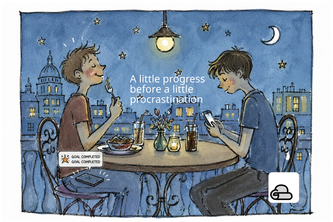
DreamScroll is a productivity app conceptualized as a hackathon project by a team of three students. The app aims to encourage users to complete small tasks before accessing social media, with the goal of fostering healthier digital habits.
What changed
The project was submitted to the OpenAI 2026 hackathon and described as a prototype built over the course of a few days or weeks by beginners in coding.
The single most important open question
Is there any evidence that DreamScroll has moved beyond the prototype stage, or that it has traction with users who are willing to pay for its services?
What The Product Actually Is
The description states that DreamScroll is a productivity app that encourages users to complete a small goal before opening their favorite social media apps. It combines:
- ✅ Goal tracking
- 🤖 AI-powered encouragement
- 📈 Progress monitoring
- 📱 Social media unlocking after completing a task
The app is described as being built with CSS, HTML, JavaScript, and Figma.
Inference The product appears to be a lightweight prototype or proof-of-concept, not a production-ready application. The team notes that they were "still figuring things out" and had limited coding experience.
Positioning & Claim Evolution
The description states that DreamScroll was inspired by the observation that people, especially students, are often distracted by social media and miss real-world moments. The team reframed the problem from “how to stop people from using social media” to “what if social media could become a reward instead of a distraction?”
Claim
The app is positioned as an alternative to complete blocking of social media, aiming to turn scrolling into something earned.
Inference This positioning suggests that DreamScroll is trying to address a behavioral issue rather than just a technical one. However, the lack of evidence for user adoption or product-market fit makes this claim unproven.
Target Customer & ICP
The description states that the team is made up of students juggling school, extracurriculars, hackathons, and college applications. They also note that they built the app with the idea of helping “students” build healthier digital habits.
Claim
The target customer is students who struggle with procrastination or time management.
Inference While the team identifies a potential user group, there is no evidence of actual users or market validation beyond their own experience and assumptions.
Business Model & Pricing Evidence
The description does not mention any pricing model, monetization strategy, or business model. It only describes how the app works in concept.
Not evidenced No information on revenue streams, subscriptions, freemium models, or paid features.
Technical & Delivery Signals
The team built the app using CSS, HTML, JavaScript, and Figma. They note that they were beginners in coding and had to learn as they went. They also mention switching tools due to expired Codex credits.
Inference The technical delivery is indicative of a prototype or early-stage product, not a scalable or production-ready solution.
Traction & Maturity Signals
The description states that the app was built during a hackathon and that it’s “a real application that people could actually use.” However, there is no evidence of:
- User adoption
- Customer feedback
- Revenue
- Product usage metrics
- Any form of market testing or validation
Not evidenced No traction data or maturity indicators beyond the prototype stage.
Competitive Context
The description does not provide any information about competitors or the competitive landscape. It also doesn’t describe how DreamScroll differentiates from existing productivity tools or social media habit trackers.
Not evidenced No mention of competitors, market positioning, or differentiation strategy.
Open Questions & Risks
- Prototype-only status: The app is described as a hackathon prototype with no evidence of further development.
- No revenue or customer data: There is no indication that the product has been monetized or used by real users.
- Team experience limitations: The team notes they were beginners in coding and had to learn on the fly, which raises concerns about scalability and long-term viability.
- Lack of business model clarity: No information on how the app would generate revenue or sustain itself.
Questions the description leaves open
- Has DreamScroll moved beyond the prototype stage? If so, what is the current product version?
- Have you conducted any user testing or gathered feedback from students?
- What is your plan for monetization and scaling the app?
- How do you intend to compete with existing productivity or habit-tracking apps?
- Are there any plans to integrate with social media platforms or APIs?
Overall Assessment
Not evidenced There is no evidence of traction, revenue, or customer adoption. The project is described as a hackathon prototype built by beginners with limited coding experience.
Confidence level Low. This is a self-reported, unverified description of a concept that has not yet demonstrated any commercial viability or user engagement.
Conclusion
DreamScroll appears to be an early-stage idea with no evidence of product-market fit or business traction. The team’s claim that it is “a real application that people could actually use” lacks supporting data. Any investment or partnership decision should be contingent on further validation of the product and its market potential.
User Stories BotA demo video on every pull request
Get a demo video on every new feature
GitHub App that watches your pull requests and records a narrated, captioned demo.
Save time on demo prep and make informed decisions faster with a video walkthrough of every new feature.
Source
Submitted to the OpenAI 2026 hackathon on Devpost. Project home on Devpost. Back to the full gallery on Devpost.
This competitive analysis was produced by top-founders.com (opens in a new tab)
Generated by a language model from this project's public Devpost page — its tagline, the author's own write-up and any built-with tags listed there — as captured in August 2026. Short quotations are the author's words. It is an opinion on the idea as a business, not on the people behind it, and it reflects the description as published then. If the project has moved on, request a correction below. The analysis is not independent research and contains no verified traction, revenue or customer data.
An independent guide by KFG International LLC — not affiliated with, endorsed by, or connected to Devpost or OpenAI.