

Archive position — measured, not model output
1 like on Devpost
505 of the 7,850 archived projects have more likes, and 1,758 share exactly 1 — so this project's #961 place in the like-ranked listing is a tie-break inside that group, not a ranking.
Projects (log scale)
Likes on Devpost. ▲ marks this project's group.
Show the figures
| Likes | Projects | Share of archive |
|---|---|---|
| 0 | 5,587 | 71.2% |
| 1 | 1,758 | 22.4% |
| 2 | 284 | 3.6% |
| 3–4 | 132 | 1.7% |
| 5–9 | 75 | 1.0% |
| 10+ | 14 | 0.2% |
 User Stories BotA demo video on every pull request
Get a demo video on every new feature
GitHub App that watches your pull requests and records a narrated, captioned demo.
Save time on demo prep and make informed decisions faster with a video walkthrough of every new feature.
Executive Summary
What the company appears to be
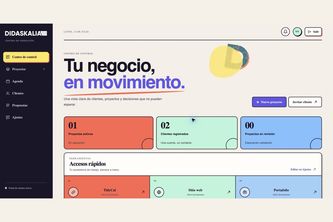
DK Control is a self-reported tool built by one individual (Vladimir Valladares) during OpenAI Build Week 2026. It aims to centralize and streamline the client lifecycle from proposal creation through project delivery, with an emphasis on preserving context and communication between client and creator.
What changed
The author states that DK Control emerged from a personal need to organize fragmented workflows across multiple platforms into one cohesive system. The tool was built using AI assistance (Codex and GPT-5.6) over the course of a few days, with no prior product specification or external validation.
Single most important open question
Is there evidence that DK Control has moved beyond a prototype or personal experiment to become a viable commercial offering with traction, adoption, or revenue?
Note: All claims are self-reported and unverified. No data on customers, revenue, usage, or product-market fit is provided.
What The Product Actually Is
The description states that DK Control is a "visual control center" designed to connect the full client journey:
- Client → Proposal → Approval → Project → Tasks → Deliverables → Follow-up
Key features include:
- Creation and management of client records
- Commercial proposal creation with configurable pricing, taxes, validity dates, scope, deliverables, timelines, and business information
- Previewing proposals exactly as clients will see them
- Generation of branded PDF versions
- Secure sharing through public links without requiring passwords
- Client approval or change requests via a portal
- Conversion of approved work into structured projects
- Task organization within customizable stages using drag-and-drop
- Multiple views (board, calendar, Gantt)
- Management of deliverables, meeting links, project activity, and client approvals
- Secure project portals for clients to follow progress
- Transactional email sending with confirmation steps
- Integration with Google Calendar and TidyCal booking links
- Activity log of important actions and interactions
The platform is built using:
- Next.js, React, TypeScript
- PostgreSQL, Drizzle ORM
- Supabase Authentication (Google Workspace)
- Resend for transactional emails
- Google Calendar API
- React PDF
- Vercel deployment
- pnpm dependency management
Inference: The product appears to be a single-user or small-team oriented solution focused on managing client workflows from proposal through delivery.
Positioning & Claim Evolution
The author positions DK Control as:
- A system designed around real workflow, not imposed by generic tools.
- Not another CRM or task manager.
- A tool that preserves the relationship and context between winning a project and delivering it.
It was built during OpenAI Build Week to explore how AI could be used for product development, with Codex and GPT-5.6 acting as partners throughout the process.
The author claims:
- The tool reflects his own business practices.
- It allows him to build tools that fit his business rather than forcing his business to fit existing software.
- AI-assisted development enabled rapid prototyping and iteration.
- The result is not a prototype but a functional system already shaped by real processes.
Claim vs Fact: These are self-reported claims about intent, utility, and process. No evidence of external validation or adoption exists.
Target Customer & ICP
The description states that DK Control was built for:
- Independent professionals (e.g., freelancers, consultants).
- Founders of businesses like Didaskalia 3.0.
- Individuals who manage client relationships and project delivery manually across multiple tools.
It is implied that the tool targets:
- Small teams or solo practitioners working in creative or service-based industries.
- Users looking to reduce fragmentation between proposal creation, approval, and project execution.
Inference: The ICP likely includes independent professionals managing client-facing workflows with limited technical resources or existing toolchains.
Business Model & Pricing Evidence
There is no mention of pricing, subscriptions, monetization strategies, or business models in the description. The author does not state whether DK Control will be offered as a paid service, free tier, freemium model, or open-source alternative.
Not evidenced: No information on how the product will generate revenue or who pays for it.
Technical & Delivery Signals
The platform is built with:
- Next.js and React
- TypeScript
- PostgreSQL and Drizzle ORM
- Supabase Authentication (Google Workspace)
- Resend for transactional emails
- Google Calendar API
- React PDF
- Vercel deployment
- pnpm for dependency management
It integrates AI tools like Codex and GPT-5.6 into the development lifecycle, including:
- Product definition
- Interface design
- Implementation
- Debugging
- Security decisions
- Deployment
Inference: The tool is built with modern web stack and uses AI in its creation process, suggesting a technical foundation suitable for further development.
Traction & Maturity Signals
The description states:
- DK Control was developed entirely during OpenAI Build Week (July 14–2026).
- It was deployed and tested in real-time.
- The author has used it directly in his own business (Didaskalia 3.0).
However, there is no evidence of:
- Customer base
- Revenue
- Usage metrics
- Adoption rate
- Product-market fit
Not evidenced: No data on traction or maturity beyond personal use and prototype status.
Competitive Context
The author does not reference competitors directly. However, based on the stated functionality (proposal creation, project management, client communication), DK Control overlaps with:
- CRM systems (e.g., HubSpot, Pipedrive)
- Project management tools (e.g., Asana, Notion, Monday.com)
- Proposal builders (e.g., PandaDoc, DocuSign)
- Workflow automation platforms
It is positioned as distinct from these by emphasizing continuity of the client experience and integration across all stages of a project lifecycle.
Inference: The competitive space includes general-purpose tools that may not fully support seamless transitions between proposal, approval, and delivery phases.
Open Questions & Risks
- Single-person development: Only one team member is mentioned; no indication of scalability or team structure.
- Prototype status: Built in a hackathon setting with no prior product history or testing.
- No commercial traction: No evidence of customers, revenue, or adoption beyond personal use.
- AI dependency: Reliance on Codex and GPT-5.6 raises questions about long-term viability if those tools change or become unavailable.
- Limited scope: The tool seems tailored to one individual’s workflow; unclear how easily it can be adapted for others.
Open Question: Lack of evidence for commercial viability, scalability, or broader market appeal.
Questions the description leaves open
- What specific business problems did you solve with DK Control?
- How many clients are currently using the system in production?
- Are there any existing customers or early adopters?
- What is your plan for monetization and pricing?
- Can you describe how the AI tools (Codex, GPT-5.6) were used beyond prototyping?
- What are the key assumptions about user behavior that underpin this product?
- How do you intend to scale the platform beyond personal use?
- Have you considered how to integrate with or replace other tools currently in use by users?
Overall Assessment
Not evidenced: There is insufficient evidence to assess whether DK Control represents a viable investment opportunity or partnership candidate.
The author describes a tool that emerged from personal need and was built quickly during a hackathon. While it shows potential for solving a real problem, there is no indication of:
- Commercial traction
- Revenue generation
- Customer validation
- Scalability
- Market demand
Confidence Level: Low — based on thin self-reported evidence only.
This is a product in early prototype form, likely intended for personal use or limited experimentation. Further diligence would require proof of adoption, usage metrics, revenue, and clear commercial strategy.
User Stories BotA demo video on every pull request
Get a demo video on every new feature
GitHub App that watches your pull requests and records a narrated, captioned demo.
Save time on demo prep and make informed decisions faster with a video walkthrough of every new feature.
Source
Submitted to the OpenAI 2026 hackathon on Devpost. Project home on Devpost. Back to the full gallery on Devpost.
This competitive analysis was produced by top-founders.com (opens in a new tab)
Generated by a language model from this project's public Devpost page — its tagline, the author's own write-up and any built-with tags listed there — as captured in August 2026. Short quotations are the author's words. It is an opinion on the idea as a business, not on the people behind it, and it reflects the description as published then. If the project has moved on, request a correction below. The analysis is not independent research and contains no verified traction, revenue or customer data.
An independent guide by KFG International LLC — not affiliated with, endorsed by, or connected to Devpost or OpenAI.