

Archive position — measured, not model output
0 likes on Devpost
2,263 of the 7,850 archived projects have more likes, and 5,587 share exactly 0 — so this project's #3,746 place in the like-ranked listing is a tie-break inside that group, not a ranking.
Projects (log scale)
Likes on Devpost. ▲ marks this project's group.
Show the figures
| Likes | Projects | Share of archive |
|---|---|---|
| 0 | 5,587 | 71.2% |
| 1 | 1,758 | 22.4% |
| 2 | 284 | 3.6% |
| 3–4 | 132 | 1.7% |
| 5–9 | 75 | 1.0% |
| 10+ | 14 | 0.2% |
 User Stories BotA demo video on every pull request
Get a demo video on every new feature
GitHub App that watches your pull requests and records a narrated, captioned demo.
Save time on demo prep and make informed decisions faster with a video walkthrough of every new feature.
Executive Summary
What the company appears to be
The project described is a software plugin that emulates the behavior of a hardware guitar pedal — specifically, the DigiTech Whammy DT. It is built using C++ and JUCE, and aims for high-fidelity emulation based on empirical measurements of the real hardware.
What changed
This is a self-reported developer project submitted to a hackathon. No commercial traction, revenue or customer data are provided. The author states that this is a personal endeavor with no external validation or market deployment.
Single most important open question
Is there any evidence of commercial intent or product-market fit beyond the author's own technical demonstration?
What The Product Actually Is
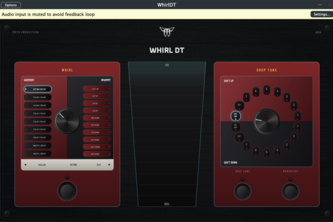
The description states that WhirlDT is a JUCE-based VST3/AU/Standalone plugin designed to model the behavior of the DigiTech Whammy DT pedal in software. It includes:
- A parameter layout matching the real pedal’s modes:
- Harmony / Whirl / Detune mode selector (with 9 harmony, 10 whirl, and 2 detune settings)
- Drop Tune section with separate "Shift Up" / "Shift Down" arcs (9 steps each)
- Momentary switch for pedal-style activation
- A measurement workflow using a custom-built tool called MeasurementMapper, which records audio both dry and through the real hardware to extract:
- Gain, latency, pitch ratio, timing drift
- Section-by-section analysis with JSON model specs and CSV dumps
- Model hints indicating whether behavior is static, dynamic, hybrid, or nonlinear
- A DSP implementation plan that builds the plugin architecture from measurement data — not pre-defined but driven by empirical results.
Not evidenced No information on actual user feedback, sales, or adoption. The project is presented as a technical prototype, not a commercial product.
Positioning & Claim Evolution
The author states:
“The goal isn't a pitch shifter that just 'sounds similar' — it's a digital model grounded in the measured response of the real hardware.”
This suggests a positioning around accuracy and fidelity over general sound similarity. The project is framed as a scientific approach to emulation, not just artistic recreation.
There is no evidence of prior claims or evolution in positioning beyond this single technical statement. No marketing materials, branding, or public-facing messaging are included.
Inference The project may be positioned as a niche tool for musicians or developers seeking accurate hardware emulation — but this is inferred from the stated intent, not demonstrated traction.
Target Customer & ICP
The description does not state any explicit target customer or ideal customer profile (ICP). However, based on the technical nature of the product and its use case:
- The plugin targets users who work with guitar effects, particularly those interested in accurate emulation of specific hardware pedals.
- It is likely aimed at musicians, producers, or sound engineers using DAWs (Digital Audio Workstations) that support VST3/AU plugins.
- The developer tooling and measurement approach suggest a technical audience rather than general consumers.
Not evidenced No customer personas, user segments, or market research are provided. No indication of whether the author has identified specific buyer types or markets.
Business Model & Pricing Evidence
The description does not provide any information about pricing, monetization strategy, or business model. The project is described as a personal development effort submitted to a hackathon.
There is no mention of:
- Revenue streams
- Licensing terms
- Subscription models
- Freemium offerings
- Paid versions or in-app purchases
Not evidenced No evidence of any commercial structure or monetization plan beyond the author’s own technical interest.
Technical & Delivery Signals
The project shows clear technical sophistication:
- Built using C++ and JUCE framework
- Uses a custom measurement tool (MeasurementMapper) for empirical data collection
- Implements dynamic DSP architecture based on measurement outputs
- Supports multiple plugin formats (VST3, AU, Standalone)
- Includes detailed audio analysis including latency correction, pitch ratio computation, and model hint classification
The author also notes that the architecture is not decided upfront but derived from empirical data — indicating a data-driven development approach.
Not evidenced No evidence of delivery timeline, testing process, or production readiness beyond the prototype stage.
Traction & Maturity Signals
There is no evidence of traction or maturity:
- No customers
- No revenue
- No public usage or downloads
- No reviews or feedback from users
- No mention of distribution channels or marketing efforts
- Submitted to a hackathon — suggesting early-stage development
The project appears to be a technical prototype, not a product in the market.
Inference Given its submission to a hackathon and lack of any commercial activity, it is likely in an early R&D phase with no proven market demand or adoption.
Competitive Context
The description does not mention competitors or existing solutions in the space. However, based on the stated goal of emulating a hardware guitar pedal:
- The market for virtual guitar pedals (VSTs, AU plugins) is well-established.
- Competitors may include companies offering accurate hardware emulation, such as Native Instruments, Soundtoys, or Eventide.
- The approach described — using empirical measurements and dynamic DSP modules — could be seen as a novel technical method, but not necessarily a differentiator in terms of product positioning.
Not evidenced No competitive analysis, market share data, or comparison to existing tools is provided.
Open Questions & Risks
- No commercial traction: The project is described as a personal hackathon submission with no evidence of real-world usage.
- Highly technical niche: Emulation of specific hardware pedals may limit the addressable market.
- Limited team size: Only one developer involved, which raises questions about scalability and long-term maintenance.
- Unproven business model: No indication of how this would be monetized or sold.
- No external validation: The project is self-reported with no third-party verification.
Inference There is a risk that the project may remain a technical curiosity without commercial viability unless further developed into a product with clear market demand.
Questions the description leaves open
- What inspired you to build this plugin? Was there a specific gap in the market or personal need?
- Do you have any plans for monetization or distribution beyond the current prototype?
- How do you intend to validate that your emulation meets user expectations in practice?
- Are you planning to expand the plugin beyond the Whammy DT, or focus on other hardware pedals?
- What is your timeline for developing this into a commercial product?
- Have you considered how users might discover and adopt this plugin?
Overall Assessment
Not evidenced:
There is no evidence of any investment interest, partnership opportunities, or strategic value beyond the author’s own technical exploration.
This project appears to be a personal development effort, likely in an early stage of R&D. It lacks commercial traction, revenue, or customer validation. Without further evidence of market demand or business intent, it does not appear suitable for investment or partnership consideration at this time.
Confidence level: Low — based entirely on self-reported information with no external corroboration.
User Stories BotA demo video on every pull request
Get a demo video on every new feature
GitHub App that watches your pull requests and records a narrated, captioned demo.
Save time on demo prep and make informed decisions faster with a video walkthrough of every new feature.
Source
Submitted to the OpenAI 2026 hackathon on Devpost. Project home on Devpost. Back to the full gallery on Devpost.
This competitive analysis was produced by top-founders.com (opens in a new tab)
Generated by a language model from this project's public Devpost page — its tagline, the author's own write-up and any built-with tags listed there — as captured in August 2026. Short quotations are the author's words. It is an opinion on the idea as a business, not on the people behind it, and it reflects the description as published then. If the project has moved on, request a correction below. The analysis is not independent research and contains no verified traction, revenue or customer data.
An independent guide by KFG International LLC — not affiliated with, endorsed by, or connected to Devpost or OpenAI.