

Archive position — measured, not model output
2 likes on Devpost
221 of the 7,850 archived projects have more likes, and 284 share exactly 2 — so this project's #305 place in the like-ranked listing is a tie-break inside that group, not a ranking.
Projects (log scale)
Likes on Devpost. ▲ marks this project's group.
Show the figures
| Likes | Projects | Share of archive |
|---|---|---|
| 0 | 5,587 | 71.2% |
| 1 | 1,758 | 22.4% |
| 2 | 284 | 3.6% |
| 3–4 | 132 | 1.7% |
| 5–9 | 75 | 1.0% |
| 10+ | 14 | 0.2% |
 User Stories BotA demo video on every pull request
Get a demo video on every new feature
GitHub App that watches your pull requests and records a narrated, captioned demo.
Save time on demo prep and make informed decisions faster with a video walkthrough of every new feature.
Executive Summary
What the company appears to be: diffthing is a local-first code review tool designed to structure AI-generated diffs into human-readable walkthroughs while preserving developer control over architectural decisions. The author states it is built around the principle that an AI can organize code but not approve or judge it.
What changed: The project evolved from a personal observation about AI agents defaulting to generic patterns without explicit constraints, leading to a rethinking of workflow where developers define system architecture before prompting, and AI handles organization while humans retain final judgment.
Single most important open question: Does diffthing have any evidence of traction or adoption beyond the authors' own use case? The description provides no data on customers, usage volume, revenue, or market response — only self-reported claims about product design and intent.
Confidence level: Low. This analysis is based entirely on a single self-reported project description with no external corroboration. All findings are derived from the author's own account and must be treated as unverified claims.
What The Product Actually Is
The description states that diffthing is:
- A local-first code review engine
- Designed to evaluate the current Git working tree against a baseline
- Operates via
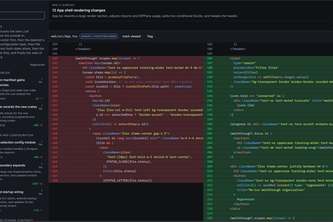
npx diffthinginside a repository - Groups related changes into scopes and sequences for structured narrative walkthroughs
- Uses an AI agent to propose organization, but does not trust that output by default
- Implements a deterministic validator that checks schema validity, hunk references, complete coverage, and ordering before accepting the AI-generated walkthrough
- Communicates between a Rust CLI daemon and React frontend over a local bridge
- Serves interface via HTTPS at
local.diffthing.devwith token-gated WebSocket connection back to local daemon - Supports offline mode using loopback when DNS or certificate is unavailable
Inference: The tool appears to be a developer-focused workflow enhancement for code review, not a general-purpose AI assistant or platform.
Positioning & Claim Evolution
The author claims:
- AI agents cannot optimize for constraints they haven’t been given
- A developer must supply guidance on trade-offs before prompting an agent
- The tool inverts the daily workflow: architecture is defined first, then execution by agent
- The AI organizes; the developer reviews and makes final decisions
- It treats the model as a structural assistant, not an autonomous reviewer
Inference: This represents a shift from typical AI-assisted development tools that may automate or even approve code changes. Instead, diffthing positions itself as a tool for human-in-the-loop review.
Target Customer & ICP
The description states:
- The primary user is a developer
- The tool is intended for use in local-first workflows, particularly within Git repositories
- It supports interactive code review sessions where developers can audit AI-generated organization of diffs
- It allows sending hunk-anchored questions or explicit change requests to a chosen coding-agent CLI
Inference: The target customer is likely individual developers or small teams working in local environments, especially those using Git and AI agents for development tasks.
Business Model & Pricing Evidence
Not evidenced.
The description does not mention:
- Any pricing model
- Revenue streams
- Monetization strategy
- Subscription plans or usage fees
Absence of evidence: No indication that diffthing has moved beyond prototype or experimental stage in terms of commercial viability.
Technical & Delivery Signals
The description states:
- Built with React, Rust, TypeScript, WebSocket
- Local-first architecture inspired by Drizzle Studio
- Two execution environments: Rust CLI daemon and React frontend
- Communicates via local HTTPS at
local.diffthing.dev - Uses token-gated same-origin WebSocket connection
- Implements deterministic validator gate
- Content-hashed hunk identity to prevent structural drift during review sessions
- Incremental reconciliation engine for handling filesystem changes
- Review state engine for persistence of viewed hunks, open threads, agent responses
Inference: The tool is technically sophisticated and built with attention to developer experience and safety in local environments.
Traction & Maturity Signals
Not evidenced.
The description does not include:
- Customer base or adoption metrics
- Revenue figures
- User engagement data
- Product usage statistics
- Market traction indicators
Absence of evidence: No signs of product-market fit, user growth, or commercial success beyond the authors' own development efforts.
Competitive Context
Not evidenced.
The description does not:
- Name competitors
- Describe competitive advantages
- Compare to existing tools in code review or AI-assisted development
- Mention market positioning relative to similar products
Absence of evidence: No competitive landscape information provided.
Open Questions & Risks
Key risks identified from the self-reported description:
- No commercial traction — The tool is described as a hackathon submission with no evidence of adoption or monetization.
- Highly niche use case — Local-first, Git-based code review may limit its appeal to broader markets.
- Dependency on developer workflow change — Requires developers to shift their approach, which may be difficult to scale.
- Limited scalability — Designed for individual or small team usage; unclear how it would function at enterprise scale.
- Unproven value proposition — While the concept is compelling, there’s no evidence that users find it valuable beyond the authors' own experience.
Inference: The tool may be technically sound but lacks commercial viability or market validation.
Questions the description leaves open
- What specific workflows or pain points led to the creation of diffthing?
- Have you tested this tool with other developers outside your team? If so, what feedback did you receive?
- How do you plan to monetize or scale this product if it gains traction?
- Are there any known limitations or edge cases in how the deterministic validator behaves under complex Git scenarios?
- What is your long-term vision for diffthing beyond its current local-first scope?
Overall Assessment
Not evidenced.
The description provides no information on:
- Valuation
- Funding history
- Investor interest
- Strategic partnerships
- Go-to-market plans
Absence of evidence: No basis to assess investment or partnership potential. The project remains in early-stage development with no demonstrated commercial traction or financial metrics.
User Stories BotA demo video on every pull request
Get a demo video on every new feature
GitHub App that watches your pull requests and records a narrated, captioned demo.
Save time on demo prep and make informed decisions faster with a video walkthrough of every new feature.
Source
Submitted to the OpenAI 2026 hackathon on Devpost. Project home on Devpost. Back to the full gallery on Devpost.
This competitive analysis was produced by top-founders.com (opens in a new tab)
Generated by a language model from this project's public Devpost page — its tagline, the author's own write-up and any built-with tags listed there — as captured in August 2026. Short quotations are the author's words. It is an opinion on the idea as a business, not on the people behind it, and it reflects the description as published then. If the project has moved on, request a correction below. The analysis is not independent research and contains no verified traction, revenue or customer data.
An independent guide by KFG International LLC — not affiliated with, endorsed by, or connected to Devpost or OpenAI.