

Archive position — measured, not model output
0 likes on Devpost
2,263 of the 7,850 archived projects have more likes, and 5,587 share exactly 0 — so this project's #3,646 place in the like-ranked listing is a tie-break inside that group, not a ranking.
Projects (log scale)
Likes on Devpost. ▲ marks this project's group.
Show the figures
| Likes | Projects | Share of archive |
|---|---|---|
| 0 | 5,587 | 71.2% |
| 1 | 1,758 | 22.4% |
| 2 | 284 | 3.6% |
| 3–4 | 132 | 1.7% |
| 5–9 | 75 | 1.0% |
| 10+ | 14 | 0.2% |
 User Stories BotA demo video on every pull request
Get a demo video on every new feature
GitHub App that watches your pull requests and records a narrated, captioned demo.
Save time on demo prep and make informed decisions faster with a video walkthrough of every new feature.
Executive Summary
What the company appears to be
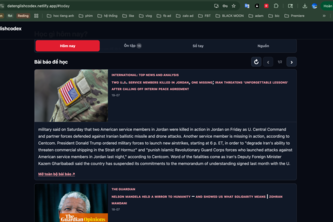
DatEnglishcodex is a self-reported Chrome extension and mobile-friendly Progressive Web App (PWA) designed for English language learners who consume content from YouTube and news websites. It allows users to look up words in context, translate sentences, view bilingual subtitles, save vocabulary with surrounding context, and review it using spaced repetition.
What changed
The project was submitted as part of the OpenAI 2026 hackathon. The author describes building a tool that integrates real-time content consumption with language learning, including features like bilingual subtitle support, dictionary integration, and synchronization across devices.
Single most important open question
Is there any evidence of user adoption or product-market fit beyond the author's own description? There is no evidence of revenue, customers, usage metrics, or traction.
What The Product Actually Is
The description states that DatEnglishcodex is a Chrome extension and mobile-friendly Progressive Web App. It enables users to:
- Double-click English words for Vietnamese translations, pronunciation, word form, usage, and examples.
- Translate sentences or paragraphs into bilingual English-Vietnamese text.
- View bilingual subtitles while watching supported YouTube videos.
- Pause videos and look up individual subtitle words.
- Save vocabulary with the original sentence and paragraph.
- Listen to words, sentences, and paragraphs.
- Review saved vocabulary using spaced repetition.
- Synchronize learning progress between desktop and mobile.
- Read selected news articles and watch selected learning videos from a daily homepage.
Evidence
- The author describes the product as a Manifest V3 Chrome extension combined with a PWA.
- Technologies listed include JavaScript, HTML, CSS, Supabase, Netlify Functions, Google Translate, Dictionary API, YouTube transcript data, and OpenAI Codex.
- Features are described in detail but not independently verified.
Inference The product appears to be built for personal use or early-stage learning rather than enterprise or large-scale deployment.
Positioning & Claim Evolution
The author positions DatEnglishcodex as a tool that turns everyday web browsing into interactive English lessons, allowing learners to discover vocabulary in context, understand meaning through surrounding sentences, and review using spaced repetition.
Claims made
- Learners can study English through real content (YouTube, news).
- Vocabulary is saved with context for better retention.
- The app supports bilingual learning and integrates with YouTube subtitles.
- It provides a seamless experience across desktop and mobile.
Evidence
- The tagline: “Turn YouTube and real news into personalized bilingual English lessons.”
- The write-up emphasizes that many vocabulary apps teach isolated words, but this one teaches through context.
- The author mentions the need to improve contextual meaning detection and AI-generated subtitles — suggesting ongoing evolution in positioning.
Inference The product is positioned as a context-based language learning tool, not a traditional app or course. It seems to be evolving toward more advanced AI integration and broader content support.
Target Customer & ICP
The description states that the author created DatEnglishcodex because they wanted to learn English from content they already use daily — especially YouTube videos and international news websites.
Claims made
- The tool targets learners who consume real-world English content.
- It supports bilingual learning (English-Vietnamese).
- Users are likely students, self-taught learners, or professionals seeking fluency through immersion.
Evidence
- The author says the inspiration came from wanting to learn English from YouTube and news.
- The app is designed for users who want to study while browsing.
- No specific demographics or personas are mentioned.
Inference The ICP likely includes language learners aged 15–35, who prefer immersive, self-directed learning methods and are comfortable using web browsers and mobile apps. However, no segmentation data is provided.
Business Model & Pricing Evidence
There is no evidence of a business model or pricing structure in the description.
Claims made
- The core experience will remain accessible to everyone.
- Optional premium features may be introduced later.
- No mention of monetization strategy or revenue streams.
Evidence
- The author says they plan to introduce optional premium features while keeping the core experience free.
- There is no indication of paid subscriptions, freemium tiers, or advertising models.
- No pricing information, customer acquisition costs, or monetization plans are shared.
Inference The business model appears to be freemium, with potential for future paid upgrades. However, this remains unproven and speculative.
Technical & Delivery Signals
The author describes building DatEnglishcodex as a Manifest V3 Chrome extension and mobile-friendly Progressive Web App (PWA).
Technologies used
- JavaScript, HTML, CSS
- Chrome Extension APIs
- Supabase for authentication and cloud synchronization
- Netlify Functions for server-side requests
- Google Translate for translation
- Dictionary API for definitions and pronunciation
- YouTube transcript data for subtitle support
- OpenAI Codex for development assistance
Challenges mentioned
- Handling dynamic website structures.
- Synchronizing English and Vietnamese subtitles.
- Ensuring responsive design across devices.
- Managing cross-device synchronization.
Evidence
- The write-up lists all major technical components.
- Challenges reflect real engineering complexity, especially around browser compatibility and data handling.
Inference The delivery approach shows a technical foundation suitable for MVP-level functionality, but lacks evidence of scalability or production-grade infrastructure.
Traction & Maturity Signals
There is no evidence of traction, users, revenue, or adoption beyond the author’s own account.
Claims made
- The app was built during a hackathon.
- It supports multiple platforms (Chrome, mobile).
- Future goals include adding Android/iOS apps and smarter recommendations.
Evidence
- Submitted to the OpenAI 2026 hackathon.
- No metrics on downloads, active users, retention, or engagement.
- No mention of beta testing, partnerships, or user feedback loops.
Inference This is a pre-MVP prototype, likely in early development or launch phase. No signs of market traction or product maturity are evident.
Competitive Context
The description does not provide any information about competitors or competitive positioning.
Claims made
- Many vocabulary apps teach isolated words.
- DatEnglishcodex teaches through context.
- It integrates with YouTube and news sites.
Evidence
- No competitor names, market share data, or pricing comparisons are included.
- The author does not reference existing tools like Anki, Memrise, Duolingo, or other language learning platforms.
Inference The competitive landscape is unknown. Based on the product features, it may compete with context-based learning tools, but no direct comparison or differentiation strategy is evident.
Open Questions & Risks
Several key risks and open questions emerge from the lack of evidence:
- No traction or user data: The project has not demonstrated any real-world usage or adoption.
- Unverified claims: All features, functionality, and positioning are self-reported without external validation.
- Limited team size: Only one member (Dat Van) is listed — raises concerns about execution capacity.
- Unclear monetization path: While a freemium model is implied, no concrete plan or revenue model exists.
- Hackathon origin: The product was built in a short timeframe; there’s no evidence of long-term planning or iteration.
Inference This project appears to be a conceptual prototype, not a mature product with proven demand or scalable business potential.
Questions the description leaves open
- What is the current stage of development? Is it live or still in testing?
- Have you conducted any user research or gathered feedback from early adopters?
- How do you plan to scale beyond a single developer and hackathon-level effort?
- What are your plans for monetization, and how will you balance free and paid features?
- Are there any technical limitations or scalability issues with the current architecture?
- Do you have any data on usage patterns, retention rates, or user engagement?
- How do you intend to differentiate from existing tools in the language learning space?
- What is your roadmap for mobile app development (iOS/Android)?
- Have you considered localization beyond English-Vietnamese?
- How do you plan to handle content rights and compliance with YouTube and news sites?
Overall Assessment
Not evidenced.
The description provides no information on financials, funding rounds, valuation, or investor interest.
Inference This is a pre-MVP prototype, likely in the early stages of development. It lacks commercial traction, user data, or business model validation. Any investment or partnership decision would require further due diligence into actual usage, market fit, and scalability. The project is not yet ready for serious commercial evaluation.
User Stories BotA demo video on every pull request
Get a demo video on every new feature
GitHub App that watches your pull requests and records a narrated, captioned demo.
Save time on demo prep and make informed decisions faster with a video walkthrough of every new feature.
Source
Submitted to the OpenAI 2026 hackathon on Devpost. Project home on Devpost. Back to the full gallery on Devpost.
This competitive analysis was produced by top-founders.com (opens in a new tab)
Generated by a language model from this project's public Devpost page — its tagline, the author's own write-up and any built-with tags listed there — as captured in August 2026. Short quotations are the author's words. It is an opinion on the idea as a business, not on the people behind it, and it reflects the description as published then. If the project has moved on, request a correction below. The analysis is not independent research and contains no verified traction, revenue or customer data.
An independent guide by KFG International LLC — not affiliated with, endorsed by, or connected to Devpost or OpenAI.