

Archive position — measured, not model output
0 likes on Devpost
2,263 of the 7,850 archived projects have more likes, and 5,587 share exactly 0 — so this project's #3,616 place in the like-ranked listing is a tie-break inside that group, not a ranking.
Projects (log scale)
Likes on Devpost. ▲ marks this project's group.
Show the figures
| Likes | Projects | Share of archive |
|---|---|---|
| 0 | 5,587 | 71.2% |
| 1 | 1,758 | 22.4% |
| 2 | 284 | 3.6% |
| 3–4 | 132 | 1.7% |
| 5–9 | 75 | 1.0% |
| 10+ | 14 | 0.2% |
 User Stories BotA demo video on every pull request
Get a demo video on every new feature
GitHub App that watches your pull requests and records a narrated, captioned demo.
Save time on demo prep and make informed decisions faster with a video walkthrough of every new feature.
Executive Summary
What the company appears to be
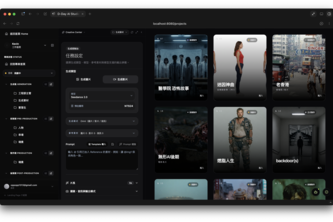
D-Day AI Studio is a self-reported cinematic AI filmmaking platform designed for professional production companies. The author states it supports end-to-end filmmaking workflows—from script development and shot planning to storyboards, visual production, and final delivery—using generative AI tools integrated into structured production phases.
What changed
The project evolved from an initial collaboration with a visual production company (D-Day) in Taiwan. It began as a practical question: how can AI be integrated into existing filmmaking processes without replacing them? The platform was built to reflect real-world workflows and support both traditional and fully AI-generated productions.
Single most important open question
Is there evidence of traction, revenue, or customer adoption beyond the self-reported description?
Note: This analysis is based solely on the author’s own account. No third-party verification, archived data, or independent sources are available. All claims are unverified and should be treated as stated by the author only.
What The Product Actually Is
The description states that D-Day AI Studio is a cinematic AI filmmaking platform built around professional filmmaking workflows. It supports:
- Script development and scene breakdowns
- Pre-production storyboard and shot planning
- Camera-angle, lens, movement, and visual-continuity planning
- AI-generated inserts or additional shots for live-action productions
- AI visual effects and post-production enhancement
- Image-to-video generation and editorial assembly
- Fully AI-generated film creation from idea to final delivery
It also integrates multiple image and video generation models (e.g., OpenAI, Sora, Seedance, Veo) into a single environment for managing production assets.
Inference: The platform appears to be structured around three main phases: pre-production, production, and post-production. These are aligned with real-world filmmaking stages, as described by the author.
Positioning & Claim Evolution
The author claims that D-Day AI Studio was developed through collaboration with a visual production company in Taiwan. It is positioned not as another standalone AI generator but as an integrated system that fits into existing professional workflows.
Key positioning elements include:
- Supporting both traditional and fully AI-generated productions
- Integrating AI tools within the structure of real filmmaking processes
- Maintaining creative control, asset traceability, and budget visibility
Claim: The platform is built to support real production work, not replace it.
Inference: This suggests a focus on workflow integration rather than tool fragmentation.
Target Customer & ICP
The description states that D-Day AI Studio targets professional production companies. It supports:
- Live-action productions enhanced by AI
- Films created entirely with generative AI
- Teams requiring continuity, model control, and cost management
Inference: The platform is aimed at mid-to-large-scale production teams that already have established workflows and need AI to enhance or automate parts of their process.
Business Model & Pricing Evidence
There is no evidence in the description of a business model or pricing structure. The author does not mention:
- Subscription tiers
- Usage-based pricing
- Licensing models
- Revenue streams
Not evidenced: No information on how the platform will generate revenue or what customers pay.
Technical & Delivery Signals
The platform is built using:
- Frontend: React, TypeScript, Vite, Tailwind CSS, shadcn/ui
- Backend: Supabase, PostgreSQL, Edge Functions
- AI APIs: OpenAI (including GPT-5.6), Sora, Seedance, Veo, Gemini, etc.
- Development tools: OpenAI Codex, Lovable
Key technical features include:
- Project-based asset management
- Script-to-storyboard workflow with approval gates
- Integration of multiple image/video generation providers
- Cost tracking and estimation dashboards
- Generation queues, cancellation, retry, and usage tracking
Inference: The platform uses a combination of modern frontend frameworks and backend services to manage complex AI workflows.
Traction & Maturity Signals
There is no evidence of traction or customer adoption beyond the author’s own account. No data on:
- Number of users
- Revenue
- Customer retention
- Product usage metrics
- Market validation
Not evidenced: No signs of product-market fit, user engagement, or commercial success.
Competitive Context
The author does not provide any information about competitors or the competitive landscape. There is no mention of:
- Direct competitors
- Market positioning relative to other AI filmmaking tools
- Differentiation from existing platforms
Not evidenced: No competitive analysis or market context provided.
Open Questions & Risks
Several potential risks and open questions are implied by the description:
- No traction or revenue: The platform is described only as a prototype or early-stage product.
- Single founder team: Only one member listed (AI Yeh), which may limit execution capacity.
- Highly technical dependencies: Reliance on multiple AI APIs and complex integrations could pose scalability or reliability issues.
- Unclear monetization strategy: No indication of how the platform will be monetized.
- Workflow complexity: Supporting both traditional and AI-generated workflows may increase development and maintenance costs.
Inference: The lack of traction, unclear business model, and limited team size raise concerns about viability and scalability.
Questions the description leaves open
- What specific feedback did D-Day provide during the collaboration? How was this incorporated into the platform?
- Are there any pilot users or early adopters beyond D-Day?
- What is the current stage of development? Is it ready for beta testing or limited release?
- How do you plan to monetize the platform? What pricing model are you considering?
- What are the key challenges in integrating multiple AI models and ensuring continuity across assets?
- What is your roadmap for expanding beyond the current scope (e.g., collaboration tools, scheduling, etc.)?
- How do you intend to scale the team or attract additional talent?
Overall Assessment
There is no evidence of revenue, customer traction, or commercial viability beyond the author’s own description.
Assessment: Not evidenced — This project appears to be an early-stage prototype or proof-of-concept. Without independent verification, data on usage, adoption, or financials, it cannot be evaluated as a viable investment or partnership opportunity.
User Stories BotA demo video on every pull request
Get a demo video on every new feature
GitHub App that watches your pull requests and records a narrated, captioned demo.
Save time on demo prep and make informed decisions faster with a video walkthrough of every new feature.
Source
Submitted to the OpenAI 2026 hackathon on Devpost. Project home on Devpost. Back to the full gallery on Devpost.
This competitive analysis was produced by top-founders.com (opens in a new tab)
Generated by a language model from this project's public Devpost page — its tagline, the author's own write-up and any built-with tags listed there — as captured in August 2026. Short quotations are the author's words. It is an opinion on the idea as a business, not on the people behind it, and it reflects the description as published then. If the project has moved on, request a correction below. The analysis is not independent research and contains no verified traction, revenue or customer data.
An independent guide by KFG International LLC — not affiliated with, endorsed by, or connected to Devpost or OpenAI.