

Archive position — measured, not model output
10 likes on Devpost
12 of the 7,850 archived projects have more likes, and 2 share exactly 10 — so this project's #13 place in the like-ranked listing is a tie-break inside that group, not a ranking.
Projects (log scale)
Likes on Devpost. ▲ marks this project's group.
Show the figures
| Likes | Projects | Share of archive |
|---|---|---|
| 0 | 5,587 | 71.2% |
| 1 | 1,758 | 22.4% |
| 2 | 284 | 3.6% |
| 3–4 | 132 | 1.7% |
| 5–9 | 75 | 1.0% |
| 10+ | 14 | 0.2% |
 User Stories BotA demo video on every pull request
Get a demo video on every new feature
GitHub App that watches your pull requests and records a narrated, captioned demo.
Save time on demo prep and make informed decisions faster with a video walkthrough of every new feature.
Executive Summary
What the company appears to be
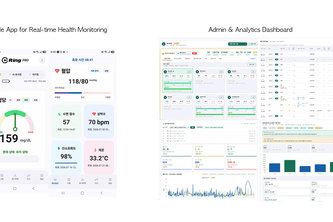
BINER AI – Cring AI Wearable Platform is a self-reported project submitted to the OpenAI 2026 hackathon. The description states it is an on-device AI wearable platform that measures blood glucose and blood pressure using physiological signals from smart rings and wearables, delivering private, real-time health intelligence.
What changed
No evidence of prior version or evolution; this is a single self-reported submission to a hackathon.
The single most important open question
Is there any evidence of actual product development, prototype testing, or user feedback beyond the hackathon submission?
What The Product Actually Is
The description states that BINER AI is an on-device AI wearable platform. It claims to continuously measure blood glucose and blood pressure using physiological signals from smart rings and wearables, such as ECG (electrocardiogram), PPG (photoplethysmography), and other sensors.
It also states that the system delivers private, real-time health intelligence, and is built with technologies including AI, Bluetooth, embedded systems, Linux, mobile apps, ONNX, OpenAI tools like GPT-5, and edge computing.
Confidence Low. The description does not clarify how the product works technically beyond its use of wearable sensors and AI models. No evidence of actual functionality or data processing pipeline is provided.
Positioning & Claim Evolution
The author states that BINER AI is an on-device AI wearable platform, with a focus on continuous health monitoring using smart rings and wearables.
It positions itself as delivering private, real-time health intelligence. It also claims to use on-device processing, implying privacy and reduced reliance on cloud services.
There is no evidence of prior positioning or evolution in the description — this appears to be a single self-reported claim from a hackathon submission.
Confidence Very low. The project does not show any historical positioning, branding evolution, or prior claims beyond its current pitch.
Target Customer & ICP
The description states that the platform is intended for users of smart rings and wearables, particularly those interested in continuous health monitoring such as blood glucose and blood pressure tracking.
It implies a consumer or health-conscious user base who values real-time, private health data.
No evidence of specific customer segments, personas, or ICP (Ideal Customer Profile) is provided beyond the general use case of wearable users.
Confidence Low. No evidence of segmentation, targeting, or understanding of actual customer needs.
Business Model & Pricing Evidence
The description does not state anything about a business model, pricing strategy, or monetization approach.
There is no mention of whether the platform will be sold as a hardware product, software-as-a-service (SaaS), or through partnerships.
Confidence Not evidenced. No indication of how the company intends to make money.
Technical & Delivery Signals
The project is described as built with technologies including:
- AI and machine learning
- Bluetooth and BLE (Bluetooth Low Energy)
- Embedded systems
- Linux
- Mobile app development
- ONNX (Open Neural Network Exchange)
- OpenAI tools like GPT-5
- ECG, PPG sensors
- Edge computing
It is also described as an on-device AI platform, suggesting local processing of health data.
However, no evidence of actual delivery, prototype, or technical architecture is provided. No mention of how the data is collected, processed, or validated.
Confidence Low. The project is described as a hackathon submission and lacks any demonstration of technical maturity or delivery.
Traction & Maturity Signals
There is no evidence of traction, customers, or product adoption beyond the hackathon submission.
The team size is listed as 2 members, and there is no mention of user testing, pilot programs, or market validation.
No evidence of revenue, ARR, funding, or headcount growth is provided.
Confidence Not evidenced. No signs of traction or maturity.
Competitive Context
The description does not provide any information about the competitive landscape or how BINER AI compares to existing solutions in the wearable health tech space.
There is no mention of competitors, market size, or differentiation strategy.
Confidence Not evidenced. No competitive positioning or analysis provided.
Open Questions & Risks
- No product demonstration or prototype evidence: The project is only described as a hackathon submission.
- No traction or customer validation: No users, feedback, or adoption metrics are mentioned.
- Unverified claims: All statements are self-reported and unverified.
- Limited team size: Only two members listed — raises questions about execution capability.
- Lack of business model clarity: No indication of how the company will monetize or scale.
Confidence High. These are clear open questions based on the lack of evidence for any real product, traction, or business plan.
Questions the description leaves open
- What is the current stage of development beyond the hackathon submission?
- Have you tested the platform with actual users or sensors?
- How does your system validate the accuracy of blood glucose and blood pressure measurements?
- What is your path to market, and how do you plan to monetize this product?
- Are there any partnerships or collaborations in place?
- What are the technical challenges you’ve faced in on-device processing of health data?
Overall Assessment
Not evidenced.
There is no evidence of a functioning product, traction, revenue, or even a clear business model. The project is described as a hackathon submission with no further development or validation.
This is a pre-product idea, not a company ready for investment or partnership.
Confidence Very low. No basis to assess commercial viability or scalability.
Customer Segments
inferred
The description does not explicitly state customer segments. Based on the technology and health focus (blood glucose and blood pressure monitoring), it can be inferred that the platform may target individuals with chronic health conditions, such as diabetes or hypertension, who are interested in continuous health monitoring using wearable devices.
Value Propositions
inferred
The description states that the platform continuously measures blood glucose and blood pressure using physiological signals from smart rings and wearables. It also emphasizes delivering private, real-time health intelligence. From this, it can be inferred that the value proposition includes real-time health insights, privacy, and continuous monitoring capabilities.
Channels
inferred
The description does not explicitly mention how the product reaches customers. However, given that it is a wearable platform built for smart rings and wearables, it can be inferred that the channels may include direct-to-consumer sales through mobile apps or partnerships with wearable device manufacturers.
Customer Relationships
inferred
There is no explicit statement about customer relationships in the description. Based on the nature of a health monitoring platform, it can be inferred that the relationship might involve ongoing support, updates, and possibly personalized health insights or alerts for users.
Revenue Streams
inferred
The description does not mention revenue models. However, given that this is a wearable platform with potential for continuous health data collection, it can be inferred that revenue may come from device sales, subscription-based access to health insights, or partnerships with healthcare providers.
Key Resources
evidenced
The description states that the platform was built using technologies such as AI, Bluetooth, ECG, PPG, embedded systems, Linux, mobile platforms, and on-device processing. These are key technical resources used in development.
Key Activities
inferred
Based on the description, it can be inferred that key activities include developing and refining the wearable platform, integrating AI models (e.g., GPT-5), collecting and analyzing physiological data, and ensuring privacy and real-time performance of health insights.
Key Partnerships
inferred
The description does not mention any partnerships. However, given the focus on wearable devices and healthcare, it can be inferred that potential partnerships may include wearable hardware manufacturers, healthcare providers, or AI/ML technology partners.
Cost Structure
inferred
There is no explicit information about cost structure in the description. It can be inferred that costs may include development of embedded systems, AI model training, mobile app development, and possibly hardware procurement or manufacturing partnerships.
Evidence & Gaps
- Customer Segments: inferred; would need explicit statement from the author to be evidenced.
- Value Propositions: inferred; based on the platform's stated features (real-time health data, privacy).
- Channels: inferred; no mention of distribution or sales methods in the description.
- Customer Relationships: inferred; no explicit mention of how users interact with the product.
- Revenue Streams: inferred; no information about monetization strategy provided.
- Key Resources: evidenced; explicitly listed as AI, Bluetooth, ECG, PPG, embedded systems, Linux, mobile platforms, and on-device processing.
- Key Activities: inferred; based on the platform’s features and development context.
- Key Partnerships: inferred; no mention of partnerships in the description.
- Cost Structure: inferred; no explicit cost information provided.
The following questions would convert inferred blocks into evidenced ones:
- Who are the intended users or customer groups?
- How does the product reach its customers?
- What is the nature of the relationship with users (e.g., support, updates)?
- How does the company make money?
- Who are the key partners involved in development or distribution?
User Stories BotA demo video on every pull request
Get a demo video on every new feature
GitHub App that watches your pull requests and records a narrated, captioned demo.
Save time on demo prep and make informed decisions faster with a video walkthrough of every new feature.
Source
Submitted to the OpenAI 2026 hackathon on Devpost. Project home on Devpost. Back to the full gallery on Devpost.
This competitive analysis was produced by top-founders.com (opens in a new tab)
Generated by a language model from this project's public Devpost page — its tagline and any built-with tags listed there, since the author published no write-up — as captured in August 2026. Short quotations are the author's words. It is an opinion on the idea as a business, not on the people behind it, and it reflects the description as published then. If the project has moved on, request a correction below. The analysis is not independent research and contains no verified traction, revenue or customer data.
An independent guide by KFG International LLC — not affiliated with, endorsed by, or connected to Devpost or OpenAI.