

Archive position — measured, not model output
0 likes on Devpost
2,263 of the 7,850 archived projects have more likes, and 5,587 share exactly 0 — so this project's #3,562 place in the like-ranked listing is a tie-break inside that group, not a ranking.
Projects (log scale)
Likes on Devpost. ▲ marks this project's group.
Show the figures
| Likes | Projects | Share of archive |
|---|---|---|
| 0 | 5,587 | 71.2% |
| 1 | 1,758 | 22.4% |
| 2 | 284 | 3.6% |
| 3–4 | 132 | 1.7% |
| 5–9 | 75 | 1.0% |
| 10+ | 14 | 0.2% |
 User Stories BotA demo video on every pull request
Get a demo video on every new feature
GitHub App that watches your pull requests and records a narrated, captioned demo.
Save time on demo prep and make informed decisions faster with a video walkthrough of every new feature.
Executive Summary
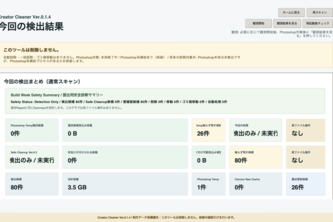
The description states that Creator Cleaner is a safety-first cleanup assistant for creators, designed to detect temporary production files without automatically deleting them. The author describes building it using AI tools like ChatGPT, GPT-5.6, and Codex, with an emphasis on safety, transparency, and auditability in its development process.
The project is self-reported as a tool focused on detection and review rather than destructive cleanup. It was submitted to the OpenAI 2026 hackathon and has no evidence of revenue, customers or traction beyond its own description.
Most important open question
Is there any indication that this tool will evolve into a product with commercial adoption or a sustainable business model?
What The Product Actually Is
The description states:
- Creator Cleaner is a cleanup assistant for creators
- It scans for temporary or generated production files
- It produces reviewable reports to help users understand what may be safe to clean
- It currently focuses on detection, documentation, safety rules, and verification, rather than automatic cleanup
The author notes that the tool is designed so creators can review candidates before taking action, and it does not delete anything automatically.
Inference: The product appears to be a file-detection utility with a strong emphasis on safety and transparency. It is not yet a full-fledged cleanup tool but rather a detection and reporting system.
Positioning & Claim Evolution
The description states:
- Creator Cleaner was built to solve the problem of temporary production files accumulating during creative workflows
- The tool takes a safety-first approach, avoiding automatic deletion
- It is positioned as a cleanup assistant, not an automated cleanup engine
- The author emphasizes that it detects, explains why files were detected, and never deletes automatically
Inference: The positioning has evolved from solving a common pain point (file clutter) to emphasizing safety, transparency, and user control. The tool’s claim is not about speed or automation but about reversibility and auditability.
Target Customer & ICP
The description states:
- The tool targets creators, including those using tools like Photoshop, video editors, audio tools, and AI workflows
- It is designed for creative work environments
Inference: The target customer is likely individual creators or small teams working in creative fields. The ICP appears to be content creators, designers, developers, or multimedia artists who generate temporary files and want a safe way to identify them.
Business Model & Pricing Evidence
The description states:
- No pricing information is provided
- There is no mention of revenue streams or monetization strategy
- The tool is described as a self-contained project submitted for a hackathon
Inference: There is no evidence of a business model or pricing structure. It appears to be a prototype or proof-of-concept, not a commercial offering.
Technical & Delivery Signals
The description states:
- Built using ChatGPT, GPT-5.6, and Codex
- Implemented with JavaScript, Node.js, Markdown, Git, GitHub
- Includes safety specifications, implementation plans, test plans, project history, and decision logs
- Development process is described as auditable and reproducible
Inference: The tool shows a high level of documentation and transparency in its development. It uses AI-assisted tools and follows structured workflows, suggesting a well-thought-out engineering approach.
Traction & Maturity Signals
The description states:
- Submitted to the OpenAI 2026 hackathon
- No revenue, customers, or adoption data are mentioned
- The tool is described as a current version focusing on detection and review
Inference: There is no evidence of traction. It is a prototype, not a product in use by users.
Competitive Context
The description states:
- No mention of competitors or market context
- The author does not reference existing tools for cleanup or file management
Inference: There is no evidence of competitive analysis or awareness of the broader marketplace. It is unclear whether similar tools exist, and how this one would differentiate.
Open Questions & Risks
The description states:
- The tool currently does not delete anything automatically
- The author notes that balancing usefulness with safety was a challenge
- It is a single-person project submitted to a hackathon
Inference:
- Risk of limited scalability or adoption, given its single-developer origin and hackathon context
- Risk of underdeveloped functionality, as it currently only detects and reports, not cleans
- Open question: No commercial viability or monetization strategy is evident
Questions the description leaves open
- What specific creative workflows does Creator Cleaner target, and how do you plan to expand support for more tools?
- How do you intend to transition from a hackathon prototype to a product with users?
- Are there any plans to monetize the tool or integrate it into existing platforms?
- What is your vision for moving beyond detection and review to include guided cleanup?
- Have you considered how to make this tool accessible to non-technical creators?
Overall Assessment
The description states:
- The project is a single-person hackathon submission
- It has no evidence of revenue, customers or traction
- It is described as a prototype with a safety-first approach
Inference: This is a pre-product concept, not an investment-ready business. It shows potential for development but lacks commercial viability, traction, or a clear path to monetization. The tool may be interesting as a proof-of-concept, but it is not yet a product with demonstrated market demand or scalability.
Assessment Not evidenced as a viable investment or partnership opportunity at this stage.
User Stories BotA demo video on every pull request
Get a demo video on every new feature
GitHub App that watches your pull requests and records a narrated, captioned demo.
Save time on demo prep and make informed decisions faster with a video walkthrough of every new feature.
Source
Submitted to the OpenAI 2026 hackathon on Devpost. Project home on Devpost. Back to the full gallery on Devpost.
This competitive analysis was produced by top-founders.com (opens in a new tab)
Generated by a language model from this project's public Devpost page — its tagline, the author's own write-up and any built-with tags listed there — as captured in August 2026. Short quotations are the author's words. It is an opinion on the idea as a business, not on the people behind it, and it reflects the description as published then. If the project has moved on, request a correction below. The analysis is not independent research and contains no verified traction, revenue or customer data.
An independent guide by KFG International LLC — not affiliated with, endorsed by, or connected to Devpost or OpenAI.