

Archive position — measured, not model output
1 like on Devpost
505 of the 7,850 archived projects have more likes, and 1,758 share exactly 1 — so this project's #873 place in the like-ranked listing is a tie-break inside that group, not a ranking.
Projects (log scale)
Likes on Devpost. ▲ marks this project's group.
Show the figures
| Likes | Projects | Share of archive |
|---|---|---|
| 0 | 5,587 | 71.2% |
| 1 | 1,758 | 22.4% |
| 2 | 284 | 3.6% |
| 3–4 | 132 | 1.7% |
| 5–9 | 75 | 1.0% |
| 10+ | 14 | 0.2% |
 User Stories BotA demo video on every pull request
Get a demo video on every new feature
GitHub App that watches your pull requests and records a narrated, captioned demo.
Save time on demo prep and make informed decisions faster with a video walkthrough of every new feature.
Executive Summary
What the company appears to be
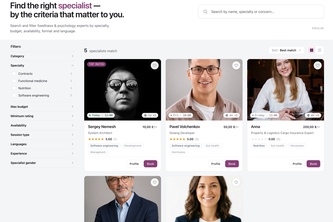
Consul is an AI-first marketplace for paid online consultations that enables cross-border communication through live voice translation and a token-based payment system. It supports both web and native iOS experiences, with a focus on real-time session management, expert discovery, and trusted AI assistance during consultations.
What changed
The project description indicates that Consul was built over three months as a working product, including marketplace flows, booking, live consultation infrastructure, and a native iOS app. During the OpenAI Build Week extension, it added an assistant beta with bounded connector actions and durable history.
Single most important open question
Is there any evidence of user adoption or revenue generation beyond the author's own development efforts?
What The Product Actually Is
The description states that Consul is:
- An AI-first marketplace for paid online consultations.
- A platform where clients discover specialists, book slots, and pay via token balance.
- A system enabling live video and real-time voice translation across languages.
- A product with native iOS apps (SwiftUI) for both client and expert roles.
- Integrated with LiveKit for media sessions, Kafka for event streaming, and PostgreSQL/Redis for data.
Inferences:
- The platform includes a real-time assistant that operates within the session boundaries.
- It uses token-based billing during live consultations.
- It supports guest booking without requiring pre-existing accounts.
Not evidenced:
- No information on actual users or customer base.
- No evidence of revenue, pricing models beyond “token balance,” or payment processing details beyond the system architecture.
Positioning & Claim Evolution
The author claims Consul aims to:
- Remove language barriers from paid consultations.
- Ensure clarity around expertise, logistics, and trust during calls.
- Provide a seamless experience for booking, speaking in different languages, and settling payments.
Evolution of claims:
- Initially positioned as a marketplace with live translation and token-based billing.
- Extended during Build Week to include an AI assistant with bounded authority and durable history.
- Emphasizes safety and trust through explicit product contracts around identity, payment, and irreversible actions.
Inferences:
- The platform evolved from a basic consultation tool into one that integrates AI assistance in a controlled way.
- The team prioritized reliability and auditability over ease-of-use or demo-style features.
Not evidenced:
- No evidence of market positioning beyond the author’s own description.
- No mention of competitors, pricing tiers, or strategic differentiation.
Target Customer & ICP
The description states that Consul targets:
- Clients who want to book consultations with specialists across borders.
- Experts who set their own prices and manage availability.
- Users who value clarity in trust, payment, and communication during live sessions.
Inferences:
- The platform caters to a global audience seeking expert advice or services.
- Both client and expert roles are supported through separate mobile experiences.
- Guest booking allows for low-friction entry into the system.
Not evidenced:
- No data on customer segments, personas, or usage patterns.
- No indication of whether clients or experts are individuals or organizations.
- No evidence of market size or target geography.
Business Model & Pricing Evidence
The description states that Consul:
- Enables experts to control their pricing.
- Uses a token-based payment system settled during live consultations.
- Reserves and settles payments through the platform as sessions run.
Inferences:
- The business model involves facilitating transactions between clients and experts.
- Payment settlement occurs in real time, likely using blockchain or tokenized ledger systems.
- There is no mention of platform fees or commissions.
Not evidenced:
- No evidence of revenue streams or pricing structures beyond “token-based billing.”
- No indication of how tokens are acquired, used, or converted.
- No information on monetization strategy beyond the platform’s own operations.
Technical & Delivery Signals
The description indicates that Consul uses:
- Next.js, React, and TypeScript for web product.
- SwiftUI for native iOS app.
- Go bounded-context services for marketplace, booking, billing, identity, and session workflows.
- Python/FastAPI LiveKit agents for real-time translation.
- PostgreSQL, Redis, Kafka, Kubernetes, and LiveKit for runtime support.
During Build Week:
- Used Codex with GPT-5.6 to investigate boundaries and implement assistant features.
- Implemented a server-owned Meet flow with durable journaling and short-lived connector actions.
- Ensured failure recovery and visibility in real-time sessions.
Inferences:
- The platform is built on modern, scalable tech stacks.
- AI integration is tightly controlled and auditable.
- Real-time session handling includes robust error management.
Not evidenced:
- No evidence of production deployment or scalability metrics.
- No information about performance benchmarks or uptime guarantees.
- No details on how the assistant interacts with external tools or APIs.
Traction & Maturity Signals
The description states that Consul:
- Was built over three months as a working product.
- Has a native iOS app in active development, not yet published.
- Includes guest booking and token-based settlement.
- Supports both client and expert mobile experiences.
- Features an assistant beta with bounded authority.
Inferences:
- The team has completed a full consultation loop from discovery to settlement.
- The platform is under active development but not yet live to users.
- The product shows early maturity in core functionality.
Not evidenced:
- No evidence of user adoption or retention.
- No data on number of specialists, clients, or sessions.
- No indication of monetization or revenue generation.
- No mention of any beta testing or pilot programs.
Competitive Context
The description does not provide:
- Any information about existing competitors.
- No mention of similar platforms or market gaps.
- No evidence of competitive positioning or differentiation strategies.
Not evidenced:
- No reference to other consultation, marketplace, or translation tools.
- No indication of how Consul compares technically or commercially to alternatives.
Open Questions & Risks
Key risks identified from the description:
- The platform is described as a working prototype built in three months; no evidence of user traction or commercial viability.
- AI assistant functionality relies on bounded actions and short-lived authority — this may limit its utility unless further refined.
- Native iOS app is not yet published, suggesting incomplete product delivery.
- No mention of legal, compliance, or regulatory considerations for cross-border consultations.
Open questions:
- Lack of revenue or customer data makes it difficult to assess commercial viability.
- The focus on “token-based billing” without clarity on token mechanics raises questions about scalability and trust.
- No evidence of monetization beyond platform operation.
Questions the description leaves open
- What is the current status of the native iOS app? Is there a timeline for App Store release?
- How does Consul plan to scale its specialist supply and ensure quality control?
- Can you explain how token-based billing works in practice, including conversion rates or mechanisms?
- What are the key assumptions about user behavior that underpin this product design?
- Are there any legal or compliance challenges related to cross-border consultations or AI assistance?
- How does Consul intend to differentiate itself from existing platforms offering similar services?
Overall Assessment
The description presents Consul as a technically sophisticated prototype with a clear vision for solving real-world problems in cross-border consulting. However, it is not evidenced that the platform has achieved any traction or revenue generation.
Confidence level: Low — based solely on self-reported development efforts and no external validation.
Assessment:
- The project shows strong technical execution and thoughtful design around trust and AI control.
- It lacks commercial evidence, user data, or financial metrics to support investment or partnership decisions.
- Further diligence is needed to assess market demand, scalability, and monetization potential.
This is a pre-product stage initiative with promising architecture but no demonstrated commercial viability.
User Stories BotA demo video on every pull request
Get a demo video on every new feature
GitHub App that watches your pull requests and records a narrated, captioned demo.
Save time on demo prep and make informed decisions faster with a video walkthrough of every new feature.
Source
Submitted to the OpenAI 2026 hackathon on Devpost. Project home on Devpost. Back to the full gallery on Devpost.
This competitive analysis was produced by top-founders.com (opens in a new tab)
Generated by a language model from this project's public Devpost page — its tagline, the author's own write-up and any built-with tags listed there — as captured in August 2026. Short quotations are the author's words. It is an opinion on the idea as a business, not on the people behind it, and it reflects the description as published then. If the project has moved on, request a correction below. The analysis is not independent research and contains no verified traction, revenue or customer data.
An independent guide by KFG International LLC — not affiliated with, endorsed by, or connected to Devpost or OpenAI.