

Archive position — measured, not model output
0 likes on Devpost
2,263 of the 7,850 archived projects have more likes, and 5,587 share exactly 0 — so this project's #3,429 place in the like-ranked listing is a tie-break inside that group, not a ranking.
Projects (log scale)
Likes on Devpost. ▲ marks this project's group.
Show the figures
| Likes | Projects | Share of archive |
|---|---|---|
| 0 | 5,587 | 71.2% |
| 1 | 1,758 | 22.4% |
| 2 | 284 | 3.6% |
| 3–4 | 132 | 1.7% |
| 5–9 | 75 | 1.0% |
| 10+ | 14 | 0.2% |
 User Stories BotA demo video on every pull request
Get a demo video on every new feature
GitHub App that watches your pull requests and records a narrated, captioned demo.
Save time on demo prep and make informed decisions faster with a video walkthrough of every new feature.
Executive Summary
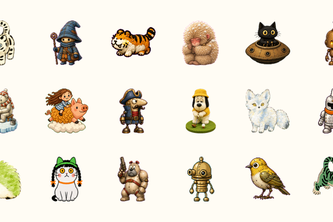
The company appears to be a solo project (1 person) named codpet, self-positioned as a management layer for AI coding companions built with Codex and the Hatch Pet skill. The author states that CodPet focuses on companion lifecycle management — discovery, organization, switching, and customization — but does not provide evidence of revenue, customers, or product adoption. The single most important open question is whether this concept has traction beyond the founder’s personal experience.
The description is self-reported and unverified. No evidence of revenue, ARR, headcount, customers, or market validation is provided.
What The Product Actually Is
- The description states that CodPet is a management layer for AI coding companions.
- It includes three core components:
- Companion Library: A curated collection of high-quality Codex pets for discovery and installation.
- Companion Manager: A tool for searching, organizing, previewing, favoriting, and switching between pets.
- Companion Studio: A workflow for creating companions with consistent visual identity and animation sets.
- The product is described as a local manager prototype that supports fast switching and compatibility with AI tools.
- It was built using Codex and the Hatch Pet skill, with manual curation of designs and metadata.
Not evidenced: actual product functionality, user interface, or technical architecture beyond the author’s description.
Positioning & Claim Evolution
- The description states that CodPet is not just a pet gallery but a management layer for AI companions.
- It positions itself as solving problems after companion creation (i.e., discovery, organization, switching), contrasting with Codex which solves creation.
- The author claims that CodPet connects:
- Creation
- Discovery
- Organization
- Management
- Customization
This is a self-stated positioning claim. No evidence of market feedback or competitive positioning is provided.
Target Customer & ICP
- The description states that CodPet targets developers who use AI coding companions.
- It implies that users may have dozens or hundreds of companions and need tools to manage them.
- The target includes individuals, creators, brands, and development teams needing consistent visual identity and animation sets.
Not evidenced: specific customer segments, personas, or usage patterns beyond the author’s personal experience.
Business Model & Pricing Evidence
- Not evidenced. No mention of pricing, monetization strategy, or business model in the description.
Technical & Delivery Signals
- The product was built using Codex and the Hatch Pet skill.
- It includes a local manager prototype with indexing and fast switching capabilities.
- Manual curation is involved: designs are reviewed, animations improved, metadata organized.
- The author notes challenges with compatibility as AI tools evolve rapidly.
- The project was submitted to an OpenAI hackathon, suggesting early-stage development.
Not evidenced: technical architecture, scalability, or delivery timeline beyond prototype status.
Traction & Maturity Signals
- Not evidenced. No data on users, adoption, retention, or product usage is provided.
- The author mentions personal experience with over 100 pets but does not indicate any external validation or user base.
- The project is described as a first version exploring instant pet switching.
Competitive Context
- Not evidenced. No mention of competitors or market landscape in the description.
- The author implies that companion creation is easy, but management remains unsolved — suggesting a gap in the market.
Open Questions & Risks
- Solo team: Only one member (pipi lu) is listed; no evidence of additional contributors or support.
- Unproven concept: The product is described as solving a personal problem, not validated with external users.
- Rapidly evolving ecosystem: AI tools like Codex are changing quickly, which could affect compatibility and product longevity.
- No monetization strategy: No indication of how the product will generate revenue or sustain itself.
Questions the description leaves open
- What is your evidence that developers have more than a few companions and need management tools?
- How do you plan to scale beyond manual curation?
- Have you validated the need for this product with potential users outside of yourself?
- What are the key technical challenges in maintaining compatibility across evolving AI tools?
- Are there any existing or planned partnerships or integrations with Codex or other platforms?
Overall Assessment
- Not evidenced. No financials, traction, or strategic fit data is provided.
- The project is described as a solo effort focused on solving a personal workflow issue.
- It has potential if the concept gains traction beyond the founder’s experience, but lacks evidence of market validation or product-market fit.
The description is self-reported and unverified. No revenue, customers, or adoption data are available.
User Stories BotA demo video on every pull request
Get a demo video on every new feature
GitHub App that watches your pull requests and records a narrated, captioned demo.
Save time on demo prep and make informed decisions faster with a video walkthrough of every new feature.
Source
Submitted to the OpenAI 2026 hackathon on Devpost. Project home on Devpost. Back to the full gallery on Devpost.
This competitive analysis was produced by top-founders.com (opens in a new tab)
Generated by a language model from this project's public Devpost page — its tagline, the author's own write-up and any built-with tags listed there — as captured in August 2026. Short quotations are the author's words. It is an opinion on the idea as a business, not on the people behind it, and it reflects the description as published then. If the project has moved on, request a correction below. The analysis is not independent research and contains no verified traction, revenue or customer data.
An independent guide by KFG International LLC — not affiliated with, endorsed by, or connected to Devpost or OpenAI.