

Archive position — measured, not model output
0 likes on Devpost
2,263 of the 7,850 archived projects have more likes, and 5,587 share exactly 0 — so this project's #3,423 place in the like-ranked listing is a tie-break inside that group, not a ranking.
Projects (log scale)
Likes on Devpost. ▲ marks this project's group.
Show the figures
| Likes | Projects | Share of archive |
|---|---|---|
| 0 | 5,587 | 71.2% |
| 1 | 1,758 | 22.4% |
| 2 | 284 | 3.6% |
| 3–4 | 132 | 1.7% |
| 5–9 | 75 | 1.0% |
| 10+ | 14 | 0.2% |
 User Stories BotA demo video on every pull request
Get a demo video on every new feature
GitHub App that watches your pull requests and records a narrated, captioned demo.
Save time on demo prep and make informed decisions faster with a video walkthrough of every new feature.
Executive Summary
What the company appears to be: A self-reported macOS utility tool — a widget and companion app for monitoring Codex usage, built by one developer (海 西塚) as part of an OpenAI 2026 hackathon submission.
What changed: The author describes building a native macOS application with a widget extension using Swift, SwiftUI, and WidgetKit to monitor Codex usage. It is presented as a personal solution to a problem they faced while using Codex regularly.
Single most important open question: Is there any evidence of actual user adoption or commercial traction beyond the author's own use case?
Note: This analysis is based entirely on the self-reported, unverified description provided by the author. No independent verification, revenue data, customer base, or market validation has been included.
What The Product Actually Is
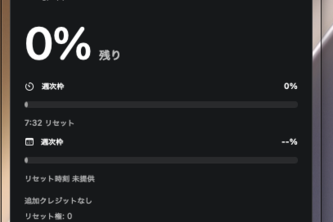
- The description states that Codex Usage Monitor is a macOS application and widget designed to help users monitor their usage of Codex.
- It includes:
- A main app for inputting and managing usage data.
- A widget extension that displays this information on the desktop or in Notification Center.
- The tool uses:
- Swift
- SwiftUI
- WidgetKit
- App Groups
- Xcode
Inference: The product is a small-scale utility app built for personal use, not a commercial offering.
Positioning & Claim Evolution
- The author positions the tool as a solution to the difficulty of tracking Codex usage manually.
- It is described as a "simple usage management tool" that allows quick access to key metrics without opening the main application.
- The author claims it helps with resource planning by showing:
- Usage percentage
- Remaining amount
- Reset timeline
- Current usage pace
Inference: The positioning is personal and niche — aimed at individuals using Codex intensively, not a broader market.
Target Customer & ICP
- The description does not name specific customers or personas.
- It implies the target is:
- Individuals who use Codex regularly
- Developers or users working on long-term projects with Codex
- People needing to manage usage limits and plan accordingly
Not evidenced: No explicit customer segments, buyer personas, or market size claimed.
Business Model & Pricing Evidence
- The description does not mention any pricing model or monetization strategy.
- It is presented as a personal tool built for self-use, not a commercial product.
Not evidenced: No indication of revenue streams, pricing tiers, or business model.
Technical & Delivery Signals
- Built using:
- Swift
- SwiftUI
- WidgetKit
- App Groups
- Xcode
- Uses a two-part architecture:
- Main app for data input and management
- Widget extension for display
- Data sharing between app and widget is handled via App Groups.
- The author used Codex to generate code, but also manually verified and iterated on it.
Inference: The technical stack indicates a native macOS app with modern UI/UX practices. The use of AI-assisted development suggests an iterative approach.
Traction & Maturity Signals
- Not evidenced: No mention of users, downloads, or adoption.
- The project is described as a hackathon submission.
- It includes future plans for enhancements but no current metrics or usage data.
Not evidenced: No evidence of traction, growth, or user engagement beyond the author’s own use.
Competitive Context
- Not evidenced: No mention of competitors or market landscape.
- The tool is described as solving a personal problem with Codex usage.
- It is not positioned against other tools or platforms in the AI development space.
Not evidenced: No competitive analysis or positioning relative to existing tools.
Open Questions & Risks
- No commercial traction: The project is presented as a personal tool, not a scalable product.
- Single-person team: Only one developer involved, limiting scalability and support.
- Limited scope: Designed for Codex users only; no indication of broader applicability.
- Self-reported only: No external validation or data to confirm usage or effectiveness.
Inference: The lack of commercialization or user feedback raises concerns about viability beyond the author’s use case.
Questions the description leaves open
- What is your actual experience with Codex usage? How often do you use it?
- Have you shared this tool with others, and if so, what was their feedback?
- Are there any plans to monetize or expand the product beyond personal use?
- What are the technical limitations of relying on manual input for usage data?
- Do you have a plan to support other AI tools or platforms beyond Codex?
Overall Assessment
- Not evidenced: No financials, traction, or commercial viability metrics.
- The project is described as a personal hackathon submission with no indication of market demand or scalability.
- It may be a useful tool for the author but lacks evidence of broader potential.
Assessment: Not suitable for investment or partnership at this stage. Further evidence of user adoption, traction, or commercial intent would be required to assess viability.
User Stories BotA demo video on every pull request
Get a demo video on every new feature
GitHub App that watches your pull requests and records a narrated, captioned demo.
Save time on demo prep and make informed decisions faster with a video walkthrough of every new feature.
Source
Submitted to the OpenAI 2026 hackathon on Devpost. Project home on Devpost. Back to the full gallery on Devpost.
This competitive analysis was produced by top-founders.com (opens in a new tab)
Generated by a language model from this project's public Devpost page — its tagline, the author's own write-up and any built-with tags listed there — as captured in August 2026. Short quotations are the author's words. It is an opinion on the idea as a business, not on the people behind it, and it reflects the description as published then. If the project has moved on, request a correction below. The analysis is not independent research and contains no verified traction, revenue or customer data.
An independent guide by KFG International LLC — not affiliated with, endorsed by, or connected to Devpost or OpenAI.