

Archive position — measured, not model output
1 like on Devpost
505 of the 7,850 archived projects have more likes, and 1,758 share exactly 1 — so this project's #835 place in the like-ranked listing is a tie-break inside that group, not a ranking.
Projects (log scale)
Likes on Devpost. ▲ marks this project's group.
Show the figures
| Likes | Projects | Share of archive |
|---|---|---|
| 0 | 5,587 | 71.2% |
| 1 | 1,758 | 22.4% |
| 2 | 284 | 3.6% |
| 3–4 | 132 | 1.7% |
| 5–9 | 75 | 1.0% |
| 10+ | 14 | 0.2% |
 User Stories BotA demo video on every pull request
Get a demo video on every new feature
GitHub App that watches your pull requests and records a narrated, captioned demo.
Save time on demo prep and make informed decisions faster with a video walkthrough of every new feature.
Executive Summary
What the company appears to be
CodeRedox is a Windows desktop developer tool described by its author as a guided engineering workflow for codebase cleanup. It integrates static analysis with AI-assisted repair, emphasizing human control and evidence-based decision-making.
What changed
The project was submitted to the OpenAI 2026 hackathon. The author describes it as an exploration of how AI can be used in a constrained, reviewable way for code cleanup, rather than as a general-purpose AI coding assistant or linter.
Single most important open question
Is there any evidence that CodeRedox has been adopted by developers beyond the author’s own use case, and if so, what is the nature of that adoption?
What The Product Actually Is
The description states that CodeRedox is a Windows desktop developer tool built with Electron, JavaScript, and Node.js. It analyzes code quality across multiple dimensions including maintainability, reliability, security, runtime safety, accessibility, formatting, and dependency health.
It detects signals such as:
- Dead code
- Duplicate logic
- Debug statements
- TODO debt
- Magic values
- Long or complex functions
- Formatting drift
- Suspicious packages
- Secrets
- Unsafe operations
- Injection risks
- Path traversal
- Weak cryptography
The tool is described as enabling a guided engineering loop:
- Scan → Understand → Prioritize → Preflight → Approve → Repair → Re-scan → Review → Hand off
Key features include:
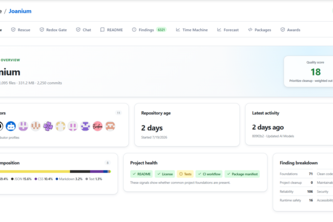
- Overview: Shows project health, source composition, contributor activity, quality signals, and active findings.
- Time Machine: Links current findings to Git commit history with context and diff evidence.
- Forecast: Identifies likely maintenance bottlenecks using active findings, dependency signals, and Git churn.
- Decision Lens: Ranks findings based on risk tier, same-file pressure, repeated patterns, and release posture.
- Fix Ripple: Simulates the effect of resolving a finding before any code is modified.
- Repair Flight Plan: Generates a preflight for AI repair including behavior-preservation contract, blast radius, Git history, file scope, verification commands, and approval gates.
- Repair Receipt: Compares working-tree changes with the Flight Plan’s allowed scope after an approved repair.
- Redox Gate: Turns Git diff into a pre-merge passport mapping changed files, linking them to scan signals, highlighting sensitive paths, and suggesting verification routes.
- Rescue Mode: Turns the experience into a guided recovery story: capture baseline, inspect highest-impact change, preflight AI repair, verify result, generate team handoff brief.
The tool uses:
- Built-in static-analysis workers
- Knip (dead-code analysis)
- JSCPD (duplicate-code detection)
- Prettier (formatting-drift repair)
- slop-scan (package-integrity signals)
- Git log, blame, and diff analysis
- Package inspection across npm, Composer, Maven, Gradle, Python, Go, Rust
It is built with Codex and GPT-5.6, which were used during the hackathon for product exploration, implementation, UX iteration, and structuring the workflow.
Not evidenced:
- Revenue or pricing model
- Customer base or adoption metrics
- Product usage beyond author's own use case
- Any third-party integrations or partnerships
Positioning & Claim Evolution
The description states that CodeRedox aims to bridge the gap between static analysis and AI-assisted coding, addressing a perceived lack of clarity in both domains.
It positions itself as:
- Not another dashboard full of red dots
- Not an unconstrained AI code editor
- A guided engineering loop for code cleanup
The author claims that most linters answer: "What is wrong here?"
Most AI tools answer: "What should I change?"
CodeRedox answers: "What is the safest and most valuable next change and how can I prove it?"
The key differentiator is described as:
- A full evidence → constrained repair → proof loop
- Speed of Codex/GPT-5.6 without sacrificing engineering judgment
- Developer control over AI actions
Inferences:
- The tool is positioned as a developer-centric, evidence-first approach to code cleanup.
- It emphasizes human-in-the-loop decision-making, not automation.
Not evidenced:
- Market positioning or competitive differentiation beyond self-description
- Any prior versions or product evolution history
- Customer feedback or testimonials
Target Customer & ICP
The description states that CodeRedox is aimed at developers, particularly those working in local repositories on Windows desktops. It is described as a developer tool for codebase cleanup.
It targets:
- Developers who work with local repositories
- Teams managing codebases with accumulated friction (duplicated logic, stale TODOs, debug statements, etc.)
- Users seeking to reduce technical debt and improve maintainability
Not evidenced:
- Specific customer segments or personas beyond “developers”
- Customer acquisition channels or marketing strategy
- Any existing user base or feedback from users outside the author
Business Model & Pricing Evidence
The description does not provide any information about:
- Revenue model
- Pricing structure
- Monetization strategy
- Subscription plans or licensing options
Not evidenced:
- Business model or pricing details
- Any paid features or freemium offerings
Technical & Delivery Signals
The tool is built as a Windows desktop application using:
- Electron
- JavaScript
- Node.js
It integrates with:
- Git metadata (log, blame, diff)
- Static analysis tools like Knip, JSCPD, Prettier, slop-scan
- Package inspection across multiple ecosystems (npm, Composer, Maven, Gradle, Python, Go, Rust)
The author states that Codex and GPT-5.6 were used during the hackathon to:
- Explore product ideas
- Implement multi-file Electron features
- Iterate on UX
- Design static-analysis workers
- Structure safe IPC boundaries
- Improve documentation
Not evidenced:
- Any production deployment or delivery infrastructure
- Scalability or performance metrics
- Technical architecture beyond initial build
Traction & Maturity Signals
The description states that this is a hackathon submission to the OpenAI 2026 hackathon.
It includes no evidence of:
- Revenue generation
- Customer adoption
- Product usage beyond the author’s own use case
- Any traction metrics or growth indicators
Not evidenced:
- Any form of product traction or user engagement
- Product maturity beyond prototype stage
- Any prior versions or iterations
Competitive Context
The description does not mention any competitors or direct market comparisons.
It implies that existing tools fall short in one of two ways:
- Static analysis tools that produce warnings but do not explain impact, history, or priority.
- AI coding agents that can make changes but do not prove scope or behavior preservation.
Inferences:
- CodeRedox is positioned to address a gap between static analysis and AI-assisted coding.
- It may compete with linters, IDE plugins, and AI coding assistants, though no specific competitors are named.
Not evidenced:
- Direct competitor names or market share
- Competitive landscape or differentiation from existing tools
Open Questions & Risks
- No evidence of adoption or traction
The tool is described as a hackathon submission with no indication of real-world usage or customer feedback.
- Single-person team
The project is built by one person (Joel Jolly), which raises questions about scalability, maintenance, and long-term viability.
- Limited scope
It only supports Windows desktop environments and local repositories, limiting its applicability to broader developer ecosystems.
- Unverified claims
All descriptions are self-reported and unverified; there is no independent validation of the tool’s functionality or effectiveness.
- No monetization strategy
No indication of how the tool would be sold or funded in a commercial context.
- AI dependency risk
Reliance on Codex and GPT-5.6 may pose risks if these services change or become unavailable.
Questions the description leaves open
- What is your plan for scaling beyond the single-person development model?
- Have you tested this tool with other developers, and what feedback have you received?
- How do you intend to monetize CodeRedox in a commercial setting?
- Are there any plans to expand support beyond Windows desktop environments?
- What are the key assumptions behind your "evidence-first" approach, and how do they hold up under real-world use cases?
- How does CodeRedox handle edge cases or complex codebases that may not fit within its current framework?
- Can you describe any potential technical limitations of relying on Codex and GPT-5.6 for core functionality?
Overall Assessment
Confidence: Low
The description is entirely self-reported, unverified, and lacks any evidence of traction, revenue, or customer adoption.
This appears to be a prototype or hackathon project, not a mature product or business.
There are no indicators that CodeRedox has moved beyond the idea stage or gained any meaningful user base.
Conclusion
Without further evidence of product-market fit, commercial viability, or adoption, there is insufficient basis for investment or partnership consideration at this time. The tool’s positioning and features are described clearly but remain unproven in practice.
User Stories BotA demo video on every pull request
Get a demo video on every new feature
GitHub App that watches your pull requests and records a narrated, captioned demo.
Save time on demo prep and make informed decisions faster with a video walkthrough of every new feature.
Source
Submitted to the OpenAI 2026 hackathon on Devpost. Project home on Devpost. Back to the full gallery on Devpost.
This competitive analysis was produced by top-founders.com (opens in a new tab)
Generated by a language model from this project's public Devpost page — its tagline, the author's own write-up and any built-with tags listed there — as captured in August 2026. Short quotations are the author's words. It is an opinion on the idea as a business, not on the people behind it, and it reflects the description as published then. If the project has moved on, request a correction below. The analysis is not independent research and contains no verified traction, revenue or customer data.
An independent guide by KFG International LLC — not affiliated with, endorsed by, or connected to Devpost or OpenAI.