

Archive position — measured, not model output
0 likes on Devpost
2,263 of the 7,850 archived projects have more likes, and 5,587 share exactly 0 — so this project's #3,263 place in the like-ranked listing is a tie-break inside that group, not a ranking.
Projects (log scale)
Likes on Devpost. ▲ marks this project's group.
Show the figures
| Likes | Projects | Share of archive |
|---|---|---|
| 0 | 5,587 | 71.2% |
| 1 | 1,758 | 22.4% |
| 2 | 284 | 3.6% |
| 3–4 | 132 | 1.7% |
| 5–9 | 75 | 1.0% |
| 10+ | 14 | 0.2% |
 User Stories BotA demo video on every pull request
Get a demo video on every new feature
GitHub App that watches your pull requests and records a narrated, captioned demo.
Save time on demo prep and make informed decisions faster with a video walkthrough of every new feature.
Executive Summary
What the company appears to be
CivicAI is a self-reported open-source browser extension for Chrome and Edge that processes selected web text locally to generate structured civic reports. It claims to operate entirely on-device without sending data to servers, using a quantized multilingual AI model.
What changed
The project description indicates this is a prototype submitted to the OpenAI 2026 hackathon. It does not evidence any prior commercial activity or product development beyond this initial build.
Single most important open question
Is there any evidence of traction, revenue, customer adoption, or monetization strategy beyond the author's own write-up?
Note: This analysis is based entirely on the self-reported and unverified project description provided by the caller. No third-party verification, archived data, or independent sources are available.
What The Product Actually Is
The description states that CivicAI is an open-source browser extension for Google Chrome and Microsoft Edge. It allows users to:
- Select text on a webpage.
- Right-click and choose “Analyze with CivicAI”.
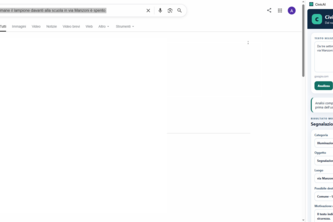
- Open a side panel where the selected text is processed locally using a multilingual AI model.
- Receive an editable civic report draft containing:
- Issue category
- Confidence score
- Suggested subject
- Location information (when available)
- Urgency level and explanation
- Suggested recipient
- Missing information
- A ready-to-edit report draft
The extension uses a quantized multilingual ONNX model (Xenova/paraphrase-multilingual-MiniLM-L12-v2) via Transformers.js and ONNX Runtime Web, running entirely in the browser.
Evidence: The author describes how it works technically and functionally.
Inference: It appears to be a proof-of-concept prototype built for a hackathon.
Positioning & Claim Evolution
The description states that CivicAI was created to reduce friction in turning informal civic descriptions into structured reports, without requiring users to send text to servers.
It positions itself as:
- A privacy-first tool.
- An open-source solution.
- A local AI-powered browser extension.
- Designed for use with sensitive or private information.
The author also notes that the project was submitted to a hackathon and includes future ambitions such as expanding categories, integrating with municipal portals, and supporting more languages.
Evidence: The author’s own claims about purpose, design principles, and roadmap.
Inference: The positioning reflects a niche focus on privacy and local AI for civic engagement — not yet proven in market traction or commercial adoption.
Target Customer & ICP
The description does not name specific customers or personas. However, it implies the following:
- Residents or citizens who encounter civic issues online (e.g., social media posts, news articles).
- Users concerned about privacy and data control.
- Local government officials or public service workers who may want to process citizen reports efficiently.
It is unclear whether CivicAI targets individuals, municipalities, or advocacy groups directly.
Evidence: The author’s narrative around informal civic reporting and user concerns about privacy.
Inference: Likely a broad audience of general users with civic engagement needs; no clear ICP defined.
Business Model & Pricing Evidence
There is no evidence in the description of any business model, pricing strategy, monetization plan, or revenue streams.
The extension is described as open-source and free to use. It does not require API keys, accounts, or telemetry.
Evidence: The author states that there are no backend systems, user accounts, or analytics used.
Inference: No commercial structure is evident beyond the prototype itself.
Technical & Delivery Signals
The extension is built as a Manifest V3 browser extension using:
- JavaScript
- HTML/CSS
- Chrome and Edge APIs
- Transformers.js
- ONNX Runtime Web
- Quantized multilingual MiniLM sentence-transformer model (
Xenova/paraphrase-multilingual-MiniLM-L12-v2) - WebAssembly
It avoids cloud inference, API keys, or remote backends. The model is loaded lazily and initialized only when needed.
Installation requires a PowerShell script that downloads runtime assets and generates SHA-256 hashes for integrity checks.
Evidence: Technical architecture described in detail by the author.
Inference: Shows strong technical execution for a local-first AI product, but no evidence of production deployment or scalability beyond prototype.
Traction & Maturity Signals
There is no evidence of:
- Revenue
- Customers
- User adoption
- Product usage metrics
- Commercial partnerships
- Funding rounds
- Market traction
The project is described as a hackathon submission and a working prototype, with no indication of prior or ongoing commercial activity.
Evidence: The author states it was submitted to a hackathon and tested on Chrome and Edge.
Inference: No signs of product-market fit or commercial viability beyond the initial build.
Competitive Context
The description does not mention any competitors or existing solutions in the civic engagement space.
It does not reference similar tools for processing civic issues, categorizing public complaints, or generating structured reports from unstructured text.
Evidence: No competitive landscape described.
Inference: The market context is unknown; no evidence of prior or current competition.
Open Questions & Risks
- No commercial traction or monetization strategy — the project appears to be a prototype with no evidence of revenue, customers, or product-market fit.
- Limited scope and maturity — built for a hackathon, not intended for production use.
- Unclear long-term roadmap execution — future features are speculative and unproven.
- No third-party verification or audits — the open-source nature does not imply trustworthiness without external validation.
- Privacy-focused but no regulatory compliance signals — while privacy is emphasized, there’s no mention of legal or regulatory considerations.
Evidence: The author's own write-up, which lacks any commercial or operational data.
Inference: High risk due to lack of evidence for viability beyond prototype stage.
Questions the description leaves open
- What is the current status of CivicAI beyond this hackathon prototype? Is it being used by anyone?
- Are there any plans to monetize or scale the product, and how?
- Has the model been tested in real-world scenarios or with actual civic issues?
- How does the team plan to handle scalability, performance, and accuracy improvements over time?
- What are the legal implications of using AI for categorizing civic issues, especially around bias or misclassification?
- Are there any partnerships or integrations with local governments or civic organizations already in place?
Overall Assessment
There is no evidence of commercial traction, revenue, or customer adoption beyond the author’s own description.
The project is described as a hackathon prototype and not yet a product in active use or development.
Assessment: Not ready for investment or partnership at this stage. The idea has potential, but lacks any demonstrated market validation or business model.
Confidence Level: Low — based on thin evidence of a prototype with no commercial data or operational signals.
User Stories BotA demo video on every pull request
Get a demo video on every new feature
GitHub App that watches your pull requests and records a narrated, captioned demo.
Save time on demo prep and make informed decisions faster with a video walkthrough of every new feature.
Source
Submitted to the OpenAI 2026 hackathon on Devpost. Project home on Devpost. Back to the full gallery on Devpost.
This competitive analysis was produced by top-founders.com (opens in a new tab)
Generated by a language model from this project's public Devpost page — its tagline, the author's own write-up and any built-with tags listed there — as captured in August 2026. Short quotations are the author's words. It is an opinion on the idea as a business, not on the people behind it, and it reflects the description as published then. If the project has moved on, request a correction below. The analysis is not independent research and contains no verified traction, revenue or customer data.
An independent guide by KFG International LLC — not affiliated with, endorsed by, or connected to Devpost or OpenAI.