

Archive position — measured, not model output
0 likes on Devpost
2,263 of the 7,850 archived projects have more likes, and 5,587 share exactly 0 — so this project's #7,189 place in the like-ranked listing is a tie-break inside that group, not a ranking.
Projects (log scale)
Likes on Devpost. ▲ marks this project's group.
Show the figures
| Likes | Projects | Share of archive |
|---|---|---|
| 0 | 5,587 | 71.2% |
| 1 | 1,758 | 22.4% |
| 2 | 284 | 3.6% |
| 3–4 | 132 | 1.7% |
| 5–9 | 75 | 1.0% |
| 10+ | 14 | 0.2% |
 User Stories BotA demo video on every pull request
Get a demo video on every new feature
GitHub App that watches your pull requests and records a narrated, captioned demo.
Save time on demo prep and make informed decisions faster with a video walkthrough of every new feature.
Executive Summary
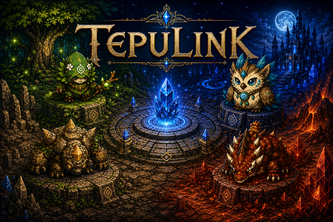
What the company appears to be: TepuLink is a self-reported 2D online creature RPG project built by one developer (Marcos D'Elia) using AI-assisted development tools, including Codex and GPT-5.6. The author states it is an open-world RPG with PvP, dungeons, and an innovative battle system, developed without traditional programming or third-party assets.
What changed: The project evolved from a personal ambition to create a video game into a self-reported AI-assisted development experiment. It was submitted to the OpenAI 2026 hackathon, indicating a public showcase of its progress.
The single most important open question: Is there evidence of any commercial traction, revenue, or user adoption beyond the author’s own claims?
Analysis basis: This report is based entirely on the self-reported project description provided by the author. No independent verification, archived data, or third-party sources are available. All statements are treated as claims unless otherwise noted.
What The Product Actually Is
The description states that TepuLink is a 2D online creature RPG where players form spiritual bonds with living companions, explore persistent worlds, and shape adventures together. It includes features like PvP, dungeons, and an innovative battle system. The author describes it as a complete open-world RPG.
- Product type: 2D online creature RPG
- Core mechanics: Spiritual bonds with companions, persistent worlds, collaborative exploration, PvP, dungeons, battle system
- Development method: AI-assisted (natural-language collaboration with Codex and GPT-5.6)
- Assets: No third-party assets; everything created by the author using AI tools
Note: The description does not provide technical specifications or gameplay details beyond general mechanics.
Positioning & Claim Evolution
The author positions TepuLink as a personal vision of their ideal game, combining elements from favorite games and built through AI collaboration. It is described as:
- A complete open-world RPG
- An experiment in AI-assisted development
- A project that preserves human creative identity despite AI use
Claim evolution: The project started as a personal ambition to create a video game and evolved into a public demonstration of AI-assisted development, submitted to a hackathon.
Inference: The positioning is driven by the author’s personal narrative rather than market data or user feedback. No evidence of external validation or product-market fit.
Target Customer & ICP
The description does not name specific customer segments or personas.
- Target audience: Not evidenced
- ICP (Ideal Customer Profile): Not evidenced
Absence of evidence: There is no mention of who the intended players are, their demographics, or how they would engage with the product.
Business Model & Pricing Evidence
The description does not contain any information about:
- Revenue model
- Pricing strategy
- Monetization approach
- Sales channels
Not evidenced
Technical & Delivery Signals
The author states that TepuLink was built using AI tools, including Codex and GPT-5.6, without writing code directly.
- Development tools: Codex, GPT-5.6, Godot engine, ENet networking, OpenGL
- Architecture: Client-server with server-authoritative design
- Platform: Desktop (Windows)
- Programming language: GDScript
- Version control: Git, GitHub
Inference: The use of AI tools suggests a non-traditional development approach. However, no evidence is provided about performance, scalability, or stability.
Traction & Maturity Signals
The description does not provide any data on:
- User adoption or engagement
- Revenue or monetization
- Customer base or retention
- Product maturity or release status
Not evidenced
Competitive Context
No information is provided about:
- Competitors in the RPG genre
- Market positioning relative to existing games
- Differentiation strategy
Not evidenced
Open Questions & Risks
- Single-person development: The project is built by one individual, which raises concerns about scalability and long-term maintenance.
- AI dependency: Heavy reliance on AI tools for development may introduce instability or lack of control over the final product.
- Lack of commercial traction: No evidence of users, revenue, or adoption beyond the author’s own claims.
- Unverified claims: The description is self-reported and unverified; no third-party validation exists.
Inference: These points are based on the structure of the project and lack of external data, not direct evidence.
Questions the description leaves open
- What specific AI tools were used for development, and how did they contribute to the final product?
- Has the project been tested with any users or playtesters beyond the creator?
- Are there plans to monetize TepuLink, and if so, what model is being considered?
- How does the creator plan to scale the project beyond a single-person effort?
- What are the technical limitations or risks of relying on AI for development?
Overall Assessment
Not evidenced
Confidence level: Very low. The description provides no evidence of commercial traction, revenue, customers, or even a functional product beyond the author’s own claims. No data supports investment or partnership viability.
User Stories BotA demo video on every pull request
Get a demo video on every new feature
GitHub App that watches your pull requests and records a narrated, captioned demo.
Save time on demo prep and make informed decisions faster with a video walkthrough of every new feature.
Source
Submitted to the OpenAI 2026 hackathon on Devpost. Project home on Devpost. Back to the full gallery on Devpost.
This competitive analysis was produced by top-founders.com (opens in a new tab)
Generated by a language model from this project's public Devpost page — its tagline, the author's own write-up and any built-with tags listed there — as captured in August 2026. Short quotations are the author's words. It is an opinion on the idea as a business, not on the people behind it, and it reflects the description as published then. If the project has moved on, request a correction below. The analysis is not independent research and contains no verified traction, revenue or customer data.
An independent guide by KFG International LLC — not affiliated with, endorsed by, or connected to Devpost or OpenAI.