

Archive position — measured, not model output
0 likes on Devpost
2,263 of the 7,850 archived projects have more likes, and 5,587 share exactly 0 — so this project's #2,945 place in the like-ranked listing is a tie-break inside that group, not a ranking.
Projects (log scale)
Likes on Devpost. ▲ marks this project's group.
Show the figures
| Likes | Projects | Share of archive |
|---|---|---|
| 0 | 5,587 | 71.2% |
| 1 | 1,758 | 22.4% |
| 2 | 284 | 3.6% |
| 3–4 | 132 | 1.7% |
| 5–9 | 75 | 1.0% |
| 10+ | 14 | 0.2% |
 User Stories BotA demo video on every pull request
Get a demo video on every new feature
GitHub App that watches your pull requests and records a narrated, captioned demo.
Save time on demo prep and make informed decisions faster with a video walkthrough of every new feature.
Executive Summary
What the company appears to be
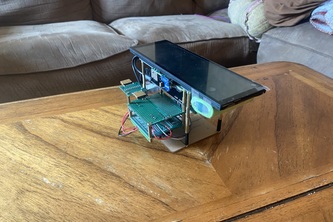
BitBuddy is a self-reported portable touchscreen electronics diagnostic platform built using a Raspberry Pi and a Raspberry Pi Pico 2. The author states it measures real hardware evidence (voltage, HDMI power) and translates technical results into plain-English diagnoses and next steps.
What changed
This is a single-person project submitted to an OpenAI hackathon. No commercial traction or revenue is evidenced. The description shows early-stage development with prototype hardware and software features.
Single most important open question
Is there evidence of any real-world testing, customer feedback or validation beyond the author's personal experience?
Commercial due-diligence read
The project description is entirely self-reported and unverified. There is no evidence of revenue, customers, pricing, partnerships, or adoption. The author states they are building a diagnostic tool for repair shops and engineers, but provides no proof of market demand or traction. The technical implementation appears to be in early prototype stage with hardware-software integration challenges noted.
What The Product Actually Is
The description states BitBuddy is:
- A portable touchscreen electronics diagnostic platform
- Built using Raspberry Pi and Raspberry Pi Pico 2
- Measures real hardware evidence (voltage, HDMI power)
- Translates technical measurements into plain-English diagnoses
- Displays live hardware results through touchscreen interface
- Scans storage devices and connected USB hardware
- Performs deeper storage checks and recovery diagnostics
- Generates and exports diagnostic reports
The author describes it as a device that combines software diagnostics with physical hardware measurements, using Python and Qt/QML for software and MicroPython for Pico firmware.
Positioning & Claim Evolution
The author states BitBuddy was inspired by personal experience with computer repair issues. The positioning claim is:
- To solve the problem of guessing what's wrong with electronics instead of forcing users to search online or bring devices to repair shops
- To become a valuable tool for repair shops, technicians, and engineers
- To eventually become useful in normal households as electronics and AI integrate into everyday life
The claim evolution shows a progression from personal frustration to building a solution that could scale beyond individual use cases.
Target Customer & ICP
The author states BitBuddy is intended for:
- Repair shops
- Technicians
- Engineers
The description does not provide evidence of customer segmentation, specific buyer personas, or market research. The positioning suggests B2B focus on technical professionals rather than consumer markets.
Business Model & Pricing Evidence
Not evidenced. The description contains no information about pricing models, revenue streams, customer acquisition costs, or business model assumptions.
Technical & Delivery Signals
The author states:
- Hardware includes Raspberry Pi, Raspberry Pi Pico 2, touchscreen display, portable battery system
- Software built with Python and Qt/QML
- Uses GPT-5.5/5.6 and Codex for development assistance
- Communication between Pico and Pi over USB serial using structured JSON data
- Includes reconnect handling, stale-data detection, hardware status monitoring
- Has 79 passing automated tests after latest update
- Features live DC voltage measurements, HDMI power testing, storage diagnostics
Traction & Maturity Signals
Not evidenced. The description contains no evidence of:
- Revenue or ARR
- Customer base or adoption metrics
- Product-market fit validation
- Market traction or growth indicators
- Commercial deployment or pilot programs
Competitive Context
Not evidenced. The description does not mention competitors, market size, competitive positioning, or industry landscape.
Open Questions & Risks
- Single-person development team (1 member)
- No evidence of commercial traction or revenue
- Self-reported only, no independent verification
- Early-stage prototype with hardware-software integration challenges
- Limited technical experience acknowledged by author
- No customer validation or feedback evidence
- No pricing or business model information
- No market research or competitive analysis
Questions the description leaves open
- What specific problems have you observed in electronics repair that BitBuddy addresses?
- Have you conducted any real-world testing with technicians or repair shops?
- What is your plan for validating the diagnostic accuracy of measurements?
- How do you intend to scale beyond single-person development?
- What are your assumptions about customer willingness to pay for this tool?
- How will you handle hardware reliability and durability in field conditions?
- What specific technical challenges remain before commercial release?
Overall Assessment
Not evidenced. The description provides no information about:
- Financial metrics or valuation
- Market opportunity size
- Competitive advantages
- Go-to-market strategy
- Founders' track record
- Required capital or resources
- Partnership potential
The project appears to be an early-stage prototype with no commercial evidence. The author's self-description shows technical capability but lacks proof of market demand, traction, or business viability.
User Stories BotA demo video on every pull request
Get a demo video on every new feature
GitHub App that watches your pull requests and records a narrated, captioned demo.
Save time on demo prep and make informed decisions faster with a video walkthrough of every new feature.
Source
Submitted to the OpenAI 2026 hackathon on Devpost. Project home on Devpost. Back to the full gallery on Devpost.
This competitive analysis was produced by top-founders.com (opens in a new tab)
Generated by a language model from this project's public Devpost page — its tagline, the author's own write-up and any built-with tags listed there — as captured in August 2026. Short quotations are the author's words. It is an opinion on the idea as a business, not on the people behind it, and it reflects the description as published then. If the project has moved on, request a correction below. The analysis is not independent research and contains no verified traction, revenue or customer data.
An independent guide by KFG International LLC — not affiliated with, endorsed by, or connected to Devpost or OpenAI.