

Archive position — measured, not model output
1 like on Devpost
505 of the 7,850 archived projects have more likes, and 1,758 share exactly 1 — so this project's #697 place in the like-ranked listing is a tie-break inside that group, not a ranking.
Projects (log scale)
Likes on Devpost. ▲ marks this project's group.
Show the figures
| Likes | Projects | Share of archive |
|---|---|---|
| 0 | 5,587 | 71.2% |
| 1 | 1,758 | 22.4% |
| 2 | 284 | 3.6% |
| 3–4 | 132 | 1.7% |
| 5–9 | 75 | 1.0% |
| 10+ | 14 | 0.2% |
 User Stories BotA demo video on every pull request
Get a demo video on every new feature
GitHub App that watches your pull requests and records a narrated, captioned demo.
Save time on demo prep and make informed decisions faster with a video walkthrough of every new feature.
Executive Summary
What the company appears to be
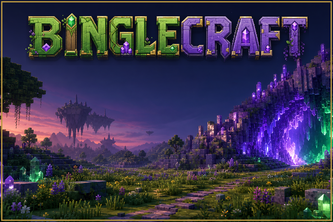
Binglecraft is a self-developed voxel-based survival-adventure game built by a single developer using AI-assisted tools including Codex and GPT-5.6 Sol. The project began as a browser prototype and evolved into a native C17 application using raylib, OpenGL, and GLSL shaders.
What changed
The author reports significant development progress during a hackathon period, including implementation of core gameplay systems (exploration, combat, crafting), world generation, and performance optimization. AI tools were used to accelerate feature development while the developer maintained control over design direction and quality.
Single most important open question
Is there evidence of any commercial traction, revenue, or customer adoption beyond the author's own development efforts?
What The Product Actually Is
The description states that Binglecraft is "a content rich voxel survival-adventure game built using Codex and GPT-5.6 Sol." It combines an open-ended voxel-building system with a structured seven-boss campaign where players explore procedurally generated worlds, gather resources, craft equipment, and defeat bosses to claim the Throne of Bingles.
The product is described as being built using:
- C17
- raylib
- OpenGL 3.3
- GLSL shaders
- Browser prototype initially
- Native port during Build Week
It includes features such as:
- Infinite procedurally generated world
- Resource gathering and crafting
- Seven-boss campaign across distinct biomes
- Over 50 enemies and minibosses
- More than 500 unique items
- Multi-world persistence
- Dynamic lighting, shadows, water, post-processing
Evidence Self-reported by author. No independent verification.
Positioning & Claim Evolution
The author positions Binglecraft as a hybrid between sandbox survival games like Minecraft and structured adventure games with clear objectives. The game aims to combine creative freedom with progression mechanics and memorable boss encounters.
Key claims include:
- Combines open-ended sandbox experience with structured adventure
- Players can explore, gather resources, craft equipment, and defeat bosses
- Designed for players who enjoy both creative survival sandboxes and clear progression
- Features a cohesive visual identity inspired by block-based aesthetics
The positioning evolved from an initial browser prototype to a native C17 application with advanced features like distant-terrain levels of detail, dynamic lighting, and multi-world persistence.
Evidence Self-reported. No external validation or market positioning data provided.
Target Customer & ICP
The description states that Binglecraft is designed for "players who enjoy creative survival sandboxes but also want clear progression, memorable boss encounters, and a campaign they can master."
It targets players interested in:
- Voxel-based exploration
- Survival mechanics
- Structured adventure campaigns
- Boss battles
- Crafting systems
The author identifies the target audience as those who enjoyed games like Minecraft, Terraria, and Hytale.
Evidence Self-reported. No data on actual user demographics or market segmentation.
Business Model & Pricing Evidence
There is no evidence provided about any business model or pricing structure for Binglecraft. The description focuses entirely on development process and features rather than monetization strategies.
The author mentions future public playtesting and potential packaging for stable release, but does not indicate any commercial intent or revenue streams.
Evidence Not evidenced.
Technical & Delivery Signals
The project was built using:
- C17
- raylib
- OpenGL 3.3
- GLSL shaders
- Browser prototype initially
- Native port during Build Week
Key technical details include:
- Deterministically generated world streaming in 16 × 16 × 288-voxel chunks
- Fixed-step 60 Hz simulation
- Separation of systems (world generation, rendering, gameplay, etc.)
- Distant-terrain levels of detail
- Dynamic lighting, shadows, water, post-processing
- Multi-world persistence
The author reports using Codex and GPT-5.6 Sol as an engineering partner, dividing work into bounded tasks with specific behavior, constraints, and acceptance criteria.
Evidence Self-reported by author. No independent verification or technical audit data provided.
Traction & Maturity Signals
There is no evidence of any traction or maturity beyond the author's own development efforts. The project is described as a single-developer effort that was submitted to an OpenAI hackathon.
The author mentions:
- 18 deterministic native test suites
- Repeatable stress tests
- Visual-capture tools
- Targeted performance benchmarks
However, there is no evidence of:
- Customer adoption
- Revenue generation
- User base metrics
- Market traction
- Commercial deployment
Evidence Not evidenced.
Competitive Context
The description references games that inspired Binglecraft:
- Minecraft
- Terraria
- Hytale
These are established titles in the voxel survival-adventure genre. The author positions Binglecraft as combining elements from these games while adding structured progression and boss encounters.
No evidence of competitive analysis, market share data, or positioning relative to existing competitors is provided.
Evidence Self-reported claims about inspiration sources only.
Open Questions & Risks
Key risks identified:
- Single developer dependency: The project is built by one person (Bryce Tuller), which poses risk of project abandonment or limited scalability.
- AI dependency without commercial viability: Heavy reliance on AI tools (Codex, GPT-5.6 Sol) raises questions about whether the approach can be scaled or monetized.
- Lack of commercial traction: No evidence of revenue, users, or market adoption beyond author's own development.
- Unverified claims: All descriptions are self-reported and unverified; no independent validation of technical claims or product quality.
- Limited external feedback: The project appears to be developed in isolation without community input or beta testing.
Evidence Inferred from self-reported description and general industry knowledge.
Questions the description leaves open
- What specific commercial goals does the author have for Binglecraft beyond personal satisfaction?
- Are there any plans for monetization, user acquisition, or market expansion?
- How does the author plan to scale beyond single-developer capacity if needed?
- What is the current state of the game's technical architecture and how maintainable is it?
- Has the author considered potential intellectual property issues with AI-generated code?
- Are there any existing partnerships or distribution channels planned?
- What metrics does the author use to evaluate success beyond personal satisfaction?
Evidence Inferred from self-reported description and general due diligence practices.
Overall Assessment
There is no evidence of commercial traction, revenue, customers, or adoption for Binglecraft. The project appears to be a single-developer experimental effort submitted to a hackathon, with no indication of any business model or market strategy beyond the author's own development.
The description states that this is a self-reported account and not independently verified. No data exists regarding:
- Revenue or profitability
- Customer base or user engagement
- Market positioning or competitive advantage
- Financial sustainability or scalability
Evidence Not evidenced. The project appears to be an experimental development effort with no commercial evidence.
User Stories BotA demo video on every pull request
Get a demo video on every new feature
GitHub App that watches your pull requests and records a narrated, captioned demo.
Save time on demo prep and make informed decisions faster with a video walkthrough of every new feature.
Source
Submitted to the OpenAI 2026 hackathon on Devpost. Project home on Devpost. Back to the full gallery on Devpost.
This competitive analysis was produced by top-founders.com (opens in a new tab)
Generated by a language model from this project's public Devpost page — its tagline, the author's own write-up and any built-with tags listed there — as captured in August 2026. Short quotations are the author's words. It is an opinion on the idea as a business, not on the people behind it, and it reflects the description as published then. If the project has moved on, request a correction below. The analysis is not independent research and contains no verified traction, revenue or customer data.
An independent guide by KFG International LLC — not affiliated with, endorsed by, or connected to Devpost or OpenAI.