

Archive position — measured, not model output
0 likes on Devpost
2,263 of the 7,850 archived projects have more likes, and 5,587 share exactly 0 — so this project's #2,880 place in the like-ranked listing is a tie-break inside that group, not a ranking.
Projects (log scale)
Likes on Devpost. ▲ marks this project's group.
Show the figures
| Likes | Projects | Share of archive |
|---|---|---|
| 0 | 5,587 | 71.2% |
| 1 | 1,758 | 22.4% |
| 2 | 284 | 3.6% |
| 3–4 | 132 | 1.7% |
| 5–9 | 75 | 1.0% |
| 10+ | 14 | 0.2% |
 User Stories BotA demo video on every pull request
Get a demo video on every new feature
GitHub App that watches your pull requests and records a narrated, captioned demo.
Save time on demo prep and make informed decisions faster with a video walkthrough of every new feature.
Executive Summary
What the company appears to be
Basira Asset Knowledge Workspace is a self-reported developer tool for industrial knowledge work, built as a synthetic-data demonstration using GPT-5.6 and structured outputs. It presents a workflow that allows users to inspect controlled documents, ask bounded questions, review draft tasks, and approve them into a local browser-based workboard — all while maintaining citation integrity and human approval gates.
What changed
The project evolved from an existing codebase into a focused product during a Build Week hackathon extension. It added operator-neutral asset handling, exact-citation workflows, structured task drafts, and a deterministic fallback mechanism for safety.
Single most important open question
Is this a working prototype or a conceptual framework? The description states that the system uses synthetic data only, does not connect to live systems, and requires explicit human approval before any action is taken — but it also claims to use GPT-5.6 in a structured way with validation and refusal logic. This raises questions about whether the core functionality has been tested beyond the demo surface.
What The Product Actually Is
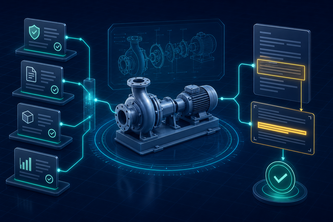
The description states that Basira is an “operator-neutral, role-aware workspace for synthetic equipment, documents, sources and evidence.” It provides a workflow where users can inspect linked controlled knowledge, ask bounded questions, open cited passages, review draft tasks, and explicitly approve them onto a local workboard.
It uses:
- A Next.js/React application
- Server-side OpenAI integration via GPT-5.6 Responses API
- Structured Outputs with strict schema adherence
- Independent citation validation (passage IDs and quoted text are checked)
- Deterministic fallback for safety and reliability
- Browser-local workboard with no external writeback
The system is described as not providing diagnosis, operating instructions, or autonomous actions — instead, it enforces a human approval gate before any task reaches the browser.
Inference The product appears to be a demonstration of how to build a safe, grounded AI interface for industrial knowledge tasks. It is not a production-ready system but rather an experimental prototype with safety mechanisms built in.
Positioning & Claim Evolution
The description positions Basira as a tool that turns “scattered asset evidence into cited, human-approved review work.” It claims to address the challenge of fragmented information in industrial environments where teams need fast access to trusted evidence without losing source trust or inventing certainty.
It evolved from an existing project during Build Week. The original version was extended with:
- Operator-neutral scope
- Synthetic/public data only
- Exact citations and fail-closed abstention
- No safety or operating advice
- Mandatory human approval
Inference The positioning is focused on trust, accountability, and safe AI use in industrial settings — not general-purpose chatbots or automation. It emphasizes the importance of source provenance and human agency.
Target Customer & ICP
The description states that Basira targets “maintenance, reliability, integrity and document-control teams.” These are described as users who need to assemble trustworthy asset evidence and prepare review work while preserving source provenance and human accountability.
Inference The target customer is industrial professionals working in regulated environments where documentation and traceability matter. The ICP likely includes engineers or technicians involved in equipment lifecycle management, compliance, or reliability reviews.
Business Model & Pricing Evidence
Not evidenced.
The description does not mention any pricing model, revenue streams, or monetization strategy. It focuses entirely on the technical implementation and safety features of a demo product.
Technical & Delivery Signals
Key technical elements include:
- Use of GPT-5.6 via OpenAI Responses API
- Structured Outputs with schema validation
- Server-side citation verification (passage ID, quoted text)
- Deterministic refusal before model call
- Fail-closed abstention on invalid citations
- Browser-local workboard with no external writeback
- Synthetic or public data only
- Vercel deployment
- Playwright-based browser acceptance tests
The system is described as having:
- 42/42 focused unit/API checks
- 14/14 Build Week E2E checks
- Preserved platform and specialist browser expectations at 29/29 and 44/44 respectively
Inference The engineering approach shows a strong emphasis on safety, validation, and controlled AI interaction. However, the lack of live system integration suggests this is not yet production-ready.
Traction & Maturity Signals
Not evidenced.
There is no mention of customers, revenue, usage metrics, or adoption data. The product is described as a synthetic-data demo with no live connections or deployments.
Competitive Context
Not evidenced.
The description does not compare Basira to other tools or platforms in the industrial knowledge management space. It focuses on its own unique features rather than market positioning or competitive differentiation.
Open Questions & Risks
- Demo-only nature: The product is explicitly stated to be a synthetic-data demonstration with no live system integration.
- No production readiness: The description notes that any next phase would require qualified workflow owners, data access, security reviews, and engineering validation — indicating no current deployment or operational use.
- Human approval as a UI state, not a system function: While the product enforces a human gate, it is unclear how this is enforced at scale or in real-world workflows.
- Limited scope of AI use: The model is restricted to evidence gathering and drafting; no diagnosis, safety decisions, or autonomous actions are allowed — which may limit its utility for some users.
Questions the description leaves open
- What specific industrial use cases were considered during development?
- How does the system handle edge cases where citations fail validation?
- Are there plans to integrate with real-world data sources or systems (e.g., EAM, OT)?
- What are the key assumptions about user behavior and workflow adoption?
- Has the team tested the human approval gate in realistic scenarios?
- How is the synthetic corpus curated and maintained for accuracy?
Overall Assessment
Not evidenced.
There is no indication of funding, valuation, or investment interest. The project is described as a hackathon submission with no commercial traction or investor engagement. It remains unclear whether this represents a viable product opportunity or an experimental prototype.
User Stories BotA demo video on every pull request
Get a demo video on every new feature
GitHub App that watches your pull requests and records a narrated, captioned demo.
Save time on demo prep and make informed decisions faster with a video walkthrough of every new feature.
Source
Submitted to the OpenAI 2026 hackathon on Devpost. Project home on Devpost. Back to the full gallery on Devpost.
This competitive analysis was produced by top-founders.com (opens in a new tab)
Generated by a language model from this project's public Devpost page — its tagline, the author's own write-up and any built-with tags listed there — as captured in August 2026. Short quotations are the author's words. It is an opinion on the idea as a business, not on the people behind it, and it reflects the description as published then. If the project has moved on, request a correction below. The analysis is not independent research and contains no verified traction, revenue or customer data.
An independent guide by KFG International LLC — not affiliated with, endorsed by, or connected to Devpost or OpenAI.