

Archive position — measured, not model output
0 likes on Devpost
2,263 of the 7,850 archived projects have more likes, and 5,587 share exactly 0 — so this project's #2,835 place in the like-ranked listing is a tie-break inside that group, not a ranking.
Projects (log scale)
Likes on Devpost. ▲ marks this project's group.
Show the figures
| Likes | Projects | Share of archive |
|---|---|---|
| 0 | 5,587 | 71.2% |
| 1 | 1,758 | 22.4% |
| 2 | 284 | 3.6% |
| 3–4 | 132 | 1.7% |
| 5–9 | 75 | 1.0% |
| 10+ | 14 | 0.2% |
 User Stories BotA demo video on every pull request
Get a demo video on every new feature
GitHub App that watches your pull requests and records a narrated, captioned demo.
Save time on demo prep and make informed decisions faster with a video walkthrough of every new feature.
Executive Summary
The description states that Avatar AI Assistant for small business is a bilingual (English/Spanish) customer-facing assistant built using OpenAI's tools and technologies. The author, Marco Ortiz, describes it as a prototype developed over a weekend for a friend’s financial services office, with plans to expand functionality into a full-service AI assistant for small businesses.
The project is self-reported and unverified. It does not contain evidence of revenue, customers, or traction beyond the author's own claims. The description indicates that the product is in early development, with no commercial deployment or market validation.
The single most important open question
Is there any evidence of actual customer use or feedback from the target small business users?
What The Product Actually Is
- The description states that the Avatar AI Assistant is a bilingual (English/Spanish) customer-facing assistant, using OpenAI Agents SDK for TypeScript, File Search, and a vector store grounded in FAQ files.
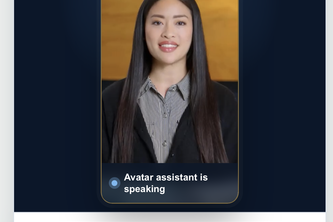
- It includes an interactive avatar added during the OpenAI Build Week hackathon.
- The author built it using ChatGPT prompts, Codex with GPT-5.6 Sol, and technologies such as Next.js, TypeScript, Tailwind, CSS, HTML5, and Netlify.
- It is described as a chatbot with an avatar, intended to answer questions about taxes, insurance, business services, required documents, and appointments.
Inference: The product appears to be a prototype chatbot with an avatar, built for demonstration or limited use in a small local business context. No evidence of production deployment or scalability is provided.
Positioning & Claim Evolution
- The author positions the product as an AI assistant tailored for small businesses, especially those serving Latino communities.
- It is described as a tool to turn trusted company information into clear, actionable answers.
- The project evolved from a simple chatbot to include an avatar after discovering another similar product (face-bot.ai).
- The author states that the idea came from wanting to help a friend’s small financial services office improve customer service.
Inference: The positioning is based on personal motivation and a specific use case. There is no evidence of market research or competitive positioning beyond the author's own narrative.
Target Customer & ICP
- The description states that the product is intended for small businesses, particularly those in financial services (tax returns, auto insurance).
- It is aimed at serving the Latino community in a local area.
- The author mentions his friend’s office as the initial test case.
Not evidenced: No data on customer segments, personas, or market size. No evidence of actual customers beyond one small business owner.
Business Model & Pricing Evidence
- The description does not state any pricing model or business model.
- There is no mention of monetization, licensing, or subscription structures.
- The author describes the project as a prototype and mentions future features like secure portals and document uploads, but no commercialization strategy is outlined.
Not evidenced: No evidence of revenue streams, pricing plans, or monetization approach.
Technical & Delivery Signals
- Built using Next.js, TypeScript, Tailwind, CSS, HTML5, and Netlify.
- Uses OpenAI Agents SDK for TypeScript, File Search, and a vector store grounded in FAQ files.
- The author used ChatGPT prompts and Codex with GPT-5.6 Sol to write code.
- Deployment is done via Netlify with GitHub integration.
- The project was built over a weekend, suggesting rapid prototyping.
Inference: The technical stack suggests a modern full-stack development approach, but no evidence of scalability or production-grade infrastructure is provided.
Traction & Maturity Signals
- The author states that the product was tested by his friend’s office and that he received feedback.
- It was submitted to the OpenAI 2026 hackathon, suggesting early-stage validation.
- The author describes the current version as a foundation with plans for future features.
- No evidence of user adoption, usage metrics, or customer retention is provided.
Not evidenced: No data on actual usage, customer engagement, or product maturity beyond prototype stage.
Competitive Context
- The author mentions discovering another similar product (face-bot.ai) and was inspired to add an avatar.
- There is no mention of other AI assistant tools in the market for small businesses.
- No evidence of competitive analysis or differentiation strategy is provided.
Not evidenced: No information on existing competitors or market positioning.
Open Questions & Risks
- The project is described as a prototype with no commercial traction.
- The author is a solo developer (team size: 1) and has limited experience beyond IT development.
- There is no evidence of customer feedback, product-market fit, or revenue.
- The project was built in a short timeframe (weekend), suggesting limited testing or validation.
Inference: High risk due to lack of market validation, limited team, and unproven commercial viability.
Questions the description leaves open
- What is the actual customer feedback from your friend’s business?
- How do you plan to scale this beyond a single small business use case?
- Have you validated demand for this product in other small businesses?
- What are the technical and operational risks of deploying this at scale?
- Are there any plans to monetize or commercialize this product?
Overall Assessment
- The project is described as a prototype with no evidence of traction, revenue, or customer adoption.
- It is built by a solo developer, and the author has not demonstrated prior business success or market validation.
- There is no evidence of a scalable business model, pricing strategy, or competitive positioning.
Assessment: Not ready for investment or partnership. The description indicates an early-stage idea with no commercial proof of concept. Further due diligence would require evidence of customer use, product-market fit, and scalability.
User Stories BotA demo video on every pull request
Get a demo video on every new feature
GitHub App that watches your pull requests and records a narrated, captioned demo.
Save time on demo prep and make informed decisions faster with a video walkthrough of every new feature.
Source
Submitted to the OpenAI 2026 hackathon on Devpost. Project home on Devpost. Back to the full gallery on Devpost.
This competitive analysis was produced by top-founders.com (opens in a new tab)
Generated by a language model from this project's public Devpost page — its tagline, the author's own write-up and any built-with tags listed there — as captured in August 2026. Short quotations are the author's words. It is an opinion on the idea as a business, not on the people behind it, and it reflects the description as published then. If the project has moved on, request a correction below. The analysis is not independent research and contains no verified traction, revenue or customer data.
An independent guide by KFG International LLC — not affiliated with, endorsed by, or connected to Devpost or OpenAI.