

Archive position — measured, not model output
0 likes on Devpost
2,263 of the 7,850 archived projects have more likes, and 5,587 share exactly 0 — so this project's #5,112 place in the like-ranked listing is a tie-break inside that group, not a ranking.
Projects (log scale)
Likes on Devpost. ▲ marks this project's group.
Show the figures
| Likes | Projects | Share of archive |
|---|---|---|
| 0 | 5,587 | 71.2% |
| 1 | 1,758 | 22.4% |
| 2 | 284 | 3.6% |
| 3–4 | 132 | 1.7% |
| 5–9 | 75 | 1.0% |
| 10+ | 14 | 0.2% |
 User Stories BotA demo video on every pull request
Get a demo video on every new feature
GitHub App that watches your pull requests and records a narrated, captioned demo.
Save time on demo prep and make informed decisions faster with a video walkthrough of every new feature.
Executive Summary
Company: MAG-VLAQ
Self-reported basis: The description is entirely self-reported and unverified. No third-party corroboration, revenue, customer data, or traction evidence is available.
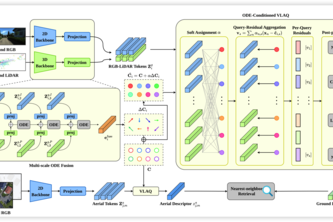
What the company appears to be: A research-grade, open-source project focused on multi-modal aerial-ground place recognition using PyTorch. It is a technical implementation for training and evaluating models on datasets like KITTI360, with support for DINOv2 and Utonia models.
What changed: The project was submitted to the OpenAI 2026 hackathon, indicating an early-stage development or prototype effort.
Single most important open question: Is there any evidence of commercial application, adoption, or traction beyond the author’s own development work?
What The Product Actually Is
The description states that MAG-VLAQ is a multi-modal aerial-ground place recognition task, implemented using PyTorch. It includes:
- Code for training and evaluation on datasets like KITTI360.
- Integration with external models such as DINOv2 and Utonia.
- Support for multi-GPU training via
torchrun. - A modular codebase under
src/mag_vlaq/, with components for data, models, losses, mining, retrieval, and engine.
Inference: The project is a research or prototype tool, likely intended for academic or experimental use in computer vision or robotics. It is not described as a product or service for end-users.
Positioning & Claim Evolution
The description states that MAG-VLAQ was submitted to the OpenAI 2026 hackathon. This implies:
- The project is positioned as an experimental or exploratory effort, possibly in the domain of autonomous systems or place recognition.
- It does not claim commercial viability, productization, or market traction.
Inference: The positioning is early-stage and research-oriented, with no evidence of a commercial or market-facing strategy.
Target Customer & ICP
The description does not identify any specific customer or target user. It is framed as a technical tool for developers or researchers, likely in the fields of computer vision, robotics, or autonomous systems.
Inference: The ICP (Ideal Customer Profile) is not evidenced. No indication of who would use this beyond the author or academic collaborators.
Business Model & Pricing Evidence
There is no evidence of a business model or pricing structure. The project is described as:
- Open-source.
- Built for research and development.
- Submitted to a hackathon.
Inference: No commercial business model or pricing is evident from the description.
Technical & Delivery Signals
The project includes:
- A PyTorch-based implementation.
- Support for multi-GPU training.
- Integration with external models (DINOv2, Utonia).
- Code layout and documentation for training, evaluation, and development.
- Use of standard tools like FAISS,
torch.hub, andtorchrun.
Inference: The technical delivery is research-grade, not production-ready. It appears to be a development tool or prototype.
Traction & Maturity Signals
The description states:
- The project was submitted to the OpenAI 2026 hackathon.
- No mention of users, customers, revenue, or adoption.
Inference: There is no evidence of traction or maturity beyond the author’s own development work. It is not a product in use.
Competitive Context
The description does not provide any information about competitors or market context. It is not clear whether this project addresses an existing problem or fills a gap in the market.
Inference: No competitive positioning or market analysis is evident.
Open Questions & Risks
- No commercial traction or adoption.
- Only one team member (Zhengyi Xu), suggesting limited development capacity.
- Research-grade tool, not a product for end-users.
- No revenue, pricing, or customer data.
- Submitted to a hackathon, indicating early-stage effort.
Inference: The project is not yet a commercial entity, and there is no evidence of market validation or scalability.
Questions the description leaves open
- What is the intended use case for MAG-VLAQ beyond research?
- Are there any plans to commercialize this work or build a product around it?
- Has the project been used in any real-world applications or by other developers?
- What are the long-term goals for the project — is it meant to be a standalone tool or part of a larger platform?
- How does this project differ from existing open-source solutions in place recognition?
Overall Assessment
Not evidenced.
The description provides no evidence of commercial viability, traction, or market demand. It is an early-stage, research-oriented project submitted to a hackathon. There is no indication that it represents a scalable or investible business.
Inference: This is not a viable target for investment or partnership at this stage.
User Stories BotA demo video on every pull request
Get a demo video on every new feature
GitHub App that watches your pull requests and records a narrated, captioned demo.
Save time on demo prep and make informed decisions faster with a video walkthrough of every new feature.
Source
Submitted to the OpenAI 2026 hackathon on Devpost. Project home on Devpost. Back to the full gallery on Devpost.
This competitive analysis was produced by top-founders.com (opens in a new tab)
Generated by a language model from this project's public Devpost page — its tagline, the author's own write-up and any built-with tags listed there — as captured in August 2026. Short quotations are the author's words. It is an opinion on the idea as a business, not on the people behind it, and it reflects the description as published then. If the project has moved on, request a correction below. The analysis is not independent research and contains no verified traction, revenue or customer data.
An independent guide by KFG International LLC — not affiliated with, endorsed by, or connected to Devpost or OpenAI.