

Archive position — measured, not model output
0 likes on Devpost
2,263 of the 7,850 archived projects have more likes, and 5,587 share exactly 0 — so this project's #2,768 place in the like-ranked listing is a tie-break inside that group, not a ranking.
Projects (log scale)
Likes on Devpost. ▲ marks this project's group.
Show the figures
| Likes | Projects | Share of archive |
|---|---|---|
| 0 | 5,587 | 71.2% |
| 1 | 1,758 | 22.4% |
| 2 | 284 | 3.6% |
| 3–4 | 132 | 1.7% |
| 5–9 | 75 | 1.0% |
| 10+ | 14 | 0.2% |
 User Stories BotA demo video on every pull request
Get a demo video on every new feature
GitHub App that watches your pull requests and records a narrated, captioned demo.
Save time on demo prep and make informed decisions faster with a video walkthrough of every new feature.
Executive Summary
What the company appears to be
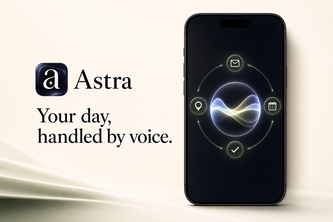
Astra AI is a voice-first, contextual AI assistant designed for executives or knowledge workers. It integrates with email, calendar, memory, location, and other digital contexts to propose and execute useful tasks without requiring explicit prompts from the user.
What changed
The author rebuilt Astra's task delegation system during OpenAI Build Week, shifting from scheduled AI prompts to a more durable, outcome-focused system that supports proactive suggestions, background execution, and structured task lifecycle management (e.g., “Working,” “Done,” “Needs You”).
Single most important open question
Is there evidence of user adoption or feedback beyond the author’s own development experience? The description does not indicate any external users, customers, or usage metrics.
Note: This analysis is based entirely on the self-reported project description provided by the author. No third-party verification, traction data, revenue figures, or customer information are available.
What The Product Actually Is
The description states that Astra AI is a voice-first AI executive assistant. It combines:
- Context from email (via Gmail API)
- Calendar events (via Google Calendar API)
- User memory and preferences
- Location data
- Current app screen context (e.g., Today, Tasks, Calendar)
It uses this information to:
- Suggest tasks or actions
- Prepare email replies for review
- Monitor prices, flights, or events
- Conduct research with source retention
- Recommend nearby events based on interests and schedule
Astra operates through a native SwiftUI app with a backend built using Bun and TypeScript, integrating with services like:
- OpenAI Realtime API
- GPT-5.6
- Cloud Run, Cloud Scheduler, Firestore
- Firebase Authentication, App Check
- Gmail and Calendar APIs
Inference: The product is described as a personal assistant tool for individuals managing complex workflows, not a commercial SaaS offering.
Positioning & Claim Evolution
The author claims Astra aims to be an “executive assistant” that understands user context and takes action without needing explicit prompts. It positions itself as a departure from typical chat-based AI tools, which require users to frame questions or initiate interactions.
Key claims include:
- Astra “understands what matters to me”
- It can “take care of useful work without making me reconstruct my life inside a chat window”
- The assistant uses context to propose next actions and executes them with user confirmation
During OpenAI Build Week, the author repositioned the product around:
- Delegation of outcomes rather than simple prompts
- A durable task lifecycle, including states like “Working,” “Done,” “Needs You”
- Proactive suggestions grounded in real-time context
- Structured voice-to-task continuity
Claim vs Fact: These are self-reported claims about intent and design philosophy, not evidence of adoption or performance.
Target Customer & ICP
The description implies the target is:
- Executives or knowledge workers who manage complex schedules and workflows
- People seeking a contextual assistant that reduces friction in task execution
There is no explicit mention of:
- Industry verticals
- Company size or role types (e.g., C-level vs. mid-level managers)
- Specific use cases beyond personal productivity
Not evidenced: No clear indication of whether Astra targets individuals, teams, or enterprises; no stated segmentation strategy.
Business Model & Pricing Evidence
The description does not contain any information about:
- Revenue model
- Pricing structure
- Monetization strategy
- Paid features or tiers
It also does not mention:
- Subscription plans
- Freemium offerings
- Licensing models
- Enterprise sales cycles
Not evidenced: No business model or pricing data available.
Technical & Delivery Signals
The project is built using:
- Native iOS app (SwiftUI)
- Backend in Bun and TypeScript
- Integration with Google Cloud Platform (Cloud Run, Firestore, Scheduler)
- OpenAI APIs including:
- GPT-5.6
- Realtime API
- Codex
- Responses API
- Web Search
Other technologies mentioned include:
- Firebase Authentication
- Gmail and Calendar APIs
- WebSocket connections
- iOS push notifications
Inference: The technical stack suggests a modern, cloud-native approach with strong AI integration. However, no evidence of scalability, reliability, or production deployment is provided.
Traction & Maturity Signals
The description states:
- Astra was previously an “unfinished personal assistant”
- It was rebuilt during OpenAI Build Week
- The author mentions a TestFlight link for early access: https://testflight.apple.com/join/n24N1aqG
- Casa Tier 2 security verification is in progress
However, there is no evidence of:
- User base or active users
- Customer feedback or reviews
- Product usage analytics
- Revenue or monetization
- Market traction beyond the author’s own development
Not evidenced: No signs of product-market fit, user engagement, or commercial viability.
Competitive Context
The description does not reference:
- Competitors in the AI assistant space
- Direct substitutes (e.g., Siri, Google Assistant, Notion AI, Todoist)
- Market positioning relative to existing tools
Not evidenced: No competitive analysis or differentiation strategy described.
Open Questions & Risks
- No external validation: The product exists only as a self-reported prototype with no evidence of real-world usage.
- Single-founder team: Only one member listed (Bikram Brar), suggesting limited resources for scaling or marketing.
- Unproven market demand: No indication of customer interest, feedback, or adoption beyond the author’s own experience.
- Unclear monetization path: No business model or pricing strategy described.
- Limited product maturity: The project was unfinished before Build Week and remains in early-stage development.
Inference: Without traction or revenue, this is a high-risk investment or partnership opportunity.
Questions the description leaves open
- What specific user problems does Astra solve that existing tools don’t?
- How many users are currently testing the app? Are there any beta testers or early adopters?
- What is the plan for monetization and scaling beyond a personal assistant tool?
- How do you intend to differentiate from other AI assistants in the market?
- Can you share any feedback from users who have tried the TestFlight version?
- What are your long-term goals for Astra — is it intended as a consumer product or enterprise solution?
Overall Assessment
Not evidenced: There is no evidence of revenue, customers, or traction to support an investment or partnership decision.
The project is described as a personal prototype, developed during a hackathon, with no indication of commercial viability or market validation.
Confidence Level: Very low. This is a speculative read based on a self-reported write-up and technical implementation details only. No data supports claims about product-market fit, scalability, or return potential.
User Stories BotA demo video on every pull request
Get a demo video on every new feature
GitHub App that watches your pull requests and records a narrated, captioned demo.
Save time on demo prep and make informed decisions faster with a video walkthrough of every new feature.
Source
Submitted to the OpenAI 2026 hackathon on Devpost. Project home on Devpost. Back to the full gallery on Devpost.
This competitive analysis was produced by top-founders.com (opens in a new tab)
Generated by a language model from this project's public Devpost page — its tagline, the author's own write-up and any built-with tags listed there — as captured in August 2026. Short quotations are the author's words. It is an opinion on the idea as a business, not on the people behind it, and it reflects the description as published then. If the project has moved on, request a correction below. The analysis is not independent research and contains no verified traction, revenue or customer data.
An independent guide by KFG International LLC — not affiliated with, endorsed by, or connected to Devpost or OpenAI.