

Archive position — measured, not model output
0 likes on Devpost
2,263 of the 7,850 archived projects have more likes, and 5,587 share exactly 0 — so this project's #2,713 place in the like-ranked listing is a tie-break inside that group, not a ranking.
Projects (log scale)
Likes on Devpost. ▲ marks this project's group.
Show the figures
| Likes | Projects | Share of archive |
|---|---|---|
| 0 | 5,587 | 71.2% |
| 1 | 1,758 | 22.4% |
| 2 | 284 | 3.6% |
| 3–4 | 132 | 1.7% |
| 5–9 | 75 | 1.0% |
| 10+ | 14 | 0.2% |
 User Stories BotA demo video on every pull request
Get a demo video on every new feature
GitHub App that watches your pull requests and records a narrated, captioned demo.
Save time on demo prep and make informed decisions faster with a video walkthrough of every new feature.
Executive Summary
What the company appears to be
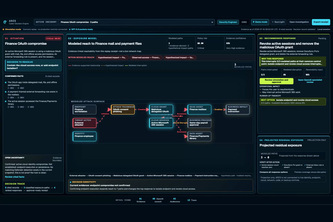
ARES is a self-reported cybersecurity decision engine built as a hackathon project. The author states it organizes scattered cyber evidence into ranked, explainable responses using AI and deterministic logic. It is described as a human-in-the-loop system that models attack paths, compares response options, and provides simulation results without executing actions automatically.
What changed
This is a single-person hackathon project submitted to the OpenAI 2026 hackathon. The author reports building it in TypeScript with React/Next.js frontend, integrating Codex for development assistance and GPT-5.6 for qualitative judgment layers. It includes synthetic incident scenarios and a demo interface.
The single most important open question
Is there any evidence of actual deployment, customer adoption or revenue generation beyond the author's own demonstration? The description contains no data about traction, customers, or commercial use.
What The Product Actually Is
The description states that ARES is:
- A "cyber decision engine" that organizes scattered cyber evidence
- Built with TypeScript and React/Next.js frontend
- Uses Codex for development assistance and GPT-5.6 for qualitative specialist input
- Designed to create causal attack-path graphs connecting identities, sessions, credentials, endpoints, cloud services, business processes, and impacts
- Capable of calculating which paths each response would interrupt
- Designed as a "single decision cockpit" interface
- Not designed for full automation - human approval is required before any action
The author claims it separates confirmed observations from derived conclusions and open questions, and creates deterministic calculations while allowing AI to contribute judgment and disagreement.
Evidence strength Self-reported. No independent verification or demonstration of actual functionality beyond the author's own account.
Positioning & Claim Evolution
The description states that ARES:
- Was built to address a frustration: "security teams already have plenty of alerts, but alerts do not tell you what to do next"
- Does not replace incident commanders
- Organizes evidence and models how incidents could reach important assets
- Compares available responses using coverage, disruption, urgency, reversibility, and evidence strength
- Provides clear explanations of tradeoffs
- Shows highest-ranked response together with runner-up, operational impact, and specialist disagreement
- Does not execute actions automatically - human must review and approve before simulation on cloned graph
The author describes it as a "human-in-the-loop" system focused on helping people make difficult security decisions faster with clearer reasoning and defendable records.
Evidence strength Self-reported claims about positioning and intent. No evidence of market traction or customer validation.
Target Customer & ICP
The description states that ARES is designed for:
- Security teams dealing with scattered alerts
- Incident commanders who need to decide what to do next
- SOC analysts who must evaluate exposure models and recommended responses
- CISOs and executives who require defendable records of decisions
- Users who want to make difficult security decisions faster with clearer reasoning
The author notes that different audiences (SOC, CISO, executive) use different language but all come from the same evidence and result.
Evidence strength Self-reported positioning. No evidence of actual customer interviews, personas or market validation.
Business Model & Pricing Evidence
Not evidenced.
The description does not contain any information about:
- Revenue streams
- Pricing models
- Customer acquisition costs
- Unit economics
- Monetization strategy
- Commercial partnerships
Evidence strength None provided. This is a self-reported hackathon project with no commercial evidence.
Technical & Delivery Signals
The description states that ARES:
- Was built in TypeScript with React/Next.js frontend
- Uses Codex for development assistance throughout the process
- Integrates GPT-5.6 for qualitative specialist layer (but not for creating evidence or changing scores)
- Has deterministic calculations for facts, claims, graph topology, path enumeration, scores, rankings, approval state, simulation results, and final receipt
- Includes a single decision cockpit interface
- Uses synthetic incident scenarios including OAuth compromise, endpoint malware, ransomware, GitHub workflow abuse, Snowflake data exfiltration, and Workday payroll tampering
- Has a replay environment for examining how different evidence would change responses
The author notes that GPT-5.6 cannot create evidence, invent citations, change the graph, rewrite scores, approve actions, or modify simulation results - these remain controlled by the deterministic engine.
Evidence strength Self-reported technical details from one developer's account. No independent verification of architecture or delivery quality.
Traction & Maturity Signals
Not evidenced.
The description contains no information about:
- Revenue generation
- Customer adoption
- User base
- Product usage metrics
- Market traction
- Commercial deployment
- Product maturity beyond the hackathon demo
The author states this is a hackathon project submitted to OpenAI 2026, and that the demo is live but provides no evidence of actual users or customers.
Evidence strength None provided. This is a single-person demonstration project with no traction data.
Competitive Context
Not evidenced.
The description does not contain any information about:
- Competitors in the cybersecurity decision space
- Market size or growth trends
- Alternative solutions
- Competitive advantages or disadvantages
- Industry positioning
Evidence strength None provided. The author makes no mention of existing players or competitive landscape.
Open Questions & Risks
Inferences based on self-reported information:
- Single-person development: The project was built by one person (Austin Kuruvilla) which raises questions about scalability, maintenance, and long-term viability.
- No commercial evidence: This is a hackathon submission with no revenue, customers or traction data - all claims are unverified.
- Unproven AI integration: While GPT-5.6 is mentioned as contributing to judgment layers, there's no evidence of how it actually functions in practice or whether its outputs are reliable.
- Limited scope: The description focuses on synthetic scenarios rather than real-world deployment, suggesting the system may not be battle-tested.
- Unverified claims: All statements about functionality, performance and capabilities are self-reported without independent verification.
- No clear path to monetization: No evidence of business model or commercial strategy beyond the author's own demonstration.
Evidence strength Inferences based on self-reported information only. No external validation.
Questions the description leaves open
- What specific security incidents have you actually used this system with, if any?
- How does the system handle edge cases or unexpected scenarios not covered in the demo?
- What is your plan for integrating with existing security platforms and tools?
- Can you provide evidence of how the AI components (GPT-5.6) perform in real-world situations?
- How do you intend to scale beyond a single developer's capacity?
- What are the actual technical limitations of the deterministic engine vs. the AI components?
- Have you identified any specific customers or use cases for this system?
- What is your roadmap for moving from demo to production deployment?
Evidence strength These questions are prompted by the self-reported nature of the project description, which lacks concrete evidence.
Overall Assessment
Not evidenced.
The description contains no information about:
- Financial performance
- Valuation or funding history
- Strategic partnerships
- Investment interest
- Acquisition potential
- Commercial viability beyond the author's own demonstration
This is a single-person hackathon project with no commercial traction, revenue, or customer evidence. The author states it was built for the OpenAI 2026 hackathon and includes only a live demo.
Evidence strength None provided. This is an unverified self-reported project with no demonstrated commercial potential or traction.
User Stories BotA demo video on every pull request
Get a demo video on every new feature
GitHub App that watches your pull requests and records a narrated, captioned demo.
Save time on demo prep and make informed decisions faster with a video walkthrough of every new feature.
Source
Submitted to the OpenAI 2026 hackathon on Devpost. Project home on Devpost. Back to the full gallery on Devpost.
This competitive analysis was produced by top-founders.com (opens in a new tab)
Generated by a language model from this project's public Devpost page — its tagline, the author's own write-up and any built-with tags listed there — as captured in August 2026. Short quotations are the author's words. It is an opinion on the idea as a business, not on the people behind it, and it reflects the description as published then. If the project has moved on, request a correction below. The analysis is not independent research and contains no verified traction, revenue or customer data.
An independent guide by KFG International LLC — not affiliated with, endorsed by, or connected to Devpost or OpenAI.