

Archive position — measured, not model output
0 likes on Devpost
2,263 of the 7,850 archived projects have more likes, and 5,587 share exactly 0 — so this project's #2,508 place in the like-ranked listing is a tie-break inside that group, not a ranking.
Projects (log scale)
Likes on Devpost. ▲ marks this project's group.
Show the figures
| Likes | Projects | Share of archive |
|---|---|---|
| 0 | 5,587 | 71.2% |
| 1 | 1,758 | 22.4% |
| 2 | 284 | 3.6% |
| 3–4 | 132 | 1.7% |
| 5–9 | 75 | 1.0% |
| 10+ | 14 | 0.2% |
 User Stories BotA demo video on every pull request
Get a demo video on every new feature
GitHub App that watches your pull requests and records a narrated, captioned demo.
Save time on demo prep and make informed decisions faster with a video walkthrough of every new feature.
Executive Summary
The description states that AI POS by Toy is a self-developed point-of-sale (POS) system for small family grocery stores in Thailand, built during an OpenAI hackathon. The author, denphan samnieng, describes it as an affordable solution aimed at modernizing traditional retail operations, with features including barcode scanning, inventory management, checkout, and receipt printing.
The system is described as being built using open-source tools like Python, Tkinter, and the OpenAI API, and is intended to support AI-enhanced functionality such as sales summarization, product insights, and store management suggestions.
What changed: The project was initiated by an individual developer to help his mother's store, with a stated ambition to integrate AI features during a hackathon event. There is no evidence of prior development or commercial traction beyond this self-reported account.
Single most important open question: Is there any evidence that the system has been deployed in real stores, or that it has achieved adoption among small shop owners? The description does not indicate whether the project has moved beyond prototype or proof-of-concept stage.
What The Product Actually Is
The description states that AI POS by Toy is a point-of-sale (POS) system for small family grocery stores in Thailand. It includes features such as:
- Barcode scanning
- Product search
- Inventory management
- Checkout process
- Sales recording
- Profit tracking
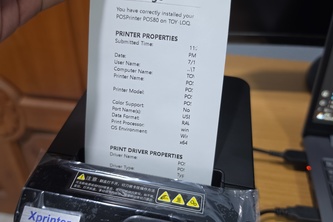
- Thermal receipt printing
During the OpenAI Build Week, the author plans to add AI capabilities including:
- Daily sales summarization
- Identification of best-selling and low-stock products
- Store management suggestions
The system is built using:
- Codex
- Git
- GitHub
- JSON
- OpenAI API
- Python
- Tkinter
- Windows
- XPrinter
Inference: The product appears to be a desktop application or lightweight software solution, likely intended for local deployment in small retail environments.
Positioning & Claim Evolution
The description states that the system was created to help modernize the author’s mother's grocery store, which has served the community for over 30 years. It is positioned as an affordable and accessible technology tool for small shop owners.
The author claims:
- The system supports basic retail operations (checkout, inventory, sales tracking).
- It aims to make technology easier and more affordable for small businesses.
- AI features will be added during OpenAI Build Week to provide insights and suggestions.
Inference: The positioning is that of a DIY or low-cost solution for traditional retailers in Thailand. The claim evolution suggests an intent to evolve from a basic POS into an AI-enhanced management tool.
Target Customer & ICP
The description states that the system is designed for small family grocery stores in Thailand. These are described as local, community-based businesses, with one example being the author’s mother's store, which has served the community for more than 30 years.
There is no evidence of segmentation beyond this single customer type or geographic scope.
Inference: The ICP appears to be small, traditional retail owners in Thailand who may lack access to or afford standard POS systems. No evidence of broader market targeting or customer personas.
Business Model & Pricing Evidence
The description does not state any pricing model or business model. It only mentions that the system is intended to be affordable for small shop owners.
There is no mention of:
- Revenue streams
- Licensing fees
- Subscription models
- SaaS vs. on-premise delivery
- Monetization strategy
Inference: The business model remains undefined in the description. It may be self-funded or a personal project with no commercial monetization yet.
Technical & Delivery Signals
The system is built using:
- Codex
- Git
- GitHub
- JSON
- OpenAI API
- Python
- Tkinter
- Windows
- XPrinter
It is described as a desktop application or lightweight software solution, likely for local deployment.
Inference: The technical stack suggests a simple, low-cost development approach. Use of Tkinter and Python indicates a basic UI and scripting environment, while the OpenAI API implies an intent to integrate AI features.
Traction & Maturity Signals
The description states that this is a self-developed project, built during an OpenAI hackathon (OpenAI Build Week 2026). It was submitted to Devpost as part of the hackathon.
There is no evidence of:
- Deployment in real stores
- Customer adoption or feedback
- Revenue generation
- Product maturity beyond prototype stage
Inference: The project is at a very early stage, likely a proof-of-concept or prototype. No traction or commercialization signals are evident.
Competitive Context
The description does not mention any competitors or existing solutions in the Thai POS market.
There is no evidence of:
- Market analysis
- Competitor benchmarking
- Existing tools used by small grocery stores in Thailand
Inference: The competitive context is unknown. No indication of whether similar systems already exist or are being used by small retailers.
Open Questions & Risks
- No commercial traction or adoption: The project is described as a personal initiative, with no evidence of real-world deployment or customer base.
- Unclear monetization strategy: No pricing model or revenue plan is evident.
- Limited technical depth: The use of Tkinter and Python suggests a basic UI and scripting approach, which may not scale for enterprise-level retail operations.
- No validation of market need: There is no evidence that small grocery store owners in Thailand are actively seeking such a solution.
- Unverified claims: All statements are self-reported and unverified.
Inference: The project lacks commercial viability or traction. It appears to be an experimental or educational effort, not a scalable business.
Questions the description leaves open
- Has the system been tested in any real store environment?
- What is the current status of AI feature development? Are they functional or conceptual?
- Is there any feedback from small shop owners in Thailand about the need for such a tool?
- How does the author plan to monetize or scale this solution?
- Has the author considered integration with existing POS systems or hardware used in Thai grocery stores?
Overall Assessment
The description states that AI POS by Toy is a self-developed project, built during an OpenAI hackathon. It is not evidenced to have any commercial traction, revenue, or adoption.
Assessment: Not evidenced as a viable investment or partnership opportunity at this stage. The project appears to be in early development with no demonstrated market need or business model. It lacks the signals of a scalable or commercially viable product.
User Stories BotA demo video on every pull request
Get a demo video on every new feature
GitHub App that watches your pull requests and records a narrated, captioned demo.
Save time on demo prep and make informed decisions faster with a video walkthrough of every new feature.
Source
Submitted to the OpenAI 2026 hackathon on Devpost. Project home on Devpost. Back to the full gallery on Devpost.
This competitive analysis was produced by top-founders.com (opens in a new tab)
Generated by a language model from this project's public Devpost page — its tagline, the author's own write-up and any built-with tags listed there — as captured in August 2026. Short quotations are the author's words. It is an opinion on the idea as a business, not on the people behind it, and it reflects the description as published then. If the project has moved on, request a correction below. The analysis is not independent research and contains no verified traction, revenue or customer data.
An independent guide by KFG International LLC — not affiliated with, endorsed by, or connected to Devpost or OpenAI.