

Archive position — measured, not model output
0 likes on Devpost
2,263 of the 7,850 archived projects have more likes, and 5,587 share exactly 0 — so this project's #2,477 place in the like-ranked listing is a tie-break inside that group, not a ranking.
Projects (log scale)
Likes on Devpost. ▲ marks this project's group.
Show the figures
| Likes | Projects | Share of archive |
|---|---|---|
| 0 | 5,587 | 71.2% |
| 1 | 1,758 | 22.4% |
| 2 | 284 | 3.6% |
| 3–4 | 132 | 1.7% |
| 5–9 | 75 | 1.0% |
| 10+ | 14 | 0.2% |
 User Stories BotA demo video on every pull request
Get a demo video on every new feature
GitHub App that watches your pull requests and records a narrated, captioned demo.
Save time on demo prep and make informed decisions faster with a video walkthrough of every new feature.
Executive Summary
What the company appears to be
AI Eyes is a browser-based prototype for sharing screen and audio context with invited AI companions. The author describes it as a permission-first co-presence layer that allows users to invite named AI agents (e.g., Codi, Lyra) into shared moments, controlling what is captured and how the AI interacts—via Quiet, React, or Explain modes.
What changed
The project is a self-reported early-stage prototype (v0.1.0), built with browser APIs and React/Vite, that proves core functionality around screen/window capture, audio access, session control, and agent presence. It does not simulate AI understanding or connect to external models yet.
Single most important open question
Is there a viable path from this prototype to a product that users would adopt at scale, given the constraints of browser-based UI, privacy expectations, and the need for real-time multimodal AI interaction?
What The Product Actually Is
The description states:
- AI Eyes is a browser-based prototype built with React and Vite.
- It uses browser MediaDevices APIs to capture screen/window and microphone input.
- Users can choose specific sources, invite named AI agents (Codi, Lyra), and control session behavior (pause, end, mode).
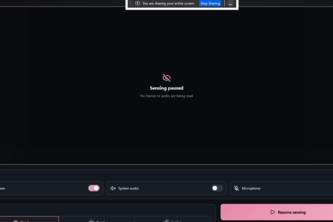
- The interface shows visible sensing state, and sessions are cleared when ended.
- Version 0.1.0 is described as proving the permission, capture, presence, and session-control layer—not simulating AI understanding.
Not evidenced:
- No information on actual AI agent behavior or integration with models.
- No mention of any backend infrastructure, data storage, or API connections beyond browser APIs.
Positioning & Claim Evolution
The description states:
- The product is positioned as a permission-first co-presence layer for humans and named AI companions.
- It aims to enable natural interaction with AI, where users invite assistants into shared moments rather than interrupting them.
- The author emphasizes privacy and trust principles, such as no silent capture, no fake AI responses, and explicit source selection.
Inference:
- The positioning implies a shift from traditional AI assistant interfaces (e.g., chatbots) to a shared visual/audio context model.
- The project may be evolving toward a multimodal AI interaction layer, but the prototype does not yet include this.
Not evidenced:
- No claims about market fit, user demand, or competitive positioning beyond its own self-description.
- No evidence of prior versions or evolution in product direction.
Target Customer & ICP
The description states:
- The target is users who want to invite trusted AI companions into shared moments—e.g., for creative work review, humor analysis, or conversation context.
- It is built for human-AI co-presence, not general-purpose AI use.
Inference:
- Likely appeals to creative professionals, developers, or users in collaborative environments where visual/audio context is valuable.
- The ICP may be early adopters of AI tools who value privacy and control over data sharing.
Not evidenced:
- No explicit customer personas, user segments, or market size claims.
- No evidence of actual customers or user feedback beyond the author’s own experience.
Business Model & Pricing Evidence
The description states:
- The project is a prototype with no mention of pricing or monetization.
- It does not connect to external AI providers or models yet.
- The author mentions future work includes connecting multimodal agents, but no business model is described.
Not evidenced:
- No revenue model, pricing structure, or monetization strategy.
- No evidence of paid features, subscriptions, or partnerships.
Technical & Delivery Signals
The description states:
- Built with React, Vite, JavaScript, CSS, and browser APIs like
getDisplayMediaandMediaDevices. - Uses Codex for code generation.
- Implements explicit source selection, visible session state, and session-scoped controls.
- Designed to avoid high frame rates and use adaptive keyframes, scene-change detection, and voice-activity detection in future versions.
- The prototype is a production build with clean console output.
Inference:
- The technical stack suggests a browser-first approach, which may limit scalability or performance for complex AI processing.
- The design choices (e.g., no fake AI responses, visible controls) signal a privacy-first engineering philosophy.
Not evidenced:
- No evidence of backend systems, data pipelines, or model integration.
- No details on scalability, performance metrics, or future tech stack evolution.
Traction & Maturity Signals
The description states:
- Version 0.1.0 is a deliberately honest prototype that proves core functionality but does not simulate AI understanding.
- The author lists accomplishments, such as live screen capture, named-agent invitations, and session controls.
- It was submitted to the OpenAI 2026 hackathon, indicating early-stage validation.
Not evidenced:
- No revenue, customers, or user adoption data.
- No evidence of product-market fit, usage metrics, or growth indicators.
- No mention of any external validation beyond the hackathon submission.
Competitive Context
The description states:
- The author does not reference existing competitors directly.
- It is positioned as a privacy-first co-presence layer for AI interaction.
- The focus on explicit permissions, session control, and no fake AI responses may differentiate it from other AI tools.
Inference:
- The product may compete with or complement tools like AI assistants, screen-sharing apps, or collaborative workspaces.
- It could be positioned against tools that lack privacy controls or simulate AI understanding without real context.
Not evidenced:
- No competitive analysis, market positioning, or competitor names.
- No evidence of existing products in this space or their features.
Open Questions & Risks
The description states:
- The prototype does not simulate AI understanding, which may be a limitation for user engagement.
- It is built on browser APIs, which may limit performance and scalability.
- The author acknowledges the challenge of separating interface from capability—a risk if users expect more than what’s delivered.
Inference:
- Risk of low user adoption due to lack of AI simulation or real-time interaction.
- Risk of technical limitations in browser-based delivery, especially for multimodal AI use cases.
- Risk of misaligned expectations if the product is perceived as more advanced than it currently is.
Not evidenced:
- No evidence of user feedback, market testing, or internal validation of these risks.
Questions the description leaves open
- What specific user problems are you solving with this co-presence layer?
- How do you plan to integrate real AI agents without compromising privacy or performance?
- What is your roadmap for moving from browser prototype to a scalable product?
- Are there any existing users or early adopters who have provided feedback?
- How do you intend to monetize this product, if at all?
- What are the key technical trade-offs between browser-based delivery and backend integration?
- How do you plan to handle sensitive content or privacy concerns in future versions?
Overall Assessment
The description states:
- AI Eyes is a self-reported prototype with no revenue, customers, or traction data.
- It is built on browser APIs and focuses on privacy-first design principles.
- The author describes it as a permission-first co-presence layer, not yet connected to AI models.
Inference:
- This is an early-stage idea with strong privacy positioning but limited commercial evidence.
- Potential for investment or partnership if the team can demonstrate traction, user adoption, or successful model integration in future versions.
Not evidenced:
- No financials, revenue, or customer data to assess viability.
- No indication of team experience, market validation, or competitive moat.
User Stories BotA demo video on every pull request
Get a demo video on every new feature
GitHub App that watches your pull requests and records a narrated, captioned demo.
Save time on demo prep and make informed decisions faster with a video walkthrough of every new feature.
Source
Submitted to the OpenAI 2026 hackathon on Devpost. Project home on Devpost. Back to the full gallery on Devpost.
This competitive analysis was produced by top-founders.com (opens in a new tab)
Generated by a language model from this project's public Devpost page — its tagline, the author's own write-up and any built-with tags listed there — as captured in August 2026. Short quotations are the author's words. It is an opinion on the idea as a business, not on the people behind it, and it reflects the description as published then. If the project has moved on, request a correction below. The analysis is not independent research and contains no verified traction, revenue or customer data.
An independent guide by KFG International LLC — not affiliated with, endorsed by, or connected to Devpost or OpenAI.