

Archive position — measured, not model output
0 likes on Devpost
2,263 of the 7,850 archived projects have more likes, and 5,587 share exactly 0 — so this project's #4,830 place in the like-ranked listing is a tie-break inside that group, not a ranking.
Projects (log scale)
Likes on Devpost. ▲ marks this project's group.
Show the figures
| Likes | Projects | Share of archive |
|---|---|---|
| 0 | 5,587 | 71.2% |
| 1 | 1,758 | 22.4% |
| 2 | 284 | 3.6% |
| 3–4 | 132 | 1.7% |
| 5–9 | 75 | 1.0% |
| 10+ | 14 | 0.2% |
 User Stories BotA demo video on every pull request
Get a demo video on every new feature
GitHub App that watches your pull requests and records a narrated, captioned demo.
Save time on demo prep and make informed decisions faster with a video walkthrough of every new feature.
Executive Summary
What the company appears to be
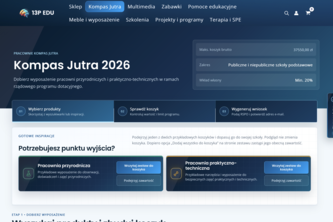
Kompas Jutra: AI School Grant Application Builder is a self-reported WordPress/WooCommerce plugin designed to help Polish school leaders prepare applications for the “Pracownie Kompas Jutra” programme, which offers funding for science and technical lab equipment. The tool automates parts of the application process by integrating with official public registries, using AI for language generation, and modifying official Excel workbooks directly.
What changed
The author states that the project was built in response to a tight deadline (10 days) for submitting applications under a new government programme. It began as an internal solution and evolved into a public tool released on July 17, 2026, shortly after the official workbook became available.
Single most important open question
Is there any evidence of actual usage or adoption by schools beyond the initial release? The description does not provide data on how many schools used the tool, whether it was adopted at scale, or if it has been integrated into institutional workflows.
What The Product Actually Is
The description states that Kompas Jutra is an AI-powered tool built as a WordPress and WooCommerce plugin. It is designed to assist Polish school leaders in preparing applications for the “Pracownie Kompas Jutra” programme, which funds science and technical laboratory equipment.
Key features include:
- Building equipment carts from existing or example sets.
- Validating equipment against financial thresholds.
- Retrieving official school data using the RSPO registry number.
- Enriching governing-body information with BIR/GUS and territorial registers.
- Converting commercial product names into neutral descriptions aligned with ministry lists.
- Generating a formal justification based on selected equipment.
- Filling the official XLSX workbook with validated data, including school info, equipment details, funding calculations, and justification.
- Highlighting fields requiring manual completion.
- Delivering editable applications via email after verification.
The system uses deterministic software components for validation, registry mapping, and document generation, while employing bounded AI (specifically GPT-5.6 Sol) for language-related tasks such as generating justifications and neutral descriptions.
It is described as a plugin that modifies the official OOXML workbook directly, preserving formatting and structure while allowing dynamic expansion of equipment tables.
Positioning & Claim Evolution
The author positions Kompas Jutra as a solution to an urgent administrative challenge faced by Polish school directors preparing for a major government funding programme. The tool is framed not as a generic AI assistant, but as a guided workflow that reduces complexity and time pressure in a high-stakes environment.
Claims made:
- The tool transforms a fragmented, time-consuming process into a guided workflow.
- It helps schools meet a tight deadline (10 days) for application submission.
- It ensures compliance with official requirements by using trusted data sources and modifying the official Excel template directly.
- It avoids “invented facts” or promotional language through bounded AI use, limiting output to verified data and formal Polish prose.
The evolution of positioning appears to be from a personal hackathon project to a real-time public tool that schools are actively using, based on early feedback and phone calls received shortly after launch.
Target Customer & ICP
The description states that the primary users are Polish school leaders, specifically those responsible for preparing applications under the “Pracownie Kompas Jutra” programme. These individuals are described as:
- Directors of primary schools.
- Responsible for understanding requirements, selecting equipment, calculating funding, and completing official documentation.
- Operating under a very short deadline (10 days).
The tool is tailored to users who:
- Have access to an online product catalogue (via WooCommerce).
- Need to comply with formal government application procedures.
- Are not necessarily tech-savvy but must navigate complex spreadsheets and public data sources.
There is no indication of segmentation beyond this core user group, nor any mention of other potential buyers or downstream users.
Business Model & Pricing Evidence
The description does not contain any information about pricing, monetization, or business model. It is unclear whether the tool is offered free of charge, sold to schools, or funded through a different mechanism (e.g., government grant, partnership).
No evidence of revenue streams, customer acquisition costs, or pricing tiers is provided.
Technical & Delivery Signals
The system is built as a WordPress/WooCommerce plugin, integrating with:
- Product catalogues.
- Public registries (RSPO, BIR/GUS, territorial).
- AI models (GPT-5.6 Sol) for language generation.
- OOXML libraries for modifying official Excel templates.
Key technical elements:
- Uses deterministic logic for financial validation, registry mapping, and document generation.
- Employs bounded AI to generate formal justifications and neutral product descriptions.
- Implements OOXML transformation pipeline to modify the official workbook directly.
- Includes email verification, rate limiting, privacy-conscious diagnostics, and automatic cleanup mechanisms.
The author notes that the system is still being developed and tested in real time due to changes in the official workbook structure. This suggests ongoing development and adaptation rather than a fixed product.
Traction & Maturity Signals
The description indicates:
- A public release on July 17, 2026, just three days after the official workbook became available.
- Early adoption confirmed by unsolicited phone calls from school directors thanking the author for the tool.
- The project is described as still being developed and improved in real time due to updates in the official workbook.
However:
- There is no evidence of actual usage metrics, number of applications submitted, or user retention.
- No mention of integration with schools or institutions beyond initial feedback.
- The system remains under active development and testing.
Competitive Context
The description does not provide any information about competitors or similar tools in the market. It does not reference other platforms or solutions that might address the same problem for school leaders preparing grant applications.
No evidence of existing alternatives, market size, or competitive positioning is available.
Open Questions & Risks
- Lack of verified traction or adoption data: The only signal of usage comes from anecdotal feedback and phone calls.
- Real-time development under pressure: The tool is still being adapted to new workbook versions, suggesting instability or lack of finalization.
- No evidence of scalability or long-term sustainability: The project is described as a single-person effort with no indication of team expansion or infrastructure support.
- Unclear business model and monetization strategy: No details on how the tool will be funded or sold.
- Dependency on external data sources: Reliance on public registries that may not always provide complete or consistent data.
- Potential legal or regulatory risks: The use of AI in formal government documents raises questions about liability, accuracy, and compliance.
Questions the description leaves open
- How many schools have actually used the tool so far? What is the adoption rate?
- Is there any feedback from schools beyond the initial phone calls?
- Has the tool been tested with multiple versions of the official workbook? How does it handle updates?
- What are the long-term plans for scaling or monetizing the product?
- Are there any legal or compliance concerns around using AI in formal government documents?
- How is data privacy and security handled, especially when integrating with public registries?
- Is the tool being used by schools beyond the initial release, or is it still experimental?
- What are the key performance indicators (KPIs) for success that you track?
Overall Assessment
The description presents a self-reported, unverified project that emerged in response to an urgent real-world need. It is not evidenced to have traction, revenue, or customer adoption beyond early feedback.
While the tool addresses a clear pain point and shows some technical sophistication, there is no evidence of:
- Revenue generation,
- Customer base,
- Market validation,
- Scalability,
- Business model clarity.
The project appears to be in an early stage, possibly still under active development, with no indication of institutional support or long-term viability.
Assessment: Not evidenced for investment or partnership.
User Stories BotA demo video on every pull request
Get a demo video on every new feature
GitHub App that watches your pull requests and records a narrated, captioned demo.
Save time on demo prep and make informed decisions faster with a video walkthrough of every new feature.
Source
Submitted to the OpenAI 2026 hackathon on Devpost. Project home on Devpost. Back to the full gallery on Devpost.
This competitive analysis was produced by top-founders.com (opens in a new tab)
Generated by a language model from this project's public Devpost page — its tagline, the author's own write-up and any built-with tags listed there — as captured in August 2026. Short quotations are the author's words. It is an opinion on the idea as a business, not on the people behind it, and it reflects the description as published then. If the project has moved on, request a correction below. The analysis is not independent research and contains no verified traction, revenue or customer data.
An independent guide by KFG International LLC — not affiliated with, endorsed by, or connected to Devpost or OpenAI.