

Archive position — measured, not model output
0 likes on Devpost
2,263 of the 7,850 archived projects have more likes, and 5,587 share exactly 0 — so this project's #7,805 place in the like-ranked listing is a tie-break inside that group, not a ranking.
Projects (log scale)
Likes on Devpost. ▲ marks this project's group.
Show the figures
| Likes | Projects | Share of archive |
|---|---|---|
| 0 | 5,587 | 71.2% |
| 1 | 1,758 | 22.4% |
| 2 | 284 | 3.6% |
| 3–4 | 132 | 1.7% |
| 5–9 | 75 | 1.0% |
| 10+ | 14 | 0.2% |
 User Stories BotA demo video on every pull request
Get a demo video on every new feature
GitHub App that watches your pull requests and records a narrated, captioned demo.
Save time on demo prep and make informed decisions faster with a video walkthrough of every new feature.
Executive Summary
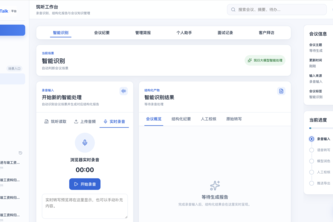
The company appears to be a solo-built, self-reported AI-powered meeting intelligence platform named ZhuTing AI Meeting Platform. The author describes it as an end-to-end system that transcribes audio, detects business scenarios, extracts structured information, and generates professional reports in Word and PDF formats. It integrates with Alibaba Cloud services and Qwen models, and is deployed using Docker and Nginx.
What changed
The project was submitted to the OpenAI 2026 hackathon, suggesting a recent development phase or prototype build. No evidence of prior traction, revenue, or customer adoption exists in the description.
Single most important open question
Is there any evidence of real-world usage, user feedback, or product-market fit beyond the author’s own account?
What The Product Actually Is
The description states that ZhuTing AI Meeting Platform is an AI-powered voice platform designed to transform spoken conversations into structured, actionable, and professionally formatted knowledge. It claims to support:
- Real-time speech transcription
- Business scenario detection
- Structured summary generation (decisions, risks, action items)
- Scenario-specific Word and PDF report creation
- Natural-language Q&A over historical meetings
- User profile and meeting history storage
It also supports multiple use cases such as:
- Meeting minutes
- Management briefings
- Personal memos
- Interviews
- Customer visits
The system integrates with Alibaba Cloud speech recognition, Qwen models, and uses a React/TypeScript frontend and FastAPI backend, deployed via Docker on Alibaba Cloud.
Inference: The platform is described as a full-stack web application built for audio-to-report workflows, but no evidence of actual deployment or usage exists beyond the author’s own account.
Positioning & Claim Evolution
The description positions ZhuTing AI Meeting Platform as an intelligent tool that goes beyond generic transcription tools by turning conversations into usable organizational assets. It emphasizes:
- Structured output over raw text
- Scenario-specific reporting
- Professional formatting (Word/PDF)
- Q&A over historical meetings
- Traceability and confidence scoring
It also states:
“Instead of merely converting speech into text, ZhuTing converts conversations into usable organizational assets.”
This suggests a shift from simple transcription to knowledge management and decision support, which is a positioning evolution from basic audio-to-text tools.
Claim: The platform aims to make every important conversation searchable, actionable, and ready for professional delivery.
Inference: This is a self-stated vision rather than a demonstrated capability or traction.
Target Customer & ICP
The description does not explicitly define the target customer or ideal customer profile (ICP). However, it implies that the platform targets:
- Professionals who attend or lead meetings
- Organizations seeking structured meeting outcomes
- Users requiring decision tracking and follow-up actions from meetings
Use cases mentioned include:
- Meeting minutes
- Management briefings
- Personal memos
- Interviews
- Customer visits
Inference: The ICP likely includes business professionals, managers, HR teams, or internal communication departments who need structured meeting outputs. No evidence of specific personas or customer segments is provided.
Business Model & Pricing Evidence
There is no mention of pricing, monetization strategy, or business model in the description. The author does not state whether this is a freemium, enterprise SaaS, or one-time tool, nor if there are any paid features or tiers.
Not evidenced: No indication of how the platform will generate revenue or who pays for it.
Technical & Delivery Signals
The platform is built with:
- Frontend: React + TypeScript
- Backend: FastAPI
- Database: SQLite
- Cloud: Alibaba Cloud
- AI services: Qwen models, Alibaba Cloud speech recognition
- Deployment: Docker containerized stack behind Nginx
- Audio handling: Browser-based microphone access (HTTPS and user permission required)
It supports:
- Real-time transcription
- Multi-signal scenario classification
- Structured information extraction
- Template-aware rendering for Word/PDF
- Responsive layout for desktop/mobile
Inference: The technical stack suggests a modern, lightweight, cloud-native prototype. No evidence of scalability, performance metrics, or production-grade infrastructure is provided.
Traction & Maturity Signals
There is no evidence of traction, revenue, customers, or adoption in the description. The project was submitted to a hackathon and is described as a solo-built prototype.
Not evidenced: No data on users, usage volume, retention, or monetization exists.
Competitive Context
The author does not reference competitors or market positioning relative to existing tools. However, based on the features described (transcription, scenario detection, report generation), it likely competes with:
- Generic transcription services (e.g., Otter.ai, Rev.com)
- Meeting intelligence platforms (e.g., Notion, Airtable, Slack integrations)
- Enterprise knowledge management systems
Inference: The platform may be positioned as a niche solution for structured meeting outputs and scenario-specific reporting. No competitive differentiation or market share data is provided.
Open Questions & Risks
- Solo-built prototype: With only one team member, there are risks related to scalability, maintenance, and long-term development.
- No revenue or customer evidence: The lack of traction or monetization signals raises questions about product-market fit.
- Self-reported claims: All features and capabilities are unverified; no independent validation exists.
- Limited technical depth: While the stack is described, there’s no indication of robustness, security, or performance in production.
- Unproven AI integration: The use of Qwen models and Alibaba Cloud services is stated but not validated for accuracy or reliability.
Inference: The project appears to be a proof-of-concept rather than a mature product with real-world usage.
Questions the description leaves open
- What specific business scenarios does the platform currently support, and how are they defined?
- How is speaker diarization handled? Is it accurate across multiple speakers?
- Has the platform been tested with actual users or organizations?
- Are there any plans for multilingual support beyond what’s already built?
- How does the system handle sensitive or confidential meeting content?
- What are the key assumptions about user behavior and adoption that underpin this product?
- Is there a plan to integrate with existing tools like Slack, Notion, or Microsoft Teams?
Overall Assessment
The description presents ZhuTing AI Meeting Platform as a solo-built hackathon project with strong technical execution and a clear vision for transforming meeting intelligence into structured knowledge.
However:
- There is no evidence of traction, revenue, or customer adoption.
- The platform is described as a prototype, not a commercial product.
- No business model, pricing, or monetization strategy is evident.
Assessment: Early-stage potential. This is a pre-product concept with technical capability but no demonstrated market validation or commercial readiness. It may be worth exploring further if the founder plans to iterate and build toward a viable product-market fit, but not as an investment or partnership target at this stage.
User Stories BotA demo video on every pull request
Get a demo video on every new feature
GitHub App that watches your pull requests and records a narrated, captioned demo.
Save time on demo prep and make informed decisions faster with a video walkthrough of every new feature.
Source
Submitted to the OpenAI 2026 hackathon on Devpost. Project home on Devpost. Back to the full gallery on Devpost.
This competitive analysis was produced by top-founders.com (opens in a new tab)
Generated by a language model from this project's public Devpost page — its tagline, the author's own write-up and any built-with tags listed there — as captured in August 2026. Short quotations are the author's words. It is an opinion on the idea as a business, not on the people behind it, and it reflects the description as published then. If the project has moved on, request a correction below. The analysis is not independent research and contains no verified traction, revenue or customer data.
An independent guide by KFG International LLC — not affiliated with, endorsed by, or connected to Devpost or OpenAI.