

Archive position — measured, not model output
0 likes on Devpost
2,263 of the 7,850 archived projects have more likes, and 5,587 share exactly 0 — so this project's #7,802 place in the like-ranked listing is a tie-break inside that group, not a ranking.
Projects (log scale)
Likes on Devpost. ▲ marks this project's group.
Show the figures
| Likes | Projects | Share of archive |
|---|---|---|
| 0 | 5,587 | 71.2% |
| 1 | 1,758 | 22.4% |
| 2 | 284 | 3.6% |
| 3–4 | 132 | 1.7% |
| 5–9 | 75 | 1.0% |
| 10+ | 14 | 0.2% |
 User Stories BotA demo video on every pull request
Get a demo video on every new feature
GitHub App that watches your pull requests and records a narrated, captioned demo.
Save time on demo prep and make informed decisions faster with a video walkthrough of every new feature.
Executive Summary
Project: zeyad.store
Self-reported basis only — this analysis rests entirely on the author's own description, unverified and without external corroboration.
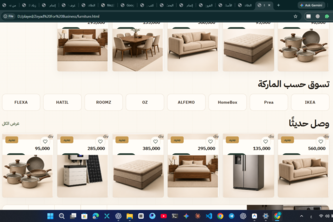
The project is described as an AI-assisted e-commerce platform for the Yemeni market, targeting furniture, home appliances, kitchens, solar energy systems, and home furnishing. It includes features like smart search, calculators for custom products, admin dashboard, and mobile-first design. The platform is built with modern web technologies (Node.js, Express, SQLite) and claims AI support in development.
Key commercial due-diligence read:
The description states the platform is designed for the Yemeni market but provides no evidence of customer adoption, revenue, or traction. It also does not clarify whether this is a product for local businesses to use or a consumer-facing marketplace. The lack of any financial, user or operational data makes it impossible to assess commercial viability or scalability.
Most important open question:
Is zeyad.store intended as a SaaS product for local Yemeni businesses or as a consumer-facing e-commerce platform? This distinction is critical to understanding the business model and market opportunity.
What The Product Actually Is
The description states that zeyad.store is an AI-assisted e-commerce platform designed for the Yemeni market. It supports browsing, searching, comparing products, managing shopping carts, placing orders, and includes interactive calculators for solar systems, kitchens, and majlis furniture.
It also includes:
- An admin dashboard
- Responsive design
- Dark mode
- SEO optimization
- WhatsApp integration
The platform is built using:
- HTML5, CSS3, JavaScript (ES6+)
- Node.js, Express.js
- SQLite
- REST API
Not evidenced:
- Whether the platform is a SaaS product for businesses or a consumer-facing marketplace.
- Whether it supports multiple sellers or is a single-vendor store.
Positioning & Claim Evolution
The author positions zeyad.store as:
- A modern AI-assisted e-commerce platform
- Designed specifically for the Yemeni market
- Targeting furniture, home appliances, kitchens, solar energy systems, and home furnishing solutions
It is described as offering:
- A premium shopping experience
- Intelligent business management tools
- Interactive calculators to help customers estimate product costs
- A clean and responsive interface
The project was submitted to the OpenAI 2026 hackathon, suggesting it may be a prototype or proof-of-concept.
Inference:
The platform is positioned as a tool for local Yemeni businesses to modernize their operations, but this is not explicitly confirmed. The claim of being "for the Yemeni market" does not imply a defined customer base or commercial traction.
Target Customer & ICP
The description states that zeyad.store is designed for the Yemeni market, and targets:
- Customers shopping for furniture, home appliances, kitchens, solar energy systems, and home furnishing solutions
- Local businesses looking to modernize their operations
Not evidenced:
- Whether the platform is intended for local businesses (as a SaaS product) or for consumers (as a marketplace)
- Specific customer segments within Yemen
- Any evidence of customer feedback or user testing
- Customer acquisition or retention metrics
Business Model & Pricing Evidence
The description does not provide any information about:
- Revenue model
- Pricing strategy
- Monetization approach
- Subscription plans or transaction fees
Inference:
If the platform is a SaaS product for local businesses, it may be priced on a per-business or per-user basis. However, this is speculative and not stated.
Technical & Delivery Signals
The platform is built with:
- Frontend: HTML5, CSS3, JavaScript (ES6+)
- Backend: Node.js, Express.js
- Database: SQLite
- API: REST API
- AI tools used: For architecture, debugging, UI/UX, optimization, documentation, and code generation
It is described as:
- Responsive
- Scalable
- Accessible
- Modular
- Supporting multilingual content and dark mode
Not evidenced:
- Whether the platform is production-ready or deployed
- Any performance metrics or scalability testing
- Deployment environment or infrastructure details
Traction & Maturity Signals
The description does not provide any evidence of:
- Revenue
- Customers or user base
- Product usage metrics
- Market traction or adoption
- Product lifecycle stage (e.g., MVP, beta, live)
Inference:
This is likely a prototype or hackathon project, based on the submission to the OpenAI 2026 hackathon. There is no indication of commercial deployment or user engagement.
Competitive Context
The description does not mention:
- Competitors
- Market size or dynamics
- Competitive advantages
- Differentiation from existing e-commerce platforms in Yemen or globally
Not evidenced:
- Any competitive analysis or market positioning
- Whether the platform is unique or replicates existing solutions
Open Questions & Risks
- No traction or revenue data: The project is described as a hackathon submission with no evidence of commercial adoption.
- Unclear business model: It’s unclear whether zeyad.store is for businesses or consumers, limiting understanding of its monetization strategy.
- Limited technical depth: The use of SQLite suggests a small-scale or prototype system; no indication of scalability or enterprise-grade infrastructure.
- No customer validation: No evidence of user testing, feedback, or market validation.
- Self-reported AI contribution: Claims about AI assistance are not substantiated with measurable outcomes.
Questions the description leaves open
- Is zeyad.store intended for local Yemeni businesses to use as a SaaS product, or is it a consumer-facing marketplace?
- What is the current stage of development? Is it deployed or still in prototype form?
- Have you conducted any user testing or gathered feedback from potential customers?
- What is your plan for monetization and customer acquisition?
- How do you intend to scale beyond the Yemeni market, if at all?
- What are the key technical challenges you anticipate in deploying this platform at scale?
Overall Assessment
Not evidenced:
- No financials
- No revenue or customer data
- No evidence of traction or commercial viability
Assessment:
This is a self-reported hackathon project with no demonstrated commercial traction, revenue, or user adoption. It is described as an AI-assisted e-commerce platform for the Yemeni market but lacks any evidence of real-world usage or business model validation.
Confidence level: Low — based on thin self-reported evidence only.
Next steps: If this is a prototype, further due diligence should focus on the founder’s ability to execute and scale, as well as the potential for commercial adoption in Yemen.
User Stories BotA demo video on every pull request
Get a demo video on every new feature
GitHub App that watches your pull requests and records a narrated, captioned demo.
Save time on demo prep and make informed decisions faster with a video walkthrough of every new feature.
Source
Submitted to the OpenAI 2026 hackathon on Devpost. Project home on Devpost. Back to the full gallery on Devpost.
This competitive analysis was produced by top-founders.com (opens in a new tab)
Generated by a language model from this project's public Devpost page — its tagline, the author's own write-up and any built-with tags listed there — as captured in August 2026. Short quotations are the author's words. It is an opinion on the idea as a business, not on the people behind it, and it reflects the description as published then. If the project has moved on, request a correction below. The analysis is not independent research and contains no verified traction, revenue or customer data.
An independent guide by KFG International LLC — not affiliated with, endorsed by, or connected to Devpost or OpenAI.